
Table of Contents
What Does Saranghae Mean in Korean?
If you’ve ever watched a Korean drama or listened to K-pop songs, chances are you’ve come across the word “사랑해 (saranghae).” It often pops up in the most emotional moments—confessions, romantic endings, or during a heartfelt fan interaction at concerts. To global fans of Korean culture, this single phrase has become a symbol of love and affection.
But what does “saranghae” really mean in Korean? While it directly translates to “I love you,” the depth of its meaning goes beyond words. In Korea, love expressions are tied to culture, respect, and relationships. This article will explore not only the translation of saranghae but also its cultural context, variations, real-life examples, and its influence in global pop culture.
Literal Meaning of Saranghae
The phrase 사랑해 (saranghae) is made of two parts:
- 사랑 (sarang) = Love
- 해 (hae) = Do (informal verb form of “하다” – to do)
When combined, it literally means “I do love” → “I love you.”
It’s a simple yet powerful expression that carries different nuances depending on the relationship and situation.
DO NOT MISS: What Does Noona vs Unnie Mean in Korean?
Formal and Polite Variations
Since Korean is a language built on levels of politeness, “I love you” can be expressed in several ways:
| Expression | Usage | Politeness Level | Example Context |
| 사랑해 (saranghae) | Informal | Casual | Used between couples, close friends, or family members |
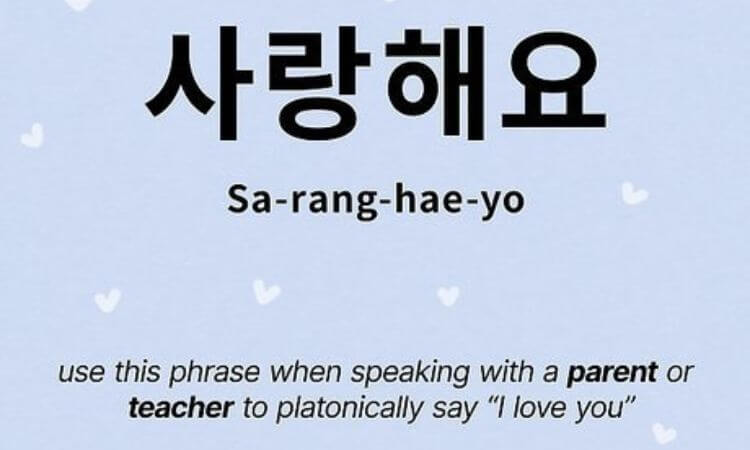
| 사랑해요 (saranghaeyo) | Polite | Standard polite | Used when speaking respectfully to someone slightly older or less close |
| 사랑합니다 (saranghamnida) | Very Formal | Highest formality | Used in speeches, ceremonies, lyrics, or formal declarations |
- Saranghae is intimate, usually reserved for someone close to your heart.
- Saranghaeyo is polite, making it safer when you’re unsure of the level of closeness.
- Saranghamnida is formal, often heard in songs, weddings, or when a celebrity declares their love for fans during an award speech.
Cultural Context of “Saranghae”
To fully understand “saranghae,” you need to look at Korean culture. Unlike in the West, where “I love you” is commonly used, Koreans traditionally express love through actions more than words.
For instance:
- A parent may cook their child’s favorite meal instead of saying “I love you” every day.
- Couples may show affection through caring gestures—buying medicine when sick, walking each other home, or remembering small details.
That’s why when a Korean person does say “saranghae,” it feels especially sincere and meaningful.
In modern Korea, however, especially among younger generations influenced by media, saying saranghae has become more common, though still not as casual as in English.
When and How to Use Saranghae
Here are some typical situations where “saranghae” is used:
- Between Romantic Partners
- Example: Oppa, saranghae! (Honey, I love you!)
- Often said daily, just like couples in the West say “I love you.”
- Parent-Child Relationships
- Example: Aegi-ya, eomma-ga saranghae. (Baby, Mommy loves you.)
- Traditionally rare, but younger parents now say it more openly.
- K-Dramas & Romantic Confessions
- Example: Na-do saranghae. (I love you too.)
- These emotional moments have made the phrase iconic worldwide.
- K-pop Idol to Fans
- Idols often say saranghaeyo on stage:
- BTS: “ARMY, saranghaeyo!”
- BLACKPINK: “Blinks, saranghae!”
- It’s a way of expressing gratitude and affection without crossing cultural boundaries.
- Idols often say saranghaeyo on stage:
Saranghae in K-Dramas and K-Pop
K-Dramas
- In Crash Landing on You, Hyun Bin’s character uses saranghae during a heartfelt confession, making fans swoon.
- In Descendants of the Sun, Song Joong-ki and Song Hye-kyo’s romantic exchanges made “saranghae” one of the most memorable lines in drama history.
K-Pop
- During concerts, idols like EXO’s Baekhyun or BTS’s Jungkook often end fan talks with “saranghaeyo.”
- Many K-pop songs use “saranghae” in their lyrics. Examples:
- BIGBANG’s “사랑해” (I Love You)
- 2NE1’s “I Love You” (mixing English and Korean expressions of love)
Pop culture has amplified the phrase globally, turning saranghae into one of the most recognized Korean words outside Korea.
Common Misunderstandings About Saranghae
- It’s not for everyone.
- You wouldn’t say saranghae to a coworker or a stranger. It’s reserved for close, meaningful relationships.
- Politeness matters.
- Beginners often say saranghae to teachers or elders, but this can feel disrespectful. Use saranghaeyo instead.
- It doesn’t always mean romance.
- While often romantic, saranghae can be platonic when used between family or very close friends.
Frequently Asked Questions (FAQs)
Q1: Is “saranghae” romantic only?
Not always. It’s commonly romantic, but can also express familial or deep platonic love.
Q2: What’s the difference between “saranghae” and “saranghaeyo”?
“Saranghae” is casual and used with close relationships, while “saranghaeyo” is polite and respectful.
Q3: Do Koreans say “I love you” often?
No, Koreans often show love through actions, though younger generations say it more frequently thanks to media influence.
Q4: How do idols express love to fans?
Most use the polite form “saranghaeyo,” striking a balance between closeness and respect.
Q5: Can I use saranghae with friends?
Yes, but only with very close friends who would be comfortable with it. Otherwise, it might feel awkward.
Conclusion
So, what does saranghae mean in Korean? Simply put, it means “I love you.” But its depth depends on context, culture, and relationship. Koreans don’t throw the phrase around lightly—it carries sincerity, warmth, and a strong sense of connection.
From heart-fluttering K-drama confessions to K-pop idols thanking their fans, “saranghae” has become one of the most globally recognized Korean words. Yet, its cultural significance reminds us that love is not only about words—it’s about the actions and feelings behind them.
So, the next time you hear “saranghae,” know that it’s more than just a phrase. It’s a heartfelt message that bridges language, culture, and emotion. 💖