
Table of Contents
How much is Ron Howard Net Worth?
Ron Howard is one of Hollywood’s most remarkable success stories. He began working in the entertainment industry as a child actor, became one of television’s most recognizable young stars, and eventually transformed himself into an award-winning director and highly successful producer. Today, his career spans more than six decades and includes some of the biggest television shows, blockbuster movies, and critically acclaimed productions in American entertainment.
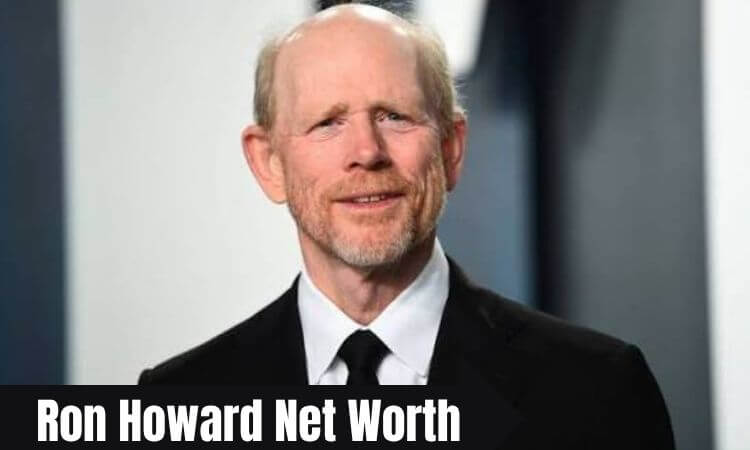
Ron Howard’s estimated net worth is $200 million.
Much of Howard’s wealth comes from his extraordinary career as a director and producer, although his early success as an actor also played an important role in establishing his position in Hollywood. From playing Opie Taylor on The Andy Griffith Show to becoming Richie Cunningham on Happy Days, Howard spent his childhood and teenage years in front of television audiences before moving behind the camera.
His transition from actor to filmmaker proved to be the defining move of his career. Howard directed movies such as Splash, Cocoon, Willow, Parenthood, Apollo 13, A Beautiful Mind, Cinderella Man, The Da Vinci Code, Angels & Demons, Rush, and Inferno. Several of these films became major commercial successes, while others earned significant critical recognition.
Howard also co-founded Imagine Entertainment with producer Brian Grazer. The company became an important force in Hollywood, producing films and television series across a wide range of genres. Through directing, producing, television, business ventures, and real estate, Howard built a fortune estimated at approximately $200 million.
But his financial success is only part of the story. Ron Howard’s career is especially interesting because he managed something relatively rare in Hollywood: he successfully reinvented himself without abandoning the popularity he had built as a child performer.
Ron Howard Net Worth
Estimated Net Worth: $200 Million
Ron Howard’s estimated $200 million net worth reflects a career that has developed through several different stages.
He initially earned money as a child actor. His role as Opie Taylor on The Andy Griffith Show gave him national recognition at an extremely young age. Later, Happy Days made him an even more recognizable television personality.
However, acting eventually became only one part of Howard’s professional life. His biggest long-term financial success came after he moved into directing and producing.
Howard’s directing career began with a relatively inexpensive 1977 movie, Grand Theft Auto. While it was a modest beginning, the project gave him the opportunity to demonstrate that he could work behind the camera. His later success with Night Shift, Splash, Cocoon, and Parenthood established him as a reliable Hollywood director.
As his reputation grew, Howard began receiving opportunities to work on increasingly ambitious productions. Movies such as Apollo 13, A Beautiful Mind, The Da Vinci Code, and Angels & Demons placed him among Hollywood’s most commercially successful filmmakers.
Another major source of his wealth has been his work as a producer. His partnership with Brian Grazer and the creation of Imagine Entertainment gave Howard an opportunity to participate in the business side of entertainment rather than relying solely on acting or directing fees.
The company’s involvement in movies and television programs created another potential stream of income and helped Howard build an entertainment career that extended well beyond individual film salaries.
His real estate holdings have also represented a significant part of his overall wealth. Howard and his wife, Cheryl, have owned valuable properties in New York, California, and Connecticut, including a luxury apartment in Manhattan’s famous Eldorado Building and a large estate in Greenwich.
Because private compensation, investments, production-company ownership, and other financial arrangements are not fully public, net-worth estimates should be treated as approximations rather than exact figures. Nevertheless, a $200 million estimate illustrates the enormous financial success Howard has achieved throughout his career.
DO NOT MISS: How much is John Ternus Net Worth?
Who Is Ron Howard?
Ron Howard is an American actor, director, and producer who became famous as a child performer before establishing himself as one of Hollywood’s most respected filmmakers.
Born Ronald William Howard on March 1, 1954, in Duncan, Oklahoma, he grew up in a family deeply connected to entertainment. His mother, Jean Speegle Howard, was an actress, while his father, Rance Howard, worked as an actor, writer, and director.
Howard’s younger brother, Clint Howard, also became a successful actor.
The family moved to Hollywood, California, in 1958. Growing up around the entertainment industry exposed Ron to acting and filmmaking from an early age. Rather than entering Hollywood as an outsider, he was surrounded by people who understood the profession and the demands of working in film and television.
That early exposure helped prepare him for an extraordinary career.
By the time Howard reached adulthood, he already had years of experience in front of cameras. Instead of continuing exclusively as an actor, however, he began exploring filmmaking.
That decision ultimately changed his life.
Ron Howard’s Early Life
Ronald William Howard was born on March 1, 1954, in Duncan, Oklahoma.
His parents played a major role in shaping his early relationship with the entertainment industry. His mother, Jean Speegle Howard, was an actress, while his father, Rance Howard, was an actor, writer, and director.
Ron was the couple’s eldest son. His younger brother, Clint Howard, would later establish his own acting career.
The Howard family moved to Hollywood in 1958, when Ron was still very young. The family lived in Hollywood for several years before eventually moving to Burbank, California.
For Ron, growing up in Southern California provided an environment where acting and filmmaking were not distant dreams. They were part of everyday life.
He attended John Burroughs High School and later studied at the School of Cinematic Arts at the University of Southern California. Although he attended USC, Howard did not complete a college degree.
By that point, his professional career was already well underway.
His decision not to graduate from college was understandable given how much practical experience he had already gained in Hollywood. He had been working professionally since childhood and had already established himself as a recognizable television actor.
Instead of spending years preparing for a career in entertainment, Howard was already living that career.
YOU MAY LIKE THIS: How much is Henry Winkler Net Worth?
Ron Howard’s Childhood Acting Career
Ron Howard entered show business at an exceptionally young age.
His first credited film role came in 1959, when he appeared in The Journey. He was only a child, but that early appearance was the beginning of a career that would eventually stretch across more than sixty years.
Howard subsequently appeared in several television programs, including The DuPont Show with June Allyson, The Twilight Zone, Dennis the Menace, The Many Loves of Dobie Gillis, and The Cheyenne Show.
Then came the role that changed his life.
Ron Howard as Opie Taylor on The Andy Griffith Show
In 1960, Ron Howard was cast as Opie Taylor on The Andy Griffith Show.
He played the son of Andy Taylor, the central character portrayed by Andy Griffith. Howard remained with the series for all eight seasons.
The role turned him into one of America’s best-known child actors.
Opie was a warm, innocent, and memorable character, and Howard’s performance helped make the father-and-son relationship at the center of the series one of the show’s most recognizable elements.
For Howard, the series also provided an extraordinary education in television production.
Working on a successful sitcom throughout childhood allowed him to observe actors, directors, writers, producers, and crew members. Years later, that experience would prove valuable when he moved behind the camera.
While many child actors struggle to maintain careers after growing up, Howard successfully avoided that trap.
He continued acting through his teenage years and gradually transitioned into adult roles.
Other Early Acting Roles
Howard continued to appear in films and television programs during his childhood and adolescence.
His film credits included The Music Man in 1962 and The Courtship of Eddie’s Father in 1963.
He also appeared in television episodes and series including The Eleventh Hour, I Spy, The Smith Family, Daniel Boone, MASH*, and The Bold Ones: The New Doctors.
These roles gave Howard an unusually broad acting background before he even reached adulthood.
His experience was not limited to one successful sitcom. He had already worked in different types of television productions and movies.
That versatility would become important later when he began exploring other areas of filmmaking.
Ron Howard and Happy Days
In 1974, Ron Howard took another career-defining television role when he was cast as Richie Cunningham on Happy Days.
The series became a major television success, and Richie Cunningham became one of Howard’s most recognizable characters.
The show focused on an idealized version of American life during the 1950s and featured a large ensemble cast. Howard appeared alongside performers including Henry Winkler, whose portrayal of Arthur “Fonzie” Fonzarelli became one of television’s most famous characters.
Happy Days established Howard as an adult television star after his earlier success as Opie Taylor.
However, Howard’s ambitions were already moving beyond acting.
Rather than spending the rest of his career simply appearing in front of the camera, he became increasingly interested in directing.
American Graffiti and Ron Howard’s Film Career
One of Howard’s important early adult film appearances came in George Lucas’s 1973 coming-of-age movie American Graffiti.
The film became an important part of American cinema and helped establish several performers who would later become major Hollywood names.
For Howard, the movie represented another stage in his development as an actor.
He subsequently appeared opposite John Wayne in the 1976 film The Shootist.
Although Howard continued acting, his interests were increasingly focused on filmmaking.
His eventual move into directing proved to be the most important career decision of his life.
Ron Howard’s Transition From Actor to Director
Ron Howard made his directorial debut in 1977 with Grand Theft Auto.
The film was a low-budget comedy-action movie and was a very different type of project from the major productions Howard would eventually direct.
At this stage, Howard was still establishing himself as a filmmaker.
He went on to direct several television movies before receiving a major opportunity with Night Shift in 1982.
That movie starred Michael Keaton, Shelley Long, and Henry Winkler.
Night Shift was an important breakthrough because it demonstrated that Howard could successfully direct a mainstream Hollywood feature.
After that, the opportunities became increasingly significant.
Splash and the Rise of Ron Howard as a Hollywood Director
In 1984, Howard directed Splash, a romantic comedy starring Tom Hanks and Daryl Hannah.
The movie was a commercial success and helped establish Howard as a director capable of handling mainstream studio entertainment.
It also marked an important collaboration with Tom Hanks, who would later work with Howard again on major projects.
The success of Splash opened the door to larger productions.
Howard followed it with Cocoon in 1985, another commercially successful movie that demonstrated his ability to work with a different type of story and audience.
Rather than becoming associated with a single genre, Howard developed a reputation for versatility.
That quality became one of the most important elements of his career.
Willow
Howard directed Willow in 1988.
The fantasy adventure film was produced by George Lucas and featured a world of magic, mythical creatures, and adventure.
The project demonstrated Howard’s willingness to tackle large-scale visual storytelling.
Although Howard would later become particularly associated with historical dramas, biographical films, and real-life stories, Willow showed that he could also work within fantasy and adventure.
Parenthood
In 1989, Howard directed Parenthood.
The film explored family relationships, parenting, and the complicated realities of raising children.
Its mixture of comedy and drama became one of Howard’s strengths as a filmmaker.
The movie also reflected a recurring characteristic of his work: stories centered on ordinary people dealing with extraordinary or emotionally complicated circumstances.
Howard continued expanding his range with projects such as Backdraft in 1991.
Apollo 13
One of the most important movies in Ron Howard’s career was Apollo 13, released in 1995.
The film dramatized the real-life Apollo 13 space mission and starred Tom Hanks, Kevin Bacon, Bill Paxton, Gary Sinise, and Ed Harris.
The story focused on the astronauts and ground-control teams dealing with a life-threatening crisis after an oxygen-tank explosion damaged the spacecraft.
Howard’s direction helped turn a historical event into a tense and emotional cinematic experience.
Apollo 13 was both a commercial and critical success.
The movie also strengthened Howard’s relationship with Tom Hanks, who delivered one of the major performances of his career in the film.
The success of Apollo 13 demonstrated that Howard could take a complex real-life story and turn it into mainstream entertainment.
How the Grinch Stole Christmas
In 2000, Howard directed How the Grinch Stole Christmas, starring Jim Carrey.
The film was a major departure from the serious historical and dramatic projects that would later become associated with Howard.
It was a large-scale family fantasy comedy based on the famous Dr. Seuss story.
The movie became a significant commercial success and showed once again that Howard could move between genres.
His ability to work on both family entertainment and serious adult dramas helped make his career unusually diverse.
A Beautiful Mind and Ron Howard’s Oscar
One of the greatest achievements of Ron Howard’s career came with A Beautiful Mind.
Released in 2001, the film starred Russell Crowe as mathematician John Nash.
The movie explored Nash’s extraordinary mathematical abilities, personal relationships, career struggles, and experiences with mental illness.
A Beautiful Mind became a major critical and commercial success.
Most importantly for Howard, the movie earned him the Academy Award for Best Director.
Winning the Oscar represented a major milestone.
Howard had gone from being a child actor known for playing Opie Taylor to an Academy Award-winning director.
The achievement demonstrated just how dramatically his career had evolved.
Ron Howard and Imagine Entertainment
Ron Howard’s wealth is not based solely on directing movies.
One of the most important elements of his long-term success has been his work with Imagine Entertainment.
Howard and producer Brian Grazer co-founded the company in the 1980s.
Imagine became a major film and television production company, allowing Howard to participate in the business and creative side of entertainment.
This was an important strategic move.
A director typically earns money by working on individual projects. A producer or production-company executive can potentially participate in a much broader range of projects.
Imagine’s extensive filmography has included movies such as 8 Mile, Friday Night Lights, and Inside Deep Throat.
The company has also produced numerous television programs.
Its television work included series such as 24, Felicity, and Arrested Development.
Through Imagine, Howard became involved in projects far beyond the movies he personally directed.
Arrested Development
One of the notable television projects associated with Ron Howard and Imagine Entertainment was Arrested Development.
Howard was involved with the series as a producer and narrator.
He also played a fictionalized version of himself.
The comedy developed a loyal audience because of its unusual storytelling style, dysfunctional family dynamics, fast-paced jokes, and unconventional narrative structure.
Howard’s involvement demonstrated that his career was not limited to traditional blockbuster filmmaking.
He was equally capable of participating in innovative television projects.
His role as narrator also became an important part of the show’s identity.
Ron Howard as a Producer
Producing has been another major part of Howard’s career.
Through Imagine Entertainment and other projects, he has worked behind the scenes on films and television programs spanning numerous genres.
Among the notable projects connected to his production career are A Beautiful Mind, The Da Vinci Code, Empire, Parenthood, Arrested Development, Friday Night Lights, and 8 Mile.
This production experience gave Howard an additional source of influence and income.
Rather than depending only on his own work as a director, he became involved in developing, producing, and supporting projects created by other filmmakers and television professionals.
That broader involvement helped transform him from a successful director into a Hollywood entertainment executive and producer.
The Da Vinci Code
In 2006, Howard directed The Da Vinci Code, based on Dan Brown’s bestselling novel.
The film starred Tom Hanks as Robert Langdon and became a major international commercial success.
The story combined mystery, history, religion, conspiracy, and adventure.
Its worldwide popularity demonstrated Howard’s ability to translate a bestselling literary property into a major studio film.
The success of the movie also led to two sequels.
Howard later directed Angels & Demons in 2009 and Inferno in 2016, both featuring Tom Hanks as Robert Langdon.
These movies further expanded Howard’s association with major commercial filmmaking.
Cinderella Man
In 2005, Howard directed Cinderella Man, a biographical sports drama starring Russell Crowe.
The movie was based on the life of boxer James J. Braddock, whose career experienced a dramatic resurgence during the Great Depression.
The film combined sports, family, historical drama, and personal struggle.
It was another example of Howard’s interest in true stories and inspirational characters.
Frost/Nixon
Howard directed Frost/Nixon, which premiered at the London Film Festival in 2008.
The film was based on the famous television interviews between British broadcaster David Frost and former U.S. President Richard Nixon.
The movie received significant critical attention and demonstrated Howard’s continued interest in historical and political subjects.
It also reinforced his reputation as a director capable of adapting complicated real-world events into accessible dramatic stories.
Rush
In 2013, Howard directed Rush, a sports drama centered on the rivalry between Formula One drivers James Hunt and Niki Lauda.
The film combined racing action with a character-driven story about ambition, competition, personality, and professional rivalry.
Rush received positive critical attention and became another example of Howard’s ability to work across genres.
Rather than simply reproducing the spectacle of racing, the movie focused heavily on the relationship between the two central competitors.
In the Heart of the Sea and Inferno
Howard continued directing major projects throughout the 2010s.
In 2015, he directed In the Heart of the Sea, a historical adventure film inspired by the real-life events behind the story of the whaling ship Essex.
In 2016, he returned to the Robert Langdon franchise with Inferno, starring Tom Hanks.
These projects showed that Howard continued to work on ambitious studio productions even after decades in the industry.
Ron Howard and Solo: A Star Wars Story
One of the more unusual directing assignments in Howard’s career came in 2017.
Howard officially became the director of Solo: A Star Wars Story after the original directors, Phil Lord and Christopher Miller, departed the production.
At the time Howard took over, the movie was already substantially developed.
He inherited a complicated production situation, with only several weeks of filming and additional reshoots remaining.
Taking over a major Star Wars production represented a significant challenge.
The finished movie was released in 2018 and expanded the story of Han Solo, one of the most recognizable characters in the Star Wars universe.
For Howard, the project added another major franchise to an already impressive directing résumé.
Hillbilly Elegy
In November 2020, Howard’s drama Hillbilly Elegy was released on Netflix.
The film was based on the memoir by J.D. Vance and starred Amy Adams and Glenn Close.
It represented another shift in tone for Howard.
Rather than directing a large-scale franchise movie, he focused on a family and social drama centered around difficult personal circumstances.
The project demonstrated that even after decades of directing major studio films, Howard continued to explore different kinds of stories.
Thirteen Lives
In 2022, Howard directed Thirteen Lives, a survival drama released through Prime Video.
The movie dramatized the remarkable rescue of a Thai youth soccer team trapped inside a cave.
The story provided Howard with another opportunity to work with real-life events and intense human drama.
It fit naturally into the filmmaker’s long-standing interest in stories involving courage, teamwork, survival, and extraordinary circumstances.
The Shrinking of Treehorn
Howard’s career has continued to evolve beyond traditional live-action filmmaking.
Netflix acquired The Shrinking of Treehorn from Paramount Pictures in 2022.
The project was expected to represent Howard’s first time directing an animated feature.
The move into animation is another example of his willingness to explore new areas of filmmaking even after achieving enormous success in live-action cinema.
Ron Howard’s Acting Legacy
Although Ron Howard became better known as a director and producer, his acting career remains an important part of his legacy.
His performances as Opie Taylor and Richie Cunningham are among the most recognizable television roles of their respective eras.
His final major acting role was a return to the character of Opie Taylor in the 1986 television film Return to Mayberry, which reunited the cast of The Andy Griffith Show.
Howard also appeared in Happy Days reunion programs in 1992 and 2005.
Although he gradually moved away from acting, he never completely abandoned the medium.
His success as a filmmaker eventually became much more prominent than his acting career.
Ron Howard’s Awards and Recognition
Howard’s career has earned numerous honors.
One of his most important achievements was winning the Academy Award for Best Director for A Beautiful Mind.
He was also inducted into the Television Hall of Fame in 2013.
In 2003, Howard received the National Medal of Arts.
His directing achievements have also been recognized by organizations and festivals, including the Austin Film Festival, which honored him with an Extraordinary Contribution to Filmmaking Award in 2009.
These awards reflect the unusual breadth of his career.
Howard has been recognized not simply as an actor or director, but as a major contributor to American film and television.
Ron Howard’s Business Success
Imagine Entertainment has played a major role in Howard’s professional success.
Co-founded with Brian Grazer, the company provided Howard with a platform to develop projects across movies and television.
The company’s portfolio has included dramas, comedies, sports films, television series, and other entertainment projects.
This business model helped Howard build a career that was not dependent on a single role.
His work could generate value as a director, producer, executive, narrator, and creative collaborator.
That diversification is an important reason his career has remained financially successful over multiple decades.
Ron Howard and Brian Grazer
Brian Grazer has been one of the most important professional collaborators in Ron Howard’s career.
The pair founded Imagine Entertainment and built a long-running creative and business partnership.
Their collaboration combined Howard’s filmmaking experience with Grazer’s producing expertise.
Together, they helped develop a production company capable of working across major Hollywood films and television.
The partnership also gave Howard a larger role in Hollywood’s business infrastructure.
Instead of simply being hired to direct individual movies, he became part of the process of creating and producing entertainment properties.
Ron Howard’s Personal Life
Ron Howard married Cheryl Alley on June 7, 1975.
Cheryl later became a writer and is known professionally as Cheryl Howard Crew.
The couple have remained together for decades, making their marriage one of the longer-lasting relationships in Hollywood.
They have four children.
Their oldest daughter, Bryce Dallas Howard, followed her father into the entertainment industry.
Bryce became a successful actress and director, appearing in major productions and establishing a career of her own.
Ron Howard’s family therefore represents a multigenerational connection to Hollywood.
Ron Howard and Bryce Dallas Howard
Bryce Dallas Howard has become a successful actress and director in her own right.
She has appeared in major movies and television productions and has also followed the family tradition of working behind the camera.
Her career has made the Howard family one of Hollywood’s notable entertainment families.
Ron’s success undoubtedly gave his children an early understanding of the industry, but Bryce has developed her own professional identity and accomplishments.
The father-daughter connection is particularly interesting because both have worked as directors.
Ron Howard and Clint Howard
Ron’s younger brother Clint Howard also became an actor.
Clint has appeared in numerous movies and television productions throughout his long career.
Like Ron, Clint entered the entertainment industry at a young age.
The brothers therefore grew up working in Hollywood and eventually built their own careers.
Their success reflects the strong entertainment background of the Howard family.
Ron Howard’s New York Real Estate
Real estate has been another important component of Ron Howard’s financial portfolio.
In 2004, Ron and Cheryl purchased a roughly 3,000-square-foot apartment in New York City’s prestigious Eldorado Building.
They paid approximately $5.6 million for the property.
The couple subsequently spent several million dollars on renovations, significantly increasing their investment in the apartment.
In 2017, they listed the property for approximately $12.5 million.
The asking price was later reduced to $11.5 million.
However, the property ultimately did not sell and remained part of their real estate holdings according to the information provided.
The Eldorado is one of New York’s best-known luxury residential buildings, making the property consistent with Howard’s status and financial position.
Ron Howard’s Second New York Apartment
Howard and Cheryl also own another apartment in New York City.
The couple purchased the second property in 2002 for approximately $712,000.
Owning multiple New York properties demonstrates the extent of their real estate interests.
New York real estate has historically represented both a luxury lifestyle choice and a potential long-term investment for wealthy entertainment figures.
For Howard, these properties form part of a broader portfolio that also includes real estate in California and Connecticut.
Ron Howard’s Greenwich Estate
In 2014, Ron and Cheryl sold a large estate in Greenwich, Connecticut.
The property covered approximately 33 acres and was located on a lake.
The estate was sold for approximately $27.5 million.
The transaction represented one of the largest known real estate deals associated with the couple.
A 33-acre waterfront property in Greenwich is an extremely valuable asset, and its multimillion-dollar sale demonstrates the level of real estate wealth the couple accumulated during their years in Hollywood.
Ron Howard’s Santa Monica Property
In 2006, Ron and Cheryl paid approximately $2.75 million for an ocean-view apartment in Santa Monica, California.
The property gave the couple access to one of Southern California’s most desirable coastal locations.
Their real estate holdings therefore span some of the most expensive and prestigious residential markets in the United States.
From New York City to Greenwich to Santa Monica, the Howards have invested in properties that reflect both their wealth and long-standing connection to major entertainment centers.
How Ron Howard Built His $200 Million Fortune
Ron Howard’s estimated $200 million fortune was not created from one blockbuster movie or one television role.
Instead, it was built over decades through several different career paths.
Child Acting
Howard began earning professionally as a child.
His work on The Andy Griffith Show established him as a major television personality at a young age.
Television Stardom
His role as Richie Cunningham on Happy Days provided another major source of professional success.
The show became a cultural phenomenon and kept Howard in the public eye during his transition into adulthood.
Directing
Directing became one of Howard’s biggest professional achievements.
His filmography includes numerous successful movies, from comedies and family films to historical dramas, thrillers, sports movies, and major franchises.
Producing
Howard’s production career expanded his involvement in entertainment beyond directing.
Through Imagine Entertainment, he participated in a wide range of films and television series.
Business Ownership
The creation of Imagine Entertainment with Brian Grazer gave Howard a long-term business platform in Hollywood.
Real Estate
His luxury properties in New York, California, and Connecticut have also represented significant assets.
The combination of these income streams explains how Howard was able to build and maintain a fortune estimated at $200 million.
Ron Howard’s Most Famous Movies
Ron Howard has directed a remarkably diverse selection of films.
Some of his best-known directing credits include:
- Grand Theft Auto
- Night Shift
- Splash
- Cocoon
- Willow
- Parenthood
- Backdraft
- Apollo 13
- How the Grinch Stole Christmas
- A Beautiful Mind
- Cinderella Man
- The Da Vinci Code
- Angels & Demons
- Frost/Nixon
- Rush
- In the Heart of the Sea
- Inferno
- Solo: A Star Wars Story
- Hillbilly Elegy
- Thirteen Lives
The list illustrates the extraordinary range of his career.
Howard has worked on comedy, fantasy, science fiction, family entertainment, sports drama, historical drama, biography, survival stories, and major franchise films.
Ron Howard’s Relationship With Tom Hanks
Tom Hanks is one of the actors most closely associated with Ron Howard’s directing career.
The two worked together on several major projects.
Their collaborations include Splash, Apollo 13, The Da Vinci Code, Angels & Demons, and Inferno.
The partnership has lasted for decades.
Howard’s direction and Hanks’s performances proved to be an effective combination, particularly in films that mixed mainstream entertainment with emotional and dramatic storytelling.
Their repeated collaborations also became an important part of Howard’s filmography.
Ron Howard’s Directing Style
Howard’s filmmaking style is often associated with clarity, accessibility, strong storytelling, and emotional character development.
Rather than restricting himself to one genre, he has repeatedly moved between different types of stories.
One common element is his interest in people facing difficult circumstances.
In Apollo 13, astronauts struggle to survive after a catastrophic accident.
In A Beautiful Mind, John Nash confronts extraordinary personal and professional challenges.
In Cinderella Man, James Braddock fights his way back to success during difficult economic times.
In Rush, two racing rivals compete at the highest level while developing a complicated relationship.
In Thirteen Lives, rescuers attempt to save a trapped soccer team.
These stories share an emphasis on human resilience.
Why Ron Howard Remains Important to Hollywood
Ron Howard’s career is unusual because he successfully moved through nearly every major part of the entertainment industry.
He began as a child actor.
He became a television star.
He became a film actor.
He became a director.
He became an Oscar-winning filmmaker.
He became a producer.
He co-founded a major entertainment company.
He also remained involved in television.
Few Hollywood careers demonstrate such a smooth transition between generations of entertainment.
Howard began working in an era dominated by traditional television networks and studio films. He later adapted to the age of streaming services, directing projects released through platforms such as Netflix and Prime Video.
That ability to adapt has been one of the most important factors behind his longevity.
Ron Howard’s Career Longevity
Ron Howard started working professionally as a child and continued building his career for decades.
His early television success could easily have become the peak of his career.
Instead, he reinvented himself.
The transition from acting to directing was particularly important.
Rather than being permanently identified as a former child actor, Howard developed a new reputation based on his filmmaking abilities.
Eventually, many audiences began to think of him primarily as a director rather than as Opie Taylor or Richie Cunningham.
That kind of transformation is extremely difficult in Hollywood.
Howard accomplished it while maintaining a connection to the audience that knew him from television.
Ron Howard’s Legacy
Ron Howard’s legacy extends far beyond his estimated $200 million fortune.
His greatest accomplishment may be the way he transformed his career.
Many actors become famous early and struggle to maintain relevance later. Howard did the opposite.
His early acting career gave him recognition, but his willingness to learn filmmaking allowed him to create a second career that became even more influential.
As a director, he delivered commercially successful films while also receiving major critical recognition.
As a producer, he helped develop numerous movies and television series.
As a businessman, he helped build Imagine Entertainment into an important Hollywood production company.
As a family man, he remained married to Cheryl for decades and watched his children pursue creative careers of their own.
Frequently Asked Questions About Ron Howard
What is Ron Howard’s net worth?
Ron Howard’s estimated net worth is $200 million. His wealth has been built through acting, directing, producing, business ventures, and real estate investments over a career spanning more than six decades.
How did Ron Howard become famous?
Ron Howard first became famous as a child actor playing Opie Taylor on The Andy Griffith Show. He later became widely known for playing Richie Cunningham on Happy Days.
How old was Ron Howard when he started acting?
Howard began working in the entertainment industry as a young child. His first credited film role came in 1959, and he joined The Andy Griffith Show in 1960.
What was Ron Howard’s first movie as a director?
Ron Howard made his directorial debut with the 1977 low-budget comedy-action film Grand Theft Auto.
Did Ron Howard win an Oscar?
Yes. Howard won the Academy Award for Best Director for A Beautiful Mind, which was released in 2001.
What movies did Ron Howard direct?
Some of Howard’s best-known movies include Splash, Cocoon, Willow, Parenthood, Backdraft, Apollo 13, How the Grinch Stole Christmas, A Beautiful Mind, Cinderella Man, The Da Vinci Code, Angels & Demons, Rush, Inferno, Solo: A Star Wars Story, Hillbilly Elegy, and Thirteen Lives.
Did Ron Howard act in The Andy Griffith Show?
Yes. Howard played Opie Taylor, the son of Andy Taylor, throughout all eight seasons of The Andy Griffith Show.
Did Ron Howard act in Happy Days?
Yes. He played Richie Cunningham on Happy Days, one of the most important television roles of his acting career.
Is Ron Howard related to Bryce Dallas Howard?
Yes. Bryce Dallas Howard is Ron Howard’s daughter. She has become a successful actress and director herself.
Is Clint Howard Ron Howard’s brother?
Yes. Clint Howard is Ron Howard’s younger brother and is also a longtime actor.
Who is Ron Howard’s wife?
Ron Howard married Cheryl Alley in 1975. She is now known professionally as Cheryl Howard Crew and is a writer.
How many children does Ron Howard have?
Ron Howard and Cheryl have four children. Their oldest daughter, Bryce Dallas Howard, is a successful actress and director.
What company did Ron Howard co-found?
Ron Howard co-founded Imagine Entertainment with producer Brian Grazer. The company has produced numerous films and television programs.
What is Imagine Entertainment?
Imagine Entertainment is a film and television production company founded by Ron Howard and Brian Grazer. Its productions have included movies and television series across many genres.
Did Ron Howard direct The Da Vinci Code?
Yes. Howard directed The Da Vinci Code, starring Tom Hanks as Robert Langdon.
How many Robert Langdon movies did Ron Howard direct?
Howard directed three Robert Langdon films starring Tom Hanks: The Da Vinci Code, Angels & Demons, and Inferno.
Did Ron Howard direct a Star Wars movie?
Yes. Howard directed Solo: A Star Wars Story, which was released in 2018 after he took over the project during production.
What happened to Ron Howard’s Greenwich property?
Ron Howard and Cheryl sold their approximately 33-acre waterfront estate in Greenwich, Connecticut, in 2014 for about $27.5 million.
Does Ron Howard own property in New York?
According to the provided information, Howard and Cheryl own multiple New York City properties, including an apartment in the Eldorado Building that they purchased for approximately $5.6 million in 2004.
Final Thoughts on Ron Howard’s Net Worth
Ron Howard’s estimated $200 million net worth is the result of an extraordinary Hollywood journey.
He started as a child actor in the late 1950s and became one of American television’s most recognizable young performers through The Andy Griffith Show. His later role as Richie Cunningham on Happy Days made him a major television star.
But instead of allowing his childhood fame to define his entire career, Howard successfully reinvented himself.
His transition into directing began with Grand Theft Auto in 1977. Over the following decades, he established himself as one of Hollywood’s most versatile directors, taking on projects ranging from Splash and Parenthood to Apollo 13, A Beautiful Mind, The Da Vinci Code, Rush, and Solo: A Star Wars Story.
His Academy Award for Best Director for A Beautiful Mind confirmed his status as a major filmmaker.
His work with Brian Grazer and Imagine Entertainment further expanded his career into the business side of Hollywood. Through the company, Howard became involved in numerous successful films and television series, allowing him to participate in entertainment projects even when he was not personally directing them.
His real estate investments have also contributed to his considerable wealth, with luxury properties in New York, California, and Connecticut forming part of his financial portfolio.
Perhaps the most impressive aspect of Ron Howard’s career is its longevity. He has remained relevant across generations, moving from classic television to blockbuster movies and eventually into the streaming era.
From Opie Taylor to Richie Cunningham, from actor to Oscar-winning director, and from filmmaker to entertainment entrepreneur, Ron Howard has built one of Hollywood’s most enduring careers.
With an estimated net worth of $200 million, his financial success reflects not just decades of celebrity, but decades of smart career decisions, creative reinvention, business partnerships, and continued involvement in the entertainment industry.