
Table of Contents
How much is Michael Owen Net Worth?
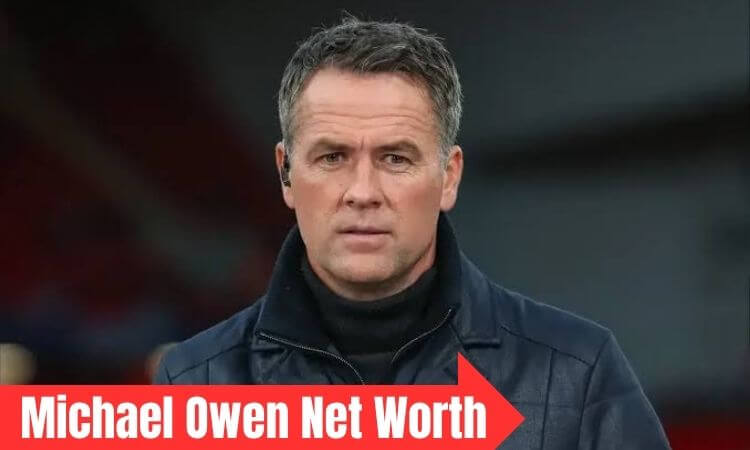
Michael Owen is one of the most recognizable English footballers of his generation. From becoming a teenage sensation at Liverpool to winning the prestigious Ballon d’Or, representing England at three World Cups, playing for Real Madrid and Manchester United, and later building a successful career in horse racing and television, Owen has created a remarkable legacy both on and off the football pitch.
As of 2026, Michael Owen’s estimated net worth is $70 million. His fortune has been built through decades of football salaries, endorsement deals, commercial appearances, publishing, broadcasting, ambassadorial work, property and, perhaps most significantly, his long-term investment in the horse-racing industry through Manor House Stables.
Owen’s financial story is particularly interesting because he became wealthy at an exceptionally young age. By the time he was only 19, his annual income was already estimated at millions of pounds. His success at Liverpool, followed by major transfers to Real Madrid and Newcastle United, gave him access to some of the highest earnings available to professional footballers during his era.
However, football was only one part of Owen’s financial journey. Unlike many former footballers who concentrate almost exclusively on media work after retirement, Owen developed a substantial second career in horse racing. He purchased a former dairy farm in Cheshire at just 24 and transformed it into Manor House Stables, a major commercial racehorse training operation.
His story is therefore not simply about how much he earned as a footballer. It is also about how he converted his sporting success into businesses, investments and income streams that continued after his retirement from professional football.
Michael Owen Net Worth at a Glance
| Category | Details |
| Full Name | Michael James Owen |
| Date of Birth | December 14, 1979 |
| Birthplace | Chester, England |
| Raised In | Hawarden, North Wales |
| Profession | Former Professional Footballer, Broadcaster, Racehorse Owner |
| Estimated Net Worth | $70 Million |
| Major Club | Liverpool |
| Other Major Clubs | Real Madrid, Newcastle United, Manchester United, Stoke City |
| England Career | 89 appearances, 40 goals |
| Premier League Goals | 150 |
| Ballon d’Or | 2001 |
| Major Business | Manor House Stables |
| Retirement | 2013 |
| Wife | Louise Bonsall |
| Children | Four |
The $70 million figure is an estimate based on Owen’s historical football earnings, endorsements, business interests, property and racing investments, as well as his income following retirement. Historical British rich lists had already estimated his fortune at approximately £30 million in 2004 and £40 million in 2009, demonstrating how financially successful he had become well before the end of his playing career.
Who Is Michael Owen?
Michael James Owen was born on December 14, 1979, in Chester, England, and grew up in Hawarden, North Wales. Football was already part of his family life because his father, Leslie Terence “Terry” Owen, had enjoyed a professional football career of his own.
Terry Owen played for several English clubs, including Bradford City, Chester City, Port Vale, Rochdale and Cambridge United. That football background gave Michael an early introduction to the sport and helped create the environment in which his extraordinary natural ability could develop.
Michael quickly established himself as an exceptional young goalscorer. His talent was so obvious that he regularly competed against players older than himself. While representing Deeside Schools, he broke records that had previously been held by legendary Welsh striker Ian Rush.
His scoring record became even more remarkable when he played for Hawarden Rangers. At only 12 years old, Owen scored 116 goals in 40 matches, an astonishing record that demonstrated why professional clubs were beginning to pay close attention to him.
He eventually attended the Football Association’s national school at Lilleshall and joined Liverpool’s youth system. His development there would ultimately launch one of the most successful football careers of his generation.
DO NOT MISS: Suzy Kolber Net Worth: How Much Is the Veteran Sports Broadcaster Worth?
Michael Owen’s Early Football Career
Owen’s professional journey accelerated rapidly during the 1990s.
In 1996, he helped Liverpool win the FA Youth Cup for the first time. The team included future Liverpool star Jamie Carragher, while Owen played a decisive role throughout the competition.
He scored hat tricks against Manchester United and Crystal Palace before finding the net in the second leg of the final against West Ham.
These performances made it increasingly difficult for Liverpool’s senior management to ignore his talent.
Just one year later, Owen was playing first-team football.
Michael Owen’s Liverpool Career
Michael Owen made his Liverpool first-team debut against Wimbledon on May 6, 1997. Coming off the bench, the teenager scored within 16 minutes.
The goal immediately announced that Liverpool had something special on its hands. Owen became the youngest goalscorer in Liverpool history at that time.
His breakthrough became even more significant during the following season when Robbie Fowler was injured. Owen was given an extended opportunity in the first team, and he took full advantage of it.
During the 1997-98 season, he scored 23 goals in all competitions and shared the Premier League Golden Boot.
He won the Golden Boot again the following season, confirming that his initial success was not simply the result of a young player enjoying a brief run of form.
Owen’s explosive acceleration, movement behind defenders and clinical finishing made him one of the most difficult forwards in English football to defend.
The 2000-01 Season
The defining season of Owen’s Liverpool career arrived in 2000-01.
Liverpool enjoyed an extraordinary campaign, winning the League Cup, FA Cup and UEFA Cup. Owen scored 24 goals across all competitions, but his most memorable performance came in the FA Cup final against Arsenal.
Liverpool were trailing 1-0 late in the match when Owen took control.
He scored in the 83rd minute to level the game before finding the net again in the 88th minute. His two late goals transformed a potential defeat into a 2-1 Liverpool victory.
The match became widely associated with Owen and was often referred to as the “Michael Owen Final.”
Liverpool then added the Community Shield and UEFA Super Cup, giving the club five trophies during the calendar year.
Owen’s performances were not limited to club football. He also scored a memorable hat trick for England against Germany.
Those achievements helped him reach the highest individual level in football.
Winning the Ballon d’Or
In 2001, Michael Owen won the Ballon d’Or, becoming the first Liverpool player to receive the prestigious award.
He was only the fourth Englishman to win it after Stanley Matthews, Bobby Charlton and Kevin Keegan.
The achievement remains one of the defining moments of Owen’s career.
Even decades later, he remains the most recent English player to win the Ballon d’Or.
His success also had an enormous financial impact. Winning football’s most prestigious individual award increased his global profile and strengthened his value to sponsors, broadcasters and commercial partners.
YOU MAY LIKE THIS: How much is Jimmy Kimmel Net Worth?
Peak Liverpool Years
Owen continued to score at an exceptional rate.
He recorded 28 goals in both the 2001-02 and 2002-03 seasons, demonstrating the consistency that had become a defining feature of his Liverpool career.
By the time he left Anfield in 2004, Owen had scored 158 goals in 297 appearances.
His Liverpool career had made him one of the biggest football stars in the world and established the financial foundation for the fortune he would later accumulate.
Michael Owen’s Transfer to Real Madrid
In August 2004, Owen made one of the biggest moves of his career when he joined Real Madrid.
Liverpool received approximately £8 million, along with midfielder Antonio Núñez as part of the transaction.
The move placed Owen in one of the most star-studded squads in football history.
His teammates included Ronaldo, Raúl, David Beckham, Zinedine Zidane and Luís Figo.
Playing time, however, was difficult to secure because of the enormous competition for attacking positions.
Despite spending significant time on the bench, Owen remained extremely efficient in front of goal.
During his only season in Spain, he scored 16 goals in 45 competitive appearances, including 13 goals in 36 La Liga matches.
His numbers were impressive considering his limited starting opportunities.
However, Owen wanted more regular playing time, particularly with the 2006 World Cup approaching. After only one season at the Santiago Bernabéu, he returned to England.
Although his Real Madrid spell was short, it enhanced his international reputation and placed him among the elite footballers who had played for one of the world’s most famous clubs.
Michael Owen’s Newcastle United Salary
Owen returned to England in August 2005 when Newcastle United paid approximately £16.5 million for his services.
The transfer broke Newcastle’s club record.
It was also financially significant for Owen.
His contract reportedly provided him with approximately £110,000 per week in base salary, equivalent to roughly £5.7 million per year.
This became one of the highest salaries in English football at the time.
From a financial perspective, his Newcastle contract represented an important stage in the growth of his wealth.
However, his time at Newcastle was heavily affected by injuries.
Injuries at Newcastle
Several serious injuries disrupted Owen’s career at St James’ Park.
He suffered a broken metatarsal several months after joining Newcastle. Later, while representing England at the 2006 World Cup, he suffered a devastating anterior cruciate ligament injury in his right knee.
The injury kept him away from club football for nearly an entire season.
The situation also had financial consequences for Newcastle.
FIFA and the Football Association contributed approximately £50,000 per week toward Owen’s Newcastle salary while he was unable to play.
Newcastle and English football authorities later reached a multimillion-pound compensation arrangement relating to the injury.
Despite his frustrating injury record, Owen still scored 30 goals in 79 appearances for Newcastle.
His contract expired following Newcastle’s relegation from the Premier League in 2009.
Michael Owen at Manchester United
After leaving Newcastle, Owen’s career appeared to be moving into a different phase.
Then Manchester United manager Sir Alex Ferguson unexpectedly offered him a contract in the summer of 2009.
Owen joined Manchester United as a free agent.
Financially, the move was very different from his Newcastle contract. He accepted a significant reduction from the approximately £110,000-per-week salary he had been receiving at Newcastle.
However, his Manchester United agreement reportedly included substantial appearance and scoring incentives.
One of the most memorable moments of his Manchester United career came in September 2009.
United were facing Manchester City in a dramatic derby match. With the score tied 3-3, Owen scored deep into stoppage time to give Manchester United a dramatic 4-3 victory.
The goal became one of the most memorable late winners in the history of the Manchester derby.
Owen also scored in the 2010 League Cup final victory over Aston Villa.
Perhaps more importantly, he finally won a Premier League championship medal when Manchester United captured the 2010-11 title.
Although injuries and limited playing time prevented him from returning to his Liverpool-era form, his Manchester United spell gave him another major trophy before the final stage of his career.
Stoke City and Retirement
After three seasons at Old Trafford, Owen joined Stoke City for the 2012-13 season.
By that point, persistent injuries had taken a considerable toll on his career.
His role at Stoke was limited, and in 2013 Owen announced his retirement from professional football.
He finished his Premier League career with 150 goals in 326 appearances.
Owen remains among the relatively small number of players to reach 150 Premier League goals.
He was also the youngest player ever to reach 100 goals in the competition.
His retirement ended a career that had included Liverpool, Real Madrid, Newcastle United, Manchester United and Stoke City, as well as international football with England.
Michael Owen’s England Career
Owen’s international career was almost as remarkable as his club career.
He made his England senior debut against Chile in February 1998 at only 18 years old.
A few months later, he became England’s youngest goalscorer at the time when he scored against Morocco.
Then came the 1998 World Cup.
The 1998 World Cup
Owen became the youngest England player to score at a World Cup when he scored against Romania at the age of 18 years and 190 days.
But it was his goal against Argentina that transformed him into a global superstar.
Owen collected the ball near midfield and immediately accelerated through the Argentine defense.
He raced past defenders before finishing past goalkeeper Carlos Roa.
The goal showcased almost every quality that made Owen famous: speed, confidence, movement, acceleration and clinical finishing.
England ultimately lost the match on penalties, but Owen returned from the tournament as one of world football’s most exciting young stars.
The performance also helped increase his commercial appeal.
England’s Famous Victory Over Germany
Owen’s international reputation grew further in 2001 when England defeated Germany 5-1 in Munich during World Cup qualifying.
Owen scored a hat trick in one of the most famous victories in English football history.
His international career included appearances at the 1998, 2002 and 2006 World Cups.
Unfortunately, the 2006 tournament ended almost immediately for Owen after his serious knee injury against Sweden.
He finished his England career with 40 goals in 89 appearances, placing him among the country’s highest-scoring players.
How Did Michael Owen Build His $70 Million Net Worth?
Michael Owen’s estimated $70 million fortune did not come from a single source.
His wealth developed through several decades of high-level football earnings, endorsements, commercial work, publishing, investments and business ownership.
The major components include:
- Professional football salaries
- Transfer-related financial opportunities
- Endorsements
- Publishing deals
- Television and broadcasting
- Ambassadorial work
- Horse racing
- Manor House Stables
- Property and other assets
- Commercial appearances
His early success was especially important because he reached the highest levels of football while still a teenager.
Michael Owen’s Early Earnings
Owen became wealthy extraordinarily early.
In 1999, when he was only 19 years old, his annual income was estimated at approximately £2.9 million.
Around £2 million of that figure came from Liverpool.
The remainder came from other commercial opportunities, including a seven-figure publishing agreement and endorsement relationships.
His sponsors included major brands such as Umbro, Jaguar, Tissot and Walkers Crisps.
At an age when most people were only beginning their careers, Owen was already earning millions.
This early financial success gave him the opportunity to invest and build wealth well beyond his football salary.
Historical Estimates of Michael Owen’s Wealth
Owen’s fortune was already substantial long before his retirement.
In 2004, a British football rich list estimated his personal fortune at approximately £30 million.
By 2009, FourFourTwo estimated his wealth at approximately £40 million, placing him second among active British footballers behind David Beckham.
These historical estimates are significant when considering his current estimated $70 million net worth.
They show that Owen had already accumulated considerable wealth during his playing career and before his later business activities fully developed.
Michael Owen’s Newcastle Earnings
His Newcastle contract was one of the most financially lucrative periods of his football career.
With a reported base salary of around £110,000 per week, four years at that rate would represent more than £20 million in gross base wages before bonuses.
Of course, gross salary is not the same as personal wealth. Taxes, expenses, agents, lifestyle costs and other financial commitments reduce the amount an athlete ultimately retains.
Nevertheless, contracts at this level provided Owen with substantial earning power.
His income from Manchester United and Stoke City, combined with his previous salaries, endorsements and other commercial activities, added further to his lifetime football earnings.
Michael Owen’s Endorsement Deals
Owen’s commercial appeal was particularly strong during the late 1990s and early 2000s.
His rise to global fame coincided with the growing commercialization of football.
His international reputation, Ballon d’Or victory and performances for Liverpool and England made him an attractive figure for major brands.
His reported relationships with Umbro, Jaguar, Tissot and Walkers Crisps provided income beyond his football contracts.
For a young footballer, endorsement opportunities could be extremely valuable because they offered another source of revenue without requiring additional matches or playing time.
Owen’s global visibility meant that his earning potential was not restricted to his club salary.
Michael Owen and Manor House Stables
Perhaps the most interesting part of Michael Owen’s financial story is his involvement in horse racing.
Horse racing was not something Owen discovered after football.
He had already developed an interest in the sport during his playing career.
At just 24 years old, he purchased a former dairy farm in Cheshire with the goal of transforming it into a commercial racehorse training operation.
The property eventually became known as Manor House Stables.
Owen invested heavily in the facility, turning it into a sophisticated training operation.
By 2009, he had invested at least £4 million in developing the site.
Over time, Manor House Stables expanded into a 170-acre operation featuring extensive gallops, veterinary facilities, an equine swimming pool, horse walkers, barns and more than 130 stalls.
This was far more than a celebrity hobby.
It became a serious commercial business.
Owen’s Partnership at Manor House Stables
Owen initially developed Manor House Stables with Betfair co-founder Andrew Black.
Their partnership helped establish the operation as a major presence in the horse-racing world.
In 2022, Owen bought Black out of the business and became the principal owner.
Trainer Hugo Palmer later relocated his operation from Newmarket to Manor House.
That move helped increase the scale of the operation, with the stable eventually accommodating close to 150 horses.
The business attracts outside horse owners, partnerships, syndicates and corporate sponsors.
Companies House records also identify Owen as the controlling shareholder of Manor House Stables Cheshire Limited.
This makes the racing operation an important part of Owen’s financial portfolio.
Brown Panther: Michael Owen’s Famous Racehorse
The most famous horse associated with Owen’s racing career was Brown Panther.
Owen bred Brown Panther himself.
The horse went on to achieve considerable success, winning at Royal Ascot, the Irish St Leger and Dubai Gold Cup.
Brown Panther earned more than £1.1 million in prize money.
The horse’s success provided Owen with both sporting recognition and another connection between his two great passions: football and horse racing.
Sadly, Brown Panther suffered a fatal injury in 2015.
The horse nevertheless remains an important part of the history of Owen’s racing operation.
Why Manor House Stables Matters to Michael Owen’s Net Worth
Manor House Stables is particularly important because it represents an asset and business beyond football.
Many footballers generate enormous incomes during their playing careers but depend heavily on investments, media appearances or sponsorships after retirement.
Owen began developing a serious business while he was still an active player.
That decision gave him a potential long-term source of income and helped diversify his financial interests.
The stable also allows him to remain involved in professional sport after retiring from football.
It is therefore both a business investment and an extension of Owen’s sporting career.
Michael Owen’s Broadcasting Career
Retirement did not mean the end of Owen’s professional involvement in football.
He transitioned into broadcasting and became a regular football analyst and commentator.
He has worked extensively on television coverage involving the Premier League, Champions League and other major competitions.
He has also continued appearing as a pundit for TNT Sports.
Broadcasting provides Owen with another source of income while allowing him to use his experience as a former elite footballer.
His firsthand knowledge of playing at the highest level gives him a perspective that is valuable to football audiences.
Michael Owen as a Liverpool Ambassador
Owen’s relationship with Liverpool also continued after his retirement.
In 2016, Liverpool appointed him as the club’s first official international ambassador.
The role involved appearances at supporter and commercial events around the world.
For a player who had scored 158 goals for Liverpool and won the Ballon d’Or while representing the club, the ambassadorial position was a natural extension of his public profile.
It also provided another professional opportunity after his playing career.
Michael Owen’s Books
Owen has also generated income through publishing.
His first autobiography, “Off the Record,” was published in 2004.
He later released the memoir “Reboot: My Life, My Time” in 2019.
Books allowed Owen to tell his story directly, covering his experiences as a teenage football sensation, his time at Liverpool and Real Madrid, his injuries, England career and life after professional football.
Publishing has therefore been another part of his post-playing career and overall income portfolio.
Michael Owen’s Personal Life
Michael Owen married his childhood sweetheart, Louise Bonsall, in 2005.
The couple have four children: Gemma, James, Emily and Jessica.
The family has lived for many years on a large estate in North Wales, close to the region where Owen grew up.
Despite becoming a global football star, Owen maintained strong ties to the area where his career began.
His personal life has also remained closely connected to his two major interests: football and horse racing.
Michael Owen’s Daughter Gemma Owen
Owen’s eldest daughter, Gemma Owen, developed a career of her own in the equestrian world.
She became an international dressage rider and business owner before reaching a much wider audience in 2022 as a contestant on the British reality series “Love Island.”
Gemma and Luca Bish finished as runners-up during that season.
Her involvement in dressage also reflects the family’s broader connection with horse racing and equestrian sports.
Michael Owen’s Legacy in Football
Owen’s football career was unusually successful considering how early it began.
He was a teenage sensation at Liverpool, a World Cup star at 18, a Ballon d’Or winner at 21 and a Premier League champion with Manchester United later in his career.
He played for some of the biggest clubs in European football, including:
- Liverpool
- Real Madrid
- Newcastle United
- Manchester United
- Stoke City
His career also included memorable international moments with England.
His goal against Argentina in the 1998 World Cup remains one of the most iconic moments of his career, while his hat trick against Germany in 2001 became part of English football history.
His 150 Premier League goals place him among the competition’s most prolific scorers.
Michael Owen’s Career Statistics
Owen’s numbers demonstrate why he was able to build such a valuable career.
For Liverpool, he scored 158 goals in 297 appearances.
For Newcastle United, he scored 30 goals in 79 appearances.
At Real Madrid, he scored 16 goals in 45 competitive appearances, including 13 in La Liga.
For England, he scored 40 goals in 89 appearances.
Across his Premier League career, he finished with 150 goals in 326 appearances.
The numbers are particularly impressive given the serious injuries that affected the second half of his career.
The Impact of Injuries on Michael Owen’s Career
Injuries became one of the defining themes of Owen’s later playing years.
His early career had been characterized by explosive speed.
Unfortunately, the physical demands associated with that style of play eventually took a toll.
The metatarsal injury he suffered at Newcastle was followed by the severe knee injury he sustained during the 2006 World Cup.
His anterior cruciate ligament injury significantly interrupted his career.
Further injuries continued to affect him during his later years at Newcastle, Manchester United and Stoke City.
Although injuries limited his appearances, Owen had already achieved enough during his early years to establish himself as one of England’s most successful strikers.
How Michael Owen’s Career Changed After Retirement
Owen retired from professional football in 2013.
At that point, he already had substantial wealth and an international reputation.
Rather than simply stepping away from professional life, he developed several new roles.
His post-retirement activities included:
- Television punditry
- Football commentary
- Club ambassador work
- Publishing
- Horse racing
- Racehorse ownership
- Management and development of Manor House Stables
- Commercial appearances
This diversification is one of the reasons his financial story extends well beyond his football salary.
Michael Owen’s Business Strategy
Owen’s approach to life after football illustrates the value of diversification.
His football career provided the initial capital.
Instead of relying exclusively on the income associated with his celebrity status, he invested heavily in a business connected to another long-term passion.
Manor House Stables became an established training operation rather than simply a private collection of horses.
At the same time, Owen maintained his connection to football through television and ambassadorial roles.
This created multiple professional channels after retirement.
His career therefore developed from footballer to businessman, broadcaster, author and racehorse owner.
Michael Owen’s Property and Assets
Property and physical assets have also contributed to Owen’s overall wealth.
His investment in the former dairy farm that became Manor House Stables represents one of the most important examples.
The transformation of that property into a 170-acre professional racing operation required substantial investment.
The facility includes training grounds, veterinary facilities, an equine swimming pool, horse walkers, barns and extensive stabling.
Owen has also lived on a large estate in North Wales with his family.
Because private property values and personal asset portfolios are not fully disclosed publicly, the precise contribution of these assets to his $70 million net worth cannot be independently calculated from the available information.
That is why net worth figures should be understood as estimates rather than exact balances.
Is Michael Owen Still Rich After Retirement?
Yes. Based on the available estimate, Michael Owen’s net worth is approximately $70 million.
Importantly, his wealth is not solely the result of his current broadcasting income.
The foundation was established during his football career, when he earned millions from club salaries and commercial deals.
His later investments, particularly Manor House Stables, helped diversify his wealth.
He has also continued earning through television, ambassadorial appearances, books and other commercial activities.
His financial position therefore reflects several decades of accumulated earnings and investments.
Michael Owen Net Worth Compared With His Early Career
One of the most interesting aspects of Owen’s financial story is how early his wealth accumulated.
At 19, his annual income was already estimated at £2.9 million.
By 2004, his fortune was estimated at £30 million.
By 2009, the estimate had risen to £40 million.
His current estimated net worth of $70 million reflects not only his football earnings but also the value of his later business interests and assets.
The figures also demonstrate how the commercial side of elite football changed during Owen’s career.
A player who became internationally famous at 18 was able to turn sporting success into sponsorships, publishing opportunities and high-value contracts.
FAQS
What Is Michael Owen’s Net Worth?
Michael Owen’s estimated net worth is $70 million. His wealth comes from his football career, endorsements, broadcasting, publishing, ambassadorial work, horse racing and business investments.
How Did Michael Owen Become Rich?
Owen became wealthy primarily through his professional football career. He earned substantial salaries at Liverpool, Newcastle United, Manchester United and other clubs while also benefiting from endorsements and publishing agreements. After retirement, he continued earning through broadcasting, commercial work and horse racing.
How Much Did Michael Owen Earn at Newcastle?
Owen reportedly earned approximately £110,000 per week in base salary at Newcastle United, equivalent to around £5.7 million per year before bonuses.
How Many Goals Did Michael Owen Score for Liverpool?
Michael Owen scored 158 goals in 297 appearances for Liverpool before leaving the club in 2004.
Did Michael Owen Win the Ballon d’Or?
Yes. Owen won the 2001 Ballon d’Or. He became the first Liverpool player to win the award and the fourth Englishman to receive it.
How Many Goals Did Michael Owen Score for England?
Owen scored 40 goals in 89 appearances for England.
How Many Premier League Goals Did Michael Owen Score?
Michael Owen scored 150 goals in 326 Premier League appearances.
What Clubs Did Michael Owen Play For?
During his professional career, Owen played for Liverpool, Real Madrid, Newcastle United, Manchester United and Stoke City.
When Did Michael Owen Retire?
Owen retired from professional football in 2013 after his final season with Stoke City.
What Is Manor House Stables?
Manor House Stables is Michael Owen’s racehorse training operation in Cheshire. He purchased a former dairy farm at the age of 24 and developed it into a major 170-acre commercial training facility.
Does Michael Owen Own Racehorses?
Yes. Owen has been involved in racehorse ownership and breeding for many years. One of the most famous horses associated with him was Brown Panther, which won major races including the Irish St Leger and Dubai Gold Cup.
How Much Did Brown Panther Earn?
Brown Panther earned more than £1.1 million in prize money during its racing career.
Is Michael Owen Still Involved in Football?
Yes. Although retired as a player, Owen has continued working in football as a television analyst, commentator and ambassador. Liverpool appointed him as its first official international ambassador in 2016.
Does Michael Owen Work in Television?
Yes. Owen has worked as a football analyst and commentator, including television coverage of major competitions. He has also continued appearing as a pundit for TNT Sports.
Does Michael Owen Own a Business?
Yes. One of his most significant business interests is Manor House Stables, a commercial racehorse training operation in Cheshire.
What Is Michael Owen’s Most Famous Goal?
His goal against Argentina during the 1998 World Cup is widely regarded as his signature international goal. Owen accelerated through the Argentine defense before scoring in one of the tournament’s most memorable moments.
What Was Michael Owen’s Biggest Football Achievement?
Winning the 2001 Ballon d’Or is arguably Owen’s most significant individual achievement. He also won multiple trophies with Liverpool and later became a Premier League champion with Manchester United.
Conclusion
Michael Owen’s estimated $70 million net worth reflects much more than the success of a former footballer.
His story began with extraordinary talent.
As a child in North Wales, Owen was already scoring at an extraordinary rate. At 12, he scored 116 goals in 40 matches for Hawarden Rangers. A few years later, he was starring for Liverpool’s youth team.
By 17, he had broken into Liverpool’s first team.
By 18, he was an England and World Cup star.
By 21, he had won the Ballon d’Or.
Those achievements created the foundation for an enormously successful financial career. His Liverpool salary, endorsements, publishing agreement and international fame made him a millionaire while he was still extremely young.
His later contracts, particularly the lucrative Newcastle agreement, increased his lifetime earnings considerably. Although injuries interrupted his career, Owen still finished with 150 Premier League goals and 40 goals for England.
But perhaps the most important decision for his long-term financial future came away from football.
At only 24, Owen purchased a former dairy farm and began transforming it into Manor House Stables. The operation eventually became a major 170-acre racehorse training facility. His involvement in horse racing developed into a serious business, giving him a professional identity beyond football.
Following his retirement in 2013, he continued working in broadcasting, publishing and ambassadorial roles while remaining deeply involved in horse racing.
That combination of football earnings, commercial partnerships, business investments and post-retirement work explains how Owen was able to build and maintain an estimated fortune of $70 million.
His financial journey is ultimately a story of turning early sporting success into long-term opportunities.
Michael Owen may have retired from professional football more than a decade ago, but the businesses and professional relationships he developed during and after his playing career have allowed him to remain a prominent figure in British sport.
From the teenage striker who stunned the world at the 1998 World Cup to the Ballon d’Or winner, Premier League champion, television pundit and racehorse owner, Owen’s career demonstrates how an elite athlete can build a lasting financial legacy long after leaving the football pitch.