
Table of Contents
How much is Don King Net Worth?
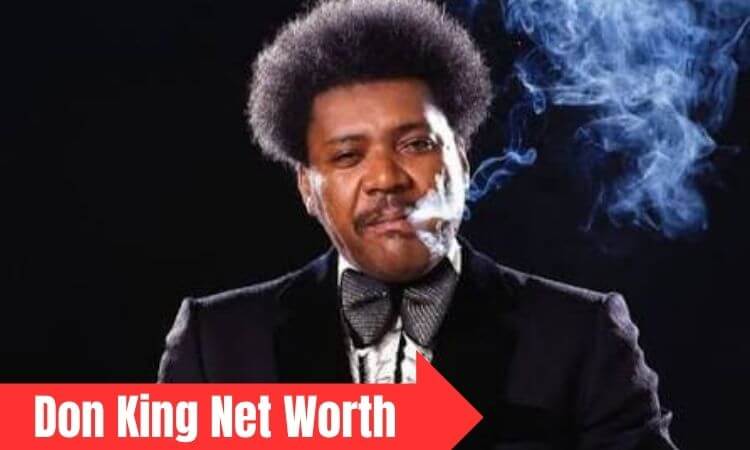
Don King Net Worth: $200 Million
Full Name: Donald King
Date of Birth: August 20, 1931
Age: 95 (as of 2026)
Birthplace: Cleveland, Ohio, United States
Nationality: American
Profession: Boxing Promoter, Businessman
Company: Don King Productions
Wife: Henrietta King (died in 2010)
Children: Eric, Debbie, and Carl
Famous For: Promoting the Rumble in the Jungle and Thrilla in Manila
What Is Don King’s Net Worth?
Don King is an American boxing promoter and businessman who has an estimated net worth of $200 million. He is widely recognized as one of the most influential and controversial promoters in the history of professional boxing. Over several decades, King transformed his ability to organize major sporting events into a powerful promotional business that generated enormous revenue through championship fights, television broadcasting agreements, casino partnerships, sponsorships, and pay-per-view sales.
Born Donald King on August 20, 1931, in Cleveland, Ohio, he did not initially have a connection to professional sports. Before entering boxing, he operated an illegal gambling business and experienced serious legal difficulties. After spending nearly four years in prison for a manslaughter conviction, he began rebuilding his life and eventually found an opportunity in boxing promotion.
His major breakthrough came in 1974 when he organized Muhammad Ali’s legendary fight against George Foreman in Zaire, now the Democratic Republic of the Congo. Known as the Rumble in the Jungle, the event became one of the most memorable sporting spectacles of the 20th century. King followed that achievement by promoting the famous Ali-Frazier fight in the Philippines, marketed as the Thrilla in Manila.
During the following decades, King worked with some of the biggest names in boxing, including Mike Tyson, Larry Holmes, Evander Holyfield, Roberto Durán, Julio César Chávez, Félix Trinidad, and Roy Jones Jr. His promotional company, Don King Productions, became one of the most recognizable businesses in the sport.
At the height of his career, King’s financial success was extraordinary. Forbes valued his personal fortune at $350 million in 2006, equivalent to approximately $585 million in today’s dollars. According to the magazine, he had generated more than $1 billion in cumulative boxing revenue over his promotional career. His personal annual income reportedly reached $70 million in 1996, during the highly profitable Mike Tyson era.
However, King’s financial history also includes expensive lawsuits, settlements with former fighters, declining promotional activity, and complicated real estate investments. Although his business empire is no longer as powerful as it was during its peak, his investments in property, media, and boxing-related intellectual property have remained important parts of his financial story.
His estimated $200 million net worth in 2026 reflects a career that combined remarkable commercial achievements with significant financial and legal complications.
Early Life and Background
Donald King was born on August 20, 1931, in Cleveland, Ohio. He grew up in a working-class family and attended John Adams High School. Although he later enrolled at Kent State University, his time in college was relatively short. King eventually left university and became involved in Cleveland’s underground gambling business.
During his early adulthood, he operated a numbers business, an illegal lottery operation that generated money through betting. His business was based in the basement of a record store and gradually became an important part of his financial activities.
King developed a reputation in Cleveland’s gambling community and became involved in illegal bookmaking. These activities provided him with income and local influence, but they also exposed him to dangerous confrontations and serious criminal consequences.
Long before he became one of America’s most recognizable boxing promoters, King was involved in two incidents in which men lost their lives. One was ruled justifiable homicide, while the other resulted in a criminal conviction.
His early experiences became an important part of his personal history and later public image. They also demonstrate how different his life was before he entered the world of professional boxing.
DO NOT MISS: How much is Daniel Negreanu Net Worth?
Criminal Conviction and Time in Prison
One of the most difficult periods in Don King’s life occurred before his career in boxing began.
In December 1954, King shot and killed Hillary Brown during an attempted robbery at one of his gambling establishments in Cleveland. Authorities determined that King had acted in self-defense, and the incident was classified as a justifiable homicide. He was not convicted of a crime in connection with Brown’s death.
A second incident occurred in April 1966. King confronted Sam Garrett, a former employee who reportedly owed him $600, outside a bar in Cleveland. During the confrontation, King beat and kicked Garrett. The injuries proved fatal.
King claimed that he had acted in self-defense, but witnesses described the incident as a violent assault. He was subsequently convicted of second-degree murder in 1967.
His conviction was later reduced to manslaughter. King served just under four years in an Ohio prison before being released in 1971.
Although his imprisonment interrupted his previous activities, King used the time to educate himself. He spent considerable time reading books about literature, philosophy, history, and other subjects. He also worked on his public speaking skills.
His reading habits eventually influenced the way he communicated with the public. King became famous for his dramatic speeches, elaborate vocabulary, historical quotations, and ability to attract attention during press conferences.
In January 1983, Ohio Governor James Rhodes granted King a full pardon. The decision followed recommendations from the state’s parole board and support letters from several prominent individuals, including Jesse Jackson, Coretta Scott King, Cleveland Mayor George Voinovich, and Cleveland Browns owner Art Modell.
King’s criminal history remained a controversial part of his biography, but his release from prison marked the beginning of a different professional direction.
How Don King Started His Boxing Career
After leaving prison in 1971, King began searching for opportunities outside the gambling business. His entry into professional boxing was not immediate, but he recognized the financial and promotional possibilities of the sport.
In 1972, he helped organize a charity boxing exhibition featuring Muhammad Ali. The event was designed to raise money for a Cleveland hospital and introduced King to the business of organizing major boxing attractions.
Working with a famous athlete such as Ali gave King valuable experience in attracting attention, negotiating arrangements, and dealing with sponsors. It also helped him understand how boxing could become a major commercial event rather than simply a sporting contest.
King subsequently partnered with experienced Cleveland boxing promoter Don Elbaum. Elbaum helped him learn about arranging fights, working with managers, negotiating contracts, and dealing with athletic commissions.
This relationship was important because boxing promotion required more than publicity. A successful promoter needed to coordinate fighters, venues, television companies, sponsors, financial guarantees, and government authorities.
King quickly developed an understanding of these different responsibilities. He recognized that the biggest fights could attract enormous audiences and that international organizations, casinos, and television networks were willing to invest heavily in events featuring popular champions.
His first major opportunity arrived in 1974, when he secured the promotional rights to the heavyweight championship fight between Muhammad Ali and George Foreman.
That event changed his career and established the foundation for his future fortune.
The Rumble in the Jungle: Don King’s Biggest Breakthrough
Don King’s career reached a new level in 1974 when he organized the heavyweight championship fight between Muhammad Ali and George Foreman.
At the time, Foreman was an undefeated heavyweight champion and one of the most feared fighters in boxing. Ali, meanwhile, was already an international sporting icon and was determined to regain the heavyweight championship.
King offered both fighters a purse of $5 million each. The combined $10 million prize was unprecedented for a boxing match at the time.
The challenge was that King initially secured the fighters’ commitments without having the money necessary to guarantee their purses. Rather than abandoning the project, he approached the government of Zaire, led by President Mobutu Sese Seko.
King successfully persuaded the government to finance the event in exchange for hosting the fight.
The championship contest took place in Kinshasa on October 30, 1974. It became known as the Rumble in the Jungle and attracted worldwide attention.
Muhammad Ali defeated George Foreman through an eighth-round knockout. Ali used his famous rope-a-dope strategy, allowing Foreman to expend energy while defending himself against the younger champion’s attacks.
The victory became one of the most celebrated moments in boxing history.
For King, the event was equally important from a business perspective. It demonstrated that he could negotiate with governments, secure substantial financial backing, attract international audiences, and organize championship events on a global scale.
The Rumble in the Jungle established his reputation as a major boxing promoter and opened the door to even bigger opportunities.
It also demonstrated the business model that would later make him wealthy: securing major fights, negotiating large financial guarantees, and generating revenue from multiple commercial partners.
The Thrilla in Manila and the Expansion of His Boxing Empire
Following the success of the Rumble in the Jungle, King continued expanding his promotional business.
In March 1975, he promoted Muhammad Ali’s fight against Chuck Wepner. Wepner was considered an underdog, but his determined performance attracted considerable attention.
The fight later became famous for inspiring Sylvester Stallone’s screenplay for the movie Rocky.
King’s next major achievement came later in 1975 when he organized the third and final fight between Muhammad Ali and Joe Frazier.
The October 1975 championship contest took place in the Philippines and was promoted under the name Thrilla in Manila.
The fight lasted 14 rounds and became one of the most physically demanding heavyweight contests in boxing history. Frazier’s corner eventually stopped the fight, giving Ali the victory.
The event further strengthened King’s international reputation.
He understood that successful boxing promotion involved creating a story around a fight. A championship contest became more attractive when audiences understood the rivalry, personalities, history, and stakes involved.
King also knew how to bring together governments, casinos, television networks, and corporate sponsors. Instead of depending on ticket sales alone, he negotiated financial guarantees and international broadcasting rights.
This approach helped increase the amount of money available to fighters and promoters.
Throughout the late 1970s, 1980s, and 1990s, King promoted fights involving some of the most recognizable names in boxing, including:
- Muhammad Ali
- Joe Frazier
- George Foreman
- Larry Holmes
- Roberto Durán
- Wilfred Benítez
- Alexis Argüello
- Salvador Sánchez
- Julio César Chávez
- Félix Trinidad
- Evander Holyfield
- Roy Jones Jr.
His company became a major force in professional boxing, and his influence extended across multiple generations of champions.
King also developed a recognizable public personality. He frequently appeared at boxing events waving miniature American flags and shouting his famous catchphrase, “Only in America!”
His appearance, speeches, and promotional style became almost as recognizable as the fighters he represented.
How Don King Built His $350 Million Boxing Fortune
Don King’s financial success came from his ability to turn major boxing matches into highly profitable commercial events. Unlike professional fighters, who earn money by competing inside the ring, King generated wealth by negotiating promotional agreements, securing broadcasting rights, arranging sponsorships, and managing relationships between fighters and major business organizations.
His company, Don King Productions, became an important part of the professional boxing industry. Through the company, King organized championship contests, negotiated contracts, and developed relationships with television networks and casino operators.
In April 2006, Forbes published an extensive investigation into King’s business empire titled “The King and His Sport, at Twilight.”
The magazine valued his personal net worth at approximately $350 million. Adjusted for inflation, that amount would be equivalent to approximately $585 million in 2026 dollars.
The report provided several important details about the size of King’s business.
According to Forbes:
- King had promoted at least 600 championship fights over 33 years.
- His promotional activities had generated more than $1 billion in cumulative boxing revenue.
- His company had produced seven of the ten largest pay-per-view events in boxing history at that time.
- He represented 113 fighters from 27 countries.
- His personal annual income reportedly reached $70 million in 1996.
These figures illustrate the scale of his business during boxing’s most commercially successful period.
However, it is important to distinguish between the total revenue generated by Don King Productions and King’s personal wealth. The company handled large sums of money, but those amounts were not necessarily personal income. Fighters, managers, television networks, casinos, venues, and other business partners also received payments.
King’s personal fortune was built through his promotional earnings, business ownership, investments, and accumulated assets.
His Record-Breaking Annual Income
One of the most remarkable details about King’s financial history was his reported income in 1996.
According to Forbes, his personal annual income reached approximately $70 million that year. This was during the period when Mike Tyson’s fights were attracting enormous audiences and generating substantial revenue through television and casino agreements.
King also discussed his tax payments publicly. He claimed that he had paid $30 million in federal income taxes during 1996 and even issued a press release celebrating the payment.
The figure demonstrates how profitable his business had become.
King was not simply earning money from individual boxing promotions. His arrangements allowed him to participate in different parts of the commercial structure surrounding major fights.
A single championship event could generate revenue through television distribution, pay-per-view purchases, casino hosting agreements, sponsorships, ticket sales, and promotional contracts.
By bringing these different sources together, King developed a business model that helped make him one of the highest-earning figures in professional sports.
His Famous $70 Million Checking Account
King’s relationship with money was another subject discussed in the Forbes investigation.
He told the magazine that he had once maintained as much as $70 million in a checking account.
He also described paying $5 million in cash for a private airplane. Following major boxing events, he reportedly preferred having casinos convert multimillion-dollar checks into physical currency.
These details reflected his unusual approach to handling money and his preference for having substantial amounts of cash available.
His earnings helped finance investments in commercial real estate, luxury residences, an Ohio ranch, newspaper ownership, and boxing-related intellectual property.
King also accumulated valuable promotional contracts and other business assets through Don King Productions.
Although his financial position changed over the following years, the 2006 Forbes valuation remains an important reference point when examining the size of his fortune during his most successful period.
Mike Tyson and the Millions Generated by Their Partnership
One of the most financially important relationships in Don King’s career was his partnership with heavyweight champion Mike Tyson.
Tyson became one of the biggest attractions in professional boxing during the 1980s. His aggressive fighting style, knockout power, and growing celebrity made him a major commercial attraction.
King began promoting Tyson during the late 1980s, and their relationship became especially profitable after Tyson was released from prison in March 1995.
King recognized the enormous commercial possibilities surrounding Tyson’s return to boxing. He negotiated major agreements with Showtime and the MGM Grand in Las Vegas that created substantial financial opportunities for Don King Productions.
The $43 Million Showtime Agreement
In March 1995, Showtime secured distribution rights to Tyson’s fights over a three-year period intended to include ten bouts.
The agreement included a $43 million signing bonus payable to Don King Productions.
This was a significant commercial arrangement because it provided the promotional company with a substantial payment connected to Tyson’s return and future fights.
The agreement demonstrated how much value Tyson generated for the boxing industry.
Television networks wanted access to his fights because audiences were interested in watching one of the sport’s biggest personalities. His popularity helped make championship events attractive to broadcasters and pay-per-view customers.
For King, the agreement was an opportunity to earn substantial promotional revenue while strengthening his relationship with one of the most commercially valuable fighters in the world.
The MGM Grand Agreement
King also negotiated a separate agreement with the MGM Grand in Las Vegas.
The arrangement covered exclusive hosting rights for six Tyson fights and included several financial components:
- A $15 million working-capital advance.
- A $15 million stock purchase.
- A guarantee that the MGM shares would eventually be worth at least $30 million.
The agreement was particularly valuable for Don King Productions because it involved both financial advances and an investment in MGM stock.
As part of the deal, King’s promotional company acquired 618,557 MGM shares.
Following Tyson’s disqualification against Evander Holyfield in 1997, the MGM agreement was terminated. The shares were subsequently sold for $27.5 million.
MGM recovered its $15 million advance, while the remaining $12.5 million went to Don King Productions.
The Showtime and MGM agreements covered overlapping events rather than sixteen completely separate fights. Their structure allowed King to generate substantial commercial value from television rights, casino guarantees, signing bonuses, and individual fight arrangements.
How Much Did Don King Earn From Mike Tyson?
King’s financial arrangement with Tyson was more complicated than a conventional promoter-fighter agreement.
Under the Team Tyson arrangement, King received 30% of Tyson’s fight purses. Managers John Horne and Rory Holloway each received 10%.
Tyson was also entitled to 50% of certain signing bonuses and promotional proceeds controlled by King’s operation.
These arrangements meant that significant portions of the financial proceeds could be allocated to the promoter and managers before taxes and other expenses.
A 1998 Associated Press investigation reported that Tyson’s share of the purses and related Showtime and MGM contracts from six post-prison fights totaled approximately $106 million. King and Tyson’s managers collected tens of millions more.
The relationship was enormously profitable for the people involved, but it eventually became one of the most controversial partnerships in boxing.
Tyson accused King of imposing additional charges and improperly diverting money from his earnings. He ultimately filed a $100 million lawsuit against his former promoter in 1998.
The lawsuit was settled in 2004 for $14 million.
Because Tyson had filed for bankruptcy in 2003, the settlement proceeds went toward satisfying his creditors rather than creating a new personal financial windfall.
Despite the dispute, Tyson’s commercial success remains an important part of King’s financial history. The agreements surrounding the heavyweight champion demonstrated King’s ability to negotiate large deals involving television companies and major casino operators.
Don King’s Lawsuits, Settlements, and Legal Expenses
Although Don King earned enormous amounts of money through boxing promotion, his business career was also marked by repeated legal disputes.
Several famous fighters accused him of withholding earnings, charging excessive fees, making unauthorized deductions, or failing to honor contractual arrangements.
These disputes resulted in lawsuits, settlements, and substantial legal expenses.
The financial consequences were significant because legal costs could reduce the money available from an otherwise profitable business.
King consistently disputed allegations that he systematically exploited fighters. He maintained that his promotional work helped boxers earn substantially more money than they could have earned without his involvement.
Nevertheless, lawsuits involving several major champions became a defining part of his professional reputation.
Muhammad Ali’s Lawsuit
Muhammad Ali was one of the most important fighters in King’s early promotional career.
However, their business relationship eventually became the subject of a financial dispute.
In 1982, Ali sued King over more than $1 million that he claimed had been withheld following his 1980 fight against Larry Holmes.
Ali alleged that he had received considerably less than the $8 million purse he had been promised.
The dispute eventually ended after King arranged for Ali to receive $50,000 in exchange for signing away his claims.
The settlement later attracted criticism because Ali was reportedly in poor health at the time. People close to the former heavyweight champion questioned the circumstances under which the agreement had been reached.
The dispute demonstrated that even King’s most famous professional relationships could become complicated by financial disagreements.
Larry Holmes’ Financial Dispute
Former heavyweight champion Larry Holmes also accused King of taking money improperly from his fight earnings.
Holmes alleged that King had charged undisclosed management fees and made inappropriate deductions from purses connected to several major fights.
One of their disputes involved a $300,000 fee that King deducted from Holmes’s earnings for his 1988 fight against Mike Tyson.
Holmes eventually settled a lawsuit against King for $150,000.
The settlement also included restrictions on publicly criticizing the former promoter.
Although the financial amount was relatively small compared with the enormous purses generated during the Tyson era, the dispute contributed to King’s reputation for contentious business relationships.
Tim Witherspoon’s $25 Million Lawsuit
Former heavyweight champion Tim Witherspoon brought one of the most detailed legal challenges against King and his business associates.
Witherspoon claimed that promotional fees and expenses consumed such a large portion of the money generated by his fights that he sometimes received less than 20% of the total income.
One of the examples involved his 1986 title defense against Frank Bruno.
HBO reportedly paid King $1.7 million for the event, while Witherspoon’s contracted purse was $500,000.
After various deductions, Witherspoon claimed that he received only $90,000.
His allegations also involved payments to King’s son Carl and charges connected to training facilities and other services.
In 1987, Witherspoon sued King for more than $25 million.
The case eventually settled outside court for $1 million.
The dispute became an important example of the financial disagreements that could arise between boxing promoters and the athletes whose performances generated the revenue.
Terry Norris’ $7.5 Million Settlement
Former world champion Terry Norris also took legal action against King.
In 1996, Norris sued the promoter, accusing him of improperly taking money from his fight earnings and conspiring with his manager to underpay him.
The dispute continued for several years before reaching a settlement in 2003.
King agreed to a $7.5 million settlement, one of the largest publicly disclosed settlements involving him and a former fighter.
The case added another substantial financial dispute to King’s business history.
Mike Tyson’s $100 Million Lawsuit
Mike Tyson’s lawsuit was one of the most widely publicized legal disputes involving King.
In 1998, Tyson filed a $100 million lawsuit against his former promoter, accusing him of cheating him out of substantial earnings during their business relationship.
The lawsuit focused on financial arrangements connected to Tyson’s purses, promotional contracts, and other payments.
The dispute was settled in 2004 for $14 million.
However, Tyson’s bankruptcy meant the proceeds were directed toward satisfying his creditors.
The settlement did not erase the financial importance of their partnership. It did, however, demonstrate how a highly profitable promotional relationship could eventually result in expensive legal consequences.
King’s Legal Expenses
The cumulative cost of defending lawsuits and other legal proceedings was substantial.
Forbes reported that King’s legal fees reached approximately $30 million in a single year during the late 1990s.
He also faced federal tax-evasion and insurance-fraud prosecutions during his career, resulting in acquittals.
The lawsuits and legal expenses help explain why King’s personal financial position should not be judged only by the revenue generated by his biggest boxing events.
A promoter can generate enormous amounts of money while also facing substantial expenses, contractual liabilities, settlements, and legal costs.
For King, the combination of high earnings and expensive disputes became an important part of his long-term financial story.
Don King’s Business Ventures Outside Boxing
Although boxing promotion was the primary source of King’s fame and fortune, his business interests were not limited to the sporting world.
He explored opportunities in entertainment, music promotion, publishing, and media.
These ventures allowed him to use his promotional experience in industries that also depended on attracting large audiences and securing commercial partnerships.
Michael Jackson’s Victory Tour
In 1984, King helped promote the Jackson family’s Victory Tour.
The tour brought Michael Jackson together with his brothers for a major series of concerts.
King secured the agreement by promising a $3 million advance to the six performers.
The project initially represented an opportunity to expand his promotional activities beyond boxing. The Jackson family was one of the most famous musical acts in the world, and the tour attracted enormous public interest.
However, the business relationship eventually became contentious.
Disagreements developed over ticketing, sponsorships, and King’s authority to negotiate on behalf of the performers.
Michael Jackson’s representatives eventually sought to restrict King’s involvement in the tour’s business decisions.
The Victory Tour concluded in December 1984, and the partnership was not renewed.
Although the project did not become another long-term business relationship, it demonstrated King’s interest in promoting major entertainment events outside professional boxing.
Ownership of the Call & Post Newspaper
King also entered the newspaper business.
In 1998, his company, King Media Enterprises, purchased the historic Cleveland-based Call & Post newspaper at a bankruptcy auction for approximately $700,000.
The publication served African American communities in Cleveland, Columbus, and Cincinnati.
King became its owner and publisher, adding a media business to his expanding portfolio.
The newspaper was another way for him to remain involved in community affairs while maintaining a presence outside boxing promotion.
His ownership of the publication also reflected his interest in communication and publicity, two areas that had played important roles throughout his career.
His Boxing Video Library
By 2006, King controlled an extensive collection of approximately 7,000 recordings.
The archive included boxing matches, press conferences, and other events associated with the sport.
The footage represented an important collection of boxing-related intellectual property.
King discussed plans to turn the archive into a dedicated boxing and entertainment television channel.
Although the proposed project did not develop into a major broadcasting network, the collection remained a valuable part of his business interests.
Boxing footage has historical and commercial value because championship fights can remain popular long after the original events have taken place.
For King, owning an extensive archive offered opportunities connected to the sport’s history and his own promotional legacy.
Don King’s Real Estate Investments
Real estate became another important part of King’s financial portfolio.
During his most successful years, he invested in luxury residences, commercial properties, and large land holdings.
His investments included properties in Florida and Ohio, with some of the most notable transactions involving a massive oceanfront compound in Manalapan and the headquarters of Don King Productions in Deerfield Beach.
However, his later real estate activities also involved mortgages, legal disputes, foreclosure proceedings, and corporate bankruptcy.
These developments demonstrate that owning valuable property does not automatically mean an investor has an equivalent amount of personal wealth.
Manalapan Oceanfront Mansion
One of King’s most extravagant property investments was an oceanfront compound in Manalapan, Florida, an exclusive community south of Palm Beach.
In 1999, King and his wife, Henrietta, purchased two neighboring estates for a combined $14.3 million.
The properties occupied more than three acres between the Atlantic Ocean and the Intracoastal Waterway.
Together, the estates included two large residences and extensive recreational facilities.
The larger residence featured nine bedrooms and nearly 18,000 square feet of living space.
Its design included a courtyard with waterfalls and ponds, creating an elaborate setting for the property.
The second home contained another five bedrooms and approximately 6,800 square feet of living space. It also included an outdoor cabana, a separate kitchen, and an ice cream parlor.
The compound offered several luxury features, including:
- Two swimming pools.
- Approximately 300 feet of ocean and Intracoastal frontage.
- Extensive outdoor recreational space.
- A large courtyard with waterfalls and ponds.
- A replica of the Statue of Liberty.
- Two substantial residential buildings.
The property reflected the scale of King’s wealth during the period when his promotional business was generating enormous revenues.
However, maintaining two enormous residences eventually became increasingly impractical.
In 2009, King listed the combined estate for $27.5 million. He later reduced the asking price to $20 million.
In June 2011, the compound sold for $15.9 million.
That was $1.6 million more than the original combined purchase price of $14.3 million.
However, the difference should not be considered a verified profit because it does not account for renovations, property maintenance, taxes, sales commissions, and other expenses.
Nevertheless, the sale demonstrated the scale of King’s real estate investments.
Deerfield Beach Headquarters and $11 Million Sale
Another important property was the longtime headquarters of Don King Productions in Deerfield Beach, Florida.
The property consisted of a 46,467-square-foot office and industrial complex occupying more than four acres.
An entity associated with King acquired the property in 2000 for approximately $3 million.
Over the following years, the property became an important commercial real estate asset connected to his promotional business.
However, its ownership structure and financing eventually became the subject of legal proceedings.
In 2023, the owning entity obtained a $5.1 million mortgage. The loan was later increased by another $200,000.
King personally guaranteed the borrowing, according to a subsequent foreclosure complaint.
The lender alleged that mortgage payments stopped in August 2024.
In March 2025, it filed a foreclosure lawsuit seeking more than $5.35 million.
Rather than allowing the property to be sold through foreclosure, King’s company arranged a private transaction.
In July 2025, the complex was sold for $11 million to an affiliate of a Boca Raton-based construction company.
The sale satisfied the delinquent mortgage and resolved the immediate foreclosure threat.
The $11 million sale price was considerably higher than the original $3 million purchase price.
However, the difference should not be treated as King’s personal profit. The property was held through an associated entity, and transaction costs, debts, taxes, and other obligations affected the amount ultimately available to its owners.
Even so, the transaction demonstrates that commercial real estate remained an important part of King’s business interests decades after his rise to prominence in boxing.
His Ohio Ranch
King also owned substantial property in Ohio.
According to Forbes, he and his wife had owned a ranch covering approximately 2,000 acres outside Cleveland for decades.
The property included training facilities used by fighters associated with Don King Productions.
The ranch formed part of a larger business operation that provided housing and training accommodations for boxers.
It was more than a personal country residence because it was connected to the practical needs of King’s promotional business.
Having training facilities available helped support the fighters associated with his company.
The ranch was also an example of how King invested in assets connected to the boxing industry rather than depending exclusively on cash earnings.
However, its present ownership and current market value have not been publicly established in the supplied information.
Consequently, its value cannot be reliably added to his estimated net worth.
Boca Raton Residence
Following the sale of his Manalapan compound, King continued investing in South Florida property.
In March 2012, he purchased a large residence in Boca Raton, Florida, for approximately $1 million.
The property occupies more than an acre and contains a substantial Mediterranean-style home.
Subsequent automated real estate valuation services have placed its estimated market value between $5 million and $6 million.
These figures are estimates rather than confirmed sale prices.
Nevertheless, the property demonstrates King’s continued interest in valuable residential real estate.
His Florida properties have formed an important part of his financial history, although their exact contribution to his present net worth remains difficult to determine.
DK Arena Bankruptcy and the Proposed $55 Million Property Sale
One of the most complicated chapters in King’s later financial history involves a 52-acre property in Mangonia Park, Florida.
The property previously operated as the Palm Beach Jai Alai arena. King acquired it through a company called DK Arena in 1999 for approximately $6.25 million.
His original intention was to transform the former jai alai facility into a boxing and entertainment venue.
However, the project proved difficult to execute, and the property eventually became the subject of several redevelopment proposals and legal disputes.
The Failed $23 Million Development Agreement
In 2004, King negotiated a proposed $23 million sale of the property to a development company interested in creating a mixed-use project.
The proposed agreement included:
- $15 million in cash.
- An $8 million second mortgage.
- A 25% ownership interest for King in the redevelopment company.
The arrangement could have created substantial financial value for King if the redevelopment had succeeded.
However, the transaction eventually collapsed and resulted in years of litigation.
Florida appellate court proceedings later examined the failed agreement.
King retained ownership of the property, which became increasingly valuable because of its size and proximity to major transportation infrastructure.
However, the investment also became more complicated as the property accumulated debt.
Millions in High-Interest Loans
Between 2023 and 2024, DK Arena obtained several loans secured by the property.
These included:
| Loan Amount | Annual Interest Rate |
| $22.3 million | 13.9% |
| $9 million | 18.5% |
| $800,000 | Not specified |
The first two loans alone generated nearly $4.8 million in annual interest at their stated rates.
These financing arrangements created significant pressure on the property-owning company.
Following alleged payment defaults, a lender obtained a foreclosure judgment of approximately $42.57 million.
Court filings also identified King as a personal guarantor of the borrowing, potentially exposing him to financial obligations beyond those of the corporate property owner.
DK Arena Files for Chapter 11 Bankruptcy
On May 15, 2026, DK Arena filed for Chapter 11 bankruptcy protection in the Southern District of Florida.
The filing temporarily halted a scheduled foreclosure auction and moved the dispute into a bankruptcy process.
The company’s initial petition listed:
- Assets between $10 million and $50 million.
- Liabilities between $50 million and $100 million.
One important distinction is that DK Arena filed for bankruptcy, not Don King personally.
The filing therefore should not be interpreted as proof that King personally declared bankruptcy or lost his entire fortune.
However, because King had reportedly guaranteed certain borrowing, the company’s financial difficulties could still have personal implications.
The Proposed $55 Million Property Bid in 2026
The bankruptcy case subsequently moved toward a court-supervised property sale.
In October 2026, a lender-affiliated company agreed to submit a $55 million opening bid for the 52-acre property. Other interested buyers were permitted to submit higher offers.
The proposed amount was more than $12 million above the $42.57 million foreclosure judgment.
At first glance, the proposed bid might appear to represent a major financial victory for King.
However, the difference between the bid and the foreclosure judgment is not automatically profit.
The property had substantial secured debt, and additional creditor claims, transaction expenses, and bankruptcy-related obligations could affect the final amount available to the property owner.
The ownership structure also matters because DK Arena, rather than King personally, held the property.
The situation illustrates the complicated relationship between King’s real estate investments and his personal net worth.
A property purchased for $6.25 million attracted a proposed $55 million opening bid decades later. Yet substantial borrowing and legal complications meant that its increased market value did not necessarily translate into an equivalent increase in King’s personal wealth.
Don King’s Later Boxing Promotions
Although King’s influence gradually declined as newer promoters and international investors gained greater control over the biggest events in professional boxing, Don King Productions continued operating.
His company remained involved in fighter agreements, championship negotiations, and promotional activities.
One of his notable later business decisions came in 2023, when he signed former four-division world champion Adrien Broner.
King subsequently promoted Broner’s 2024 fight against Blair Cobbs in Florida.
The agreement demonstrated that King still had an interest in working with established fighters, even as the boxing business had become more competitive.
The $1.1 Million Purse Bid
In May 2025, Don King Productions won a $1.1 million purse bid for a proposed WBA heavyweight title fight between Kubrat Pulev and Michael Hunter.
A purse bid is a process through which promoters compete for the right to organize a particular championship contest by offering a financial amount.
Winning the bid gave King’s company an opportunity to promote the proposed event.
However, the fight did not proceed as originally planned because of changing championship requirements and promotional disagreements.
The situation highlighted some of the challenges facing King’s business in the modern boxing industry.
During his most successful years, he had considerable influence over the sport’s biggest champions and events. In later years, however, promoters had to compete with new organizations, investors, broadcasters, and international boxing businesses.
The 50th Anniversary of the Rumble in the Jungle
King’s later activities also involved legal controversy surrounding a proposed event commemorating the 50th anniversary of the Rumble in the Jungle.
Companies associated with promoter Cecil Miller filed a lawsuit seeking billions of dollars in damages.
The allegations involved claims that King and his company had improperly interfered with the proposed event.
King disputed the allegations.
The claimed damages were not an established financial liability and should not be treated as money that he necessarily owed.
Nevertheless, the lawsuit illustrates how the commercial legacy of the Rumble in the Jungle continued to generate business interest and legal disagreements decades after the original fight.
Don King’s Personal Life and Family
Behind his public image as a flamboyant boxing promoter, Don King maintained a family life that was considerably more private.
He was married to Henrietta King for more than 50 years.
The couple raised three children:
- Eric King
- Debbie King
- Carl King
They also had five grandchildren and three great-grandchildren.
Henrietta played an important role in King’s personal life throughout their marriage.
She died on December 2, 2010, at the age of 87 after battling stomach cancer.
Her death marked a difficult period for King, who had spent more than five decades with her.
Although he frequently appeared in public surrounded by athletes, celebrities, and business personalities, his family remained an important part of his life.
His son Carl was also mentioned in legal allegations connected to King’s promotional business, particularly in the dispute involving Tim Witherspoon. Those allegations formed part of the broader litigation surrounding the company’s financial arrangements.
Don King’s Charity Work and Community Contributions
King’s public life has included charitable activities and community involvement, particularly in Cleveland and South Florida.
One of his best-known traditions has been an annual holiday turkey giveaway.
Through this initiative, King distributed thousands of turkeys to families in need.
The activity became a regular part of his community involvement and reflected his desire to maintain connections with people outside the boxing business.
His charitable efforts also included support for hospitals, civic organizations, and other community causes.
His earliest connection to boxing itself came through a charity exhibition featuring Muhammad Ali in 1972, which raised money for a Cleveland hospital.
This event eventually became the starting point for his career as a boxing promoter.
King frequently spoke about American opportunity and made patriotism an important part of his public identity.
His famous “Only in America!” catchphrase reflected his belief that the country offered opportunities for people to achieve success regardless of their backgrounds.
Although his career has attracted significant criticism, his community activities have also remained part of his public legacy.
Awards, Recognition, and Boxing Hall of Fame
Don King’s influence on professional boxing earned him recognition from several major organizations.
One of his most important honors came in 1997 when he was inducted into the International Boxing Hall of Fame.
The recognition reflected his enormous influence on the promotion and commercialization of professional boxing.
King helped organize some of the most important heavyweight championship events in history and played a major role in increasing the financial value of boxing promotions.
His ability to negotiate international hosting agreements, television contracts, and sponsorship arrangements helped transform the business side of the sport.
He was also inducted into the Gaming Hall of Fame in 2008.
This recognition reflected his connections with casinos and the commercial relationships that helped make Las Vegas an important destination for major boxing events.
His achievements were not limited to individual awards.
King’s promotional history includes some of the most memorable fights in boxing history, and his company worked with multiple generations of world champions.
Even as his business influence declined, his name remained closely associated with the sport’s most commercially successful era.
Don King’s Net Worth in 2026: How His Fortune Changed Over Time
Understanding King’s estimated $200 million net worth requires examining the difference between his peak financial position and his later business activities.
In 2006, Forbes estimated his personal fortune at $350 million.
That valuation reflected decades of promotional earnings, commercial property, business interests, and other assets.
The magazine also reported that his company had generated more than $1 billion in cumulative boxing revenue.
However, his business empire subsequently contracted.
Legal expenses, settlements, changing boxing economics, and the complicated financing of later real estate projects all became relevant to his financial position.
The following timeline highlights some of the most important financial events in his career.
| Year | Major Financial or Business Event |
| 1974 | Promoted the Rumble in the Jungle |
| 1975 | Organized the Thrilla in Manila |
| 1984 | Helped promote the Jackson family’s Victory Tour |
| 1995 | Negotiated major Showtime and MGM agreements involving Mike Tyson |
| 1996 | Reportedly earned $70 million personally |
| 1998 | Purchased the Call & Post newspaper for $700,000 |
| 2003 | Terry Norris settlement reached $7.5 million |
| 2004 | Settled Mike Tyson’s lawsuit for $14 million |
| 2006 | Forbes estimated his fortune at $350 million |
| 2011 | Sold his Manalapan estate for $15.9 million |
| 2012 | Purchased a Boca Raton residence for $1 million |
| 2023 | Signed Adrien Broner and obtained additional property financing through DK Arena |
| 2025 | Sold Don King Productions’ Deerfield Beach headquarters for $11 million |
| 2026 | DK Arena entered Chapter 11 bankruptcy proceedings and a $55 million opening bid was proposed for its property |
The timeline shows that King accumulated substantial wealth during boxing’s most lucrative years but continued facing financial and business challenges long afterward.
His current estimated net worth of $200 million should be understood as an estimate rather than an independently audited statement of his personal assets and liabilities.
How Does Don King Make His Money?
King’s fortune was built through several business activities over multiple decades.
Although boxing promotion was his primary source of wealth, his financial interests expanded into other industries.
1. Boxing Promotion
Promoting major boxing matches was the foundation of King’s fortune.
He negotiated agreements with fighters and organized championship events that attracted international audiences.
The Rumble in the Jungle and Thrilla in Manila helped establish his reputation, while his later relationships with Mike Tyson and other champions generated substantial commercial opportunities.
2. Television and Pay-Per-View Deals
Television agreements became an increasingly important source of revenue during King’s career.
His ability to negotiate broadcasting rights helped make championship fights valuable to television networks.
Pay-per-view events were particularly important because audiences paid directly to watch major contests.
According to Forbes, King’s company had produced seven of the ten largest pay-per-view events in boxing history at the time of its 2006 investigation.
3. Casino Agreements
King developed strong relationships with casino operators, particularly in Las Vegas.
The MGM Grand agreements involving Mike Tyson demonstrated how casinos could become major financial partners in boxing promotions.
These arrangements involved hosting rights, financial advances, and other commercial incentives.
4. Real Estate Investments
King invested in luxury residential and commercial properties.
His portfolio included the Manalapan oceanfront compound, Deerfield Beach headquarters, Boca Raton residence, Ohio ranch, and the Mangonia Park property associated with DK Arena.
Some properties appreciated significantly in value, although debt and ownership structures affected their actual financial contribution.
5. Media and Publishing
His ownership of the Call & Post newspaper expanded his business interests into publishing.
He also controlled an extensive library of boxing recordings that could provide historical and commercial value.
6. Promotional Contracts and Intellectual Property
Don King Productions accumulated promotional agreements and boxing-related intellectual property.
These assets represented another part of his business empire, although their current individual valuations have not been established in the supplied information.
FAQS
1. What is Don King’s net worth in 2026?
Don King has an estimated net worth of $200 million in 2026. He accumulated his fortune through boxing promotion, television contracts, pay-per-view events, casino agreements, real estate, and media investments.
2. How did Don King become rich?
King became wealthy by promoting major boxing events and negotiating lucrative agreements involving fighters, television networks, casinos, governments, and sponsors. His biggest financial successes included the Rumble in the Jungle, the Thrilla in Manila, and his business partnership with Mike Tyson.
3. What was Don King’s highest estimated net worth?
Forbes valued King’s personal fortune at approximately $350 million in 2006. Adjusted for inflation, that amount would be worth approximately $585 million in 2026 dollars.
4. How much money did Don King make in 1996?
According to Forbes, King’s personal annual income reached approximately $70 million in 1996. This was during the highly profitable period involving Mike Tyson’s boxing career and major television and casino agreements.
5. How much money did Don King make from Mike Tyson?
There is no single publicly established figure representing King’s total personal earnings from Tyson. However, their agreements involved a $43 million Showtime signing bonus payable to Don King Productions, a separate MGM arrangement, and King’s contractual share of Tyson’s fight purses.
King’s promotional company also received millions through the MGM stock arrangement.
6. Did Mike Tyson sue Don King?
Yes. Tyson filed a $100 million lawsuit against King in 1998, accusing his former promoter of improperly taking money from his earnings. The case was settled in 2004 for $14 million.
7. How much did Don King pay in legal settlements?
Several publicly reported settlements involved King and former fighters. These included $150,000 for Larry Holmes, $1 million for Tim Witherspoon, $7.5 million for Terry Norris, and $14 million in the settlement with Mike Tyson.
These are individual settlements and do not represent the complete amount of his legal expenses.
8. Did Don King promote Muhammad Ali?
Yes. King promoted several important fights involving Muhammad Ali, including the Rumble in the Jungle against George Foreman in 1974 and the Thrilla in Manila against Joe Frazier in 1975.
These events played a major role in establishing King’s international reputation.
9. What happened to Don King’s Manalapan mansion?
King and his wife purchased two neighboring estates in Manalapan, Florida, for a combined $14.3 million in 1999. After listing the compound for higher asking prices, they sold it in June 2011 for $15.9 million.
10. Does Don King still own Don King Productions?
Don King Productions continued operating in later years and remained involved in boxing promotions, including the Adrien Broner agreement in 2023 and the proposed Pulev-Hunter fight in 2025. The supplied information does not establish the company’s complete current ownership structure.
11. Did Don King’s company file for bankruptcy?
DK Arena, a company associated with King that owned a 52-acre property in Mangonia Park, Florida, filed for Chapter 11 bankruptcy protection on May 15, 2026. This was a corporate bankruptcy filing, not a personal bankruptcy filing by Don King.
12. What is the value of Don King’s Florida real estate?
The supplied information identifies several valuable Florida properties, including his former Manalapan compound, Boca Raton residence, Deerfield Beach headquarters, and the DK Arena property.
However, their combined current market value cannot be reliably calculated from the available figures because some properties have been sold, others have outstanding debt, and certain ownership arrangements involve separate companies.
13. How many children does Don King have?
Don King and his wife Henrietta raised three children: Eric, Debbie, and Carl. He also has five grandchildren and three great-grandchildren.
14. When did Don King’s wife die?
Henrietta King died on December 2, 2010, at the age of 87 after battling stomach cancer. She and Don King had been married for more than 50 years.
15. Is Don King in the Boxing Hall of Fame?
Yes. King was inducted into the International Boxing Hall of Fame in 1997. He was also inducted into the Gaming Hall of Fame in 2008.
Conclusion
Don King’s estimated $200 million net worth in 2026 represents the financial legacy of one of the most recognizable figures in professional boxing.
His journey from Cleveland’s underground gambling business to the center of international sports promotion was unusual and controversial. After serving time in prison, King entered boxing and quickly established himself as a promoter capable of organizing events on an extraordinary scale.
The Rumble in the Jungle and the Thrilla in Manila transformed his career. His later work with Mike Tyson, Larry Holmes, Evander Holyfield, Roberto Durán, Julio César Chávez, and other champions helped establish Don King Productions as one of the most influential promotional companies in boxing.
At his financial peak, Forbes estimated his personal fortune at $350 million and reported annual income of approximately $70 million in 1996. His business generated more than $1 billion in cumulative boxing revenue, while his investments expanded into real estate, newspapers, entertainment, and boxing archives.
However, his career was never free from controversy. Lawsuits involving prominent fighters, millions in legal expenses, complicated property financing, and changing conditions in the boxing industry affected his business empire.
His later real estate developments, particularly the DK Arena bankruptcy proceedings in 2026, demonstrate that substantial property valuations do not necessarily translate into personal wealth.
Despite these challenges, Don King remains a major name in boxing history. His promotional achievements changed the financial scale of championship fights and helped turn professional boxing into a global entertainment business.
His estimated $200 million fortune reflects both the enormous commercial success he achieved and the complicated financial legacy of a career spanning more than five decades.