
Table of Contents
Angry Anderson Net Worth: How Much Was the Rose Tattoo Singer Worth?
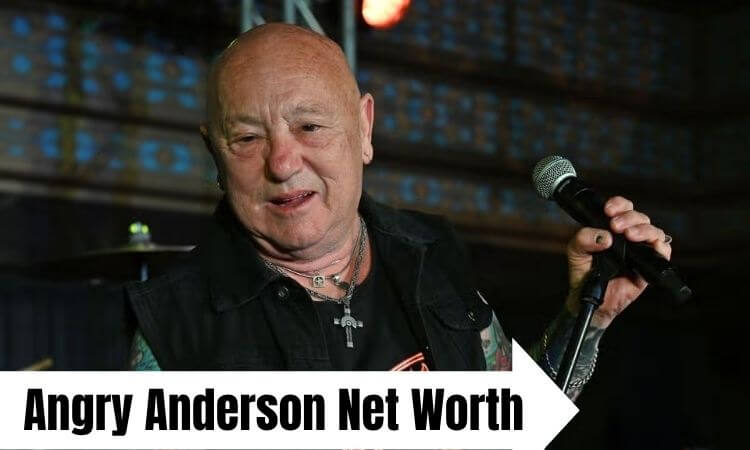
Angry Anderson net worth was estimated at $3 million at the time of his death in September 2026. The Australian rock singer, songwriter, actor, television personality, and youth advocate built his wealth over a career spanning roughly five decades. He became internationally recognized as the longtime frontman of Rose Tattoo, one of Australia’s best-known hard rock bands, while also earning money and recognition through solo music, acting, television appearances, live performances, and other entertainment work.
Anderson, whose birth name was Gary Stephen Anderson, was born in Melbourne, Australia, on August 5, 1947. He grew up in Coburg and eventually became one of the most distinctive personalities in Australian rock music. His shaved head, tattoos, powerful voice, short stature, and intense stage presence made him immediately recognizable.
His career was much broader than his work with Rose Tattoo. Anderson recorded music as a solo artist, acted in films and television productions, worked as a television presenter and youth advocate, participated in charity projects, and became involved in community and social issues.
One of the most surprising moments of his career came with the 1987 song “Suddenly.” Unlike the aggressive hard rock music associated with Rose Tattoo, “Suddenly” was a romantic ballad. The song became a major success after being used during the famous wedding of Scott Robinson and Charlene Mitchell on the Australian soap opera Neighbours. The storyline helped introduce Anderson’s music to an audience far beyond traditional rock fans.
Anderson continued performing with Rose Tattoo into his seventies. In 2026, the band began a 50th-anniversary tour that was intended to mark its final run of performances. During the European portion of the tour, Anderson suffered a cardiac arrest in Germany and was hospitalized. The European tour was subsequently canceled, and he returned to Australia. He died on September 21, 2026, at the age of 79. His family and Rose Tattoo announced his death publicly on September 23.
This article explores Angry Anderson’s estimated net worth, sources of income, music career, Rose Tattoo success, solo career, acting work, television career, charitable activities, family life, and lasting legacy.
Angry Anderson Net Worth
Angry Anderson Net Worth: $3 Million
Estimated Net Worth: $3 Million
Full Name: Gary Stephen Anderson
Stage Name: Angry Anderson
Date of Birth: August 5, 1947
Place of Birth: Melbourne, Victoria, Australia
Date of Death: September 21, 2026
Age at Death: 79
Nationality: Australian
Profession: Singer, songwriter, actor, television personality, youth advocate
Best Known For: Rose Tattoo
Solo Hit: “Suddenly”
Years Active: Approximately 1971–2026
Main Music Genres: Hard rock, blues rock, rock and roll
Celebrity Net Worth estimated Anderson’s fortune at $3 million at the time of his death. That figure should be treated as an estimate because celebrity net-worth websites generally rely on publicly available information and calculations rather than private financial statements, tax records, or independently audited estate documents.
His wealth was accumulated over a very long career rather than through one single source. Music was the central part of his professional life, but his income and public profile were also connected to acting, television, live appearances, solo recordings, and other entertainment activities.
DO NOT MISS: Arman Tsarukyan Net Worth: UFC Earnings, Career & Sponsorships
Who Was Angry Anderson?
Angry Anderson was one of the most recognizable figures in Australian rock music.
Although his stage name suggested aggression, his career eventually developed in several different directions. He became known not only as the frontman of a hard rock band but also as a television personality, actor, charity worker, and youth advocate.
Anderson was born Gary Stephen Anderson in Melbourne on August 5, 1947. He grew up in the working-class suburb of Coburg. According to accounts of his childhood, he experienced a difficult family environment and struggled with bullying because of his relatively small stature. He later described music as an important outlet for his anger and frustration.
His nickname “Angry” eventually became inseparable from his professional identity.
Before Rose Tattoo, Anderson performed with several bands. One of the most important was Buster Brown, which he formed in the early 1970s. The band included drummer Phil Rudd, who later became famous as a member of AC/DC.
Buster Brown released the album Something to Say in 1974 through Mushroom Records. Although the group did not become a long-term commercial success, it helped establish Anderson as a serious vocalist on the Australian rock scene.
His biggest career chapter began when he joined Rose Tattoo.
Angry Anderson and Rose Tattoo
Rose Tattoo was formed in Sydney in 1976. Anderson became the band’s defining singer and eventually its longest-serving remaining original member.
The band’s music was aggressive, loud, blues-influenced rock that fit naturally into Australia’s famous pub-rock culture. Songs such as “Bad Boy for Love,” “Rock ‘n’ Roll Outlaw,” “Nice Boys,” and “We Can’t Be Beaten” became associated with the band and helped establish its reputation.
The band’s first self-titled album arrived in 1978. It became an important release in Australian hard rock and helped introduce Rose Tattoo’s sound to listeners outside the country.
Anderson’s distinctive appearance became a major part of Rose Tattoo’s image. He was short, muscular-looking, heavily tattooed, bald, and known for his intense performances. His voice was equally recognizable.
The band initially faced resistance from parts of the Australian mainstream music industry. Some radio networks were reluctant to play its music, and Rose Tattoo developed a reputation for being an uncompromising rock band.
Internationally, however, the group found an audience.
Rose Tattoo toured internationally and developed a following in the United Kingdom and Europe. Its first two albums reached the top of the British heavy metal charts, according to accounts of the band’s career.
The band’s influence eventually extended beyond Australia. Rose Tattoo became part of the wider hard rock history that influenced later musicians, including artists associated with the emerging heavy metal and hard rock scenes.
Anderson’s career therefore benefited from decades of music-related activity: album sales, live performances, touring, royalties, appearances, and the continuing popularity of Rose Tattoo’s catalog.
How Rose Tattoo Contributed to Angry Anderson’s Wealth
Music was the foundation of Anderson’s career and likely one of the most important sources behind his estimated fortune.
For a musician with a career lasting approximately five decades, income can come from several different areas.
These can include:
- Album and music sales
- Songwriting royalties
- Performance royalties
- Streaming revenue
- Live concert payments
- Touring
- Festival appearances
- Licensing
- Radio and television use of music
- Compilation albums
- Reissues and catalog sales
- Merchandise
- Solo recordings
Anderson’s involvement with Rose Tattoo meant that his professional life remained connected to live music for decades.
Even after the band’s classic early period, Rose Tattoo continued to tour and perform. Anderson remained the band’s recognizable frontman and continued appearing on stage well into his seventies.
The group’s 2026 50th-anniversary tour demonstrated how long its catalog had remained relevant. The tour was intended to celebrate five decades of Rose Tattoo before Anderson’s health emergency brought the European portion to an end.
Angry Anderson’s Solo Career
Although Rose Tattoo was the most important band in Anderson’s career, he also achieved notable success as a solo artist.
His best-known solo song was “Suddenly.”
Released in 1987, the song represented a dramatic change from the aggressive hard rock image associated with Rose Tattoo. Instead of a loud rock anthem, “Suddenly” was a romantic ballad.
The song became a major Australian success and also charted internationally. It reached high positions in Australia, New Zealand, Ireland, the United Kingdom, Belgium, and the Netherlands.
The song’s popularity grew dramatically after it was used during the wedding of Scott Robinson and Charlene Mitchell on Neighbours. The characters were played by Jason Donovan and Kylie Minogue, and the televised wedding became one of the most memorable moments in Australian television history.
The success of “Suddenly” was important for Anderson for more than financial reasons.
It demonstrated that audiences could accept him outside his established hard-rock identity. People who had never listened to Rose Tattoo could suddenly recognize Anderson as the voice behind a romantic song.
The song also created another stream of music-related income through recordings, performances, licensing, and royalties.
“Suddenly” and Neighbours
The connection between Anderson and Neighbours became one of the most unusual chapters of his career.
Rose Tattoo was known for hard-edged songs and an aggressive rock image. Anderson was therefore an unexpected choice to become associated with one of television’s most famous romantic scenes.
The use of “Suddenly” during Scott and Charlene’s wedding exposed the song to an enormous television audience.
The wedding became a cultural moment, particularly in Australia and the United Kingdom. The song subsequently became one of Anderson’s most recognizable recordings.
For Anderson’s career, the exposure helped broaden his public identity.
He was no longer simply the aggressive frontman of Rose Tattoo. He was also the singer behind a romantic song that had become part of popular television culture.
Angry Anderson’s Acting Career
Music was not Anderson’s only connection to entertainment.
He also worked as an actor.
One of his best-known acting roles was Ironbar Bassey in the 1985 film Mad Max Beyond Thunderdome, which starred Mel Gibson and Tina Turner.
The film gave Anderson an opportunity to move from the concert stage to the movie screen.
His physical appearance and intimidating stage persona made him a natural fit for the post-apocalyptic world of the Mad Max franchise.
Although acting did not replace music as his primary career, film and television appearances added another dimension to his professional life.
Working in movies and television can provide income through acting fees, appearances, residual arrangements, publicity, and related opportunities. Anderson’s acting work also helped strengthen his status as a recognizable Australian entertainment personality.
Angry Anderson’s Television Career
One of the most significant transformations in Anderson’s public career occurred through television.
During the 1980s, he became involved with Ray Martin’s Midday program, where he worked on youth affairs.
This was a major departure from his rock-star image.
Instead of appearing only on stage, Anderson began interviewing people and discussing difficult social issues. His approach was direct and personal, and he was willing to discuss subjects that were uncomfortable or emotionally difficult.
He later worked with Ray Martin after Martin moved to A Current Affair.
Anderson became involved in segments that focused on charities and community projects.
These included projects involving:
- Children with disabilities
- People affected by HIV/AIDS
- Drought-stricken farmers
- Youth issues
- Social welfare
- Community support
His television work gave him a much wider audience than Rose Tattoo alone could provide.
It also showed a different side of his personality.
Angry Anderson as a Youth Advocate
Anderson’s work with young people became an important part of his identity.
His interest in youth issues was connected in part to his own difficult childhood experiences.
He publicly discussed bullying, family difficulties, and childhood abuse. He also worked on television segments that explored child abuse and the experiences of troubled young people.
His willingness to discuss these subjects helped distinguish him from the stereotypical image of a rock musician.
In 1992, Anderson was made a Member of the Order of Australia for his work as a youth advocate.
This recognition demonstrated how far his public career had expanded beyond music.
By this point, Anderson had become known in multiple areas of Australian public life.
He was a musician, actor, television personality, charity worker, and youth advocate.
Angry Anderson’s Charity Work
Charity work became another important part of Anderson’s public career.
Through television, he participated in projects designed to help communities and people facing difficult circumstances.
His television challenges included helping construct respite accommodation for people affected by HIV/AIDS, creating playground facilities for children with disabilities, and supporting farmers experiencing drought.
These activities did not necessarily represent direct sources of wealth.
Instead, they expanded Anderson’s public profile and demonstrated how his celebrity status could be used for community projects.
For someone whose career began with an aggressive rock image, the evolution was significant.
The same performer who had become famous singing loud hard rock songs was later appearing on television helping vulnerable people and speaking about youth issues.
Angry Anderson’s Personal Life and Family
Anderson’s family life was an important part of his story.
He met Lindy Michael in 1982. Their first child, Roxanne, was born in 1983 while Rose Tattoo was touring with Aerosmith. Anderson later described how becoming a father dramatically changed his priorities.
The couple married in 1986 and went on to have three sons as well.
Anderson spoke publicly about the importance of showing affection to his children. His own childhood experiences influenced the way he wanted to behave as a father.
His family also experienced an extremely painful tragedy.
In 2018, Anderson’s son Liam was killed by a friend during a drug-fueled hallucination in Sydney. The case resulted in a manslaughter conviction and an eight-year prison sentence for the person responsible. Anderson later described the profound effect his son’s death had on him.
The tragedy became one of the darkest chapters of Anderson’s life.
Angry Anderson’s Early Life
Understanding Anderson’s early life helps explain the development of his stage persona.
Born in Melbourne in 1947, Anderson grew up in Coburg.
His mother had moved to Australia from Mauritius when she was young. Anderson later spoke about his complicated relationship with his father and described an emotionally difficult household.
At school, he struggled to fit in.
His relatively short height also made him a target for bullies.
According to accounts of his childhood, music eventually became an outlet for his anger and frustration.
His nickname evolved from “Angry Ant” to the shorter and more memorable “Angry.”
That name eventually became a permanent part of Australian rock culture.
Buster Brown Before Rose Tattoo
Before Rose Tattoo, Anderson’s most significant early band was Buster Brown.
The group was formed in 1973 and included future AC/DC drummer Phil Rudd.
Buster Brown recorded the album Something to Say for Mushroom Records in 1974. The band did not last long, breaking up the following year.
Although Buster Brown did not achieve the lasting success of Rose Tattoo, the experience gave Anderson valuable exposure to the Australian rock circuit.
It also connected him with other musicians who would later become important figures in Australian rock history.
Rose Tattoo’s International Reputation
Rose Tattoo became more than an Australian pub-rock band.
The group developed an international reputation, particularly in Britain and Europe.
The band’s first album and Assault and Battery achieved strong positions on British heavy metal charts, while Rose Tattoo also performed at major festivals and toured internationally.
The band also shared stages and connections with major rock acts.
Its aggressive blues-based sound helped establish Rose Tattoo as an influential part of the Australian hard rock movement.
Anderson’s voice and stage presence were central to that identity.
He was not simply a singer standing behind a microphone. His live performances were physical, energetic, and often deliberately confrontational.
That reputation helped keep Rose Tattoo’s live shows attractive to rock audiences over several decades.
Angry Anderson and AC/DC
Anderson was part of the same Australian rock ecosystem as AC/DC.
His early band Buster Brown featured Phil Rudd, while Rose Tattoo and AC/DC shared connections through Australia’s developing pub-rock scene.
Rose Tattoo members also had musical relationships with AC/DC members during the band’s early years.
This connection is part of the broader story of Australian hard rock during the 1970s and 1980s, when bands built audiences through pubs, clubs, touring, and local venues before developing international followings.
Anderson’s career therefore existed within an important period in Australian rock history.
Angry Anderson and Guns N’ Roses
Rose Tattoo’s influence eventually reached international hard rock and heavy metal musicians.
The band has been cited as an influence on later artists, and Anderson became connected with members of Guns N’ Roses.
Rose Tattoo’s stripped-down, aggressive style helped demonstrate how blues-based hard rock could be delivered with raw energy rather than elaborate production.
That influence became part of Anderson’s wider musical legacy.
Angry Anderson’s AFL Grand Final Performance
Anderson’s solo career also included a major sporting appearance.
He performed “Bound for Glory” at the 1991 AFL Grand Final. The event was watched by a large Australian television audience and helped further establish Anderson as a mainstream entertainment figure.
The appearance demonstrated another side of his career.
His audience was no longer limited to rock fans.
Between music, television, sport, movies, and charity work, Anderson had become a recognizable Australian public personality.
Angry Anderson’s Income Sources
When considering Anderson’s estimated $3 million net worth, it is important to look at the different ways a performer with such a long career could generate income.
1. Rose Tattoo
Rose Tattoo was likely one of the most important foundations of Anderson’s professional income.
The band generated revenue from recordings, touring, performances, licensing, and merchandise.
2. Solo Music
Anderson’s solo work, particularly “Suddenly,” provided another important source of music-related income.
The song’s international success gave him additional recording and royalty opportunities.
3. Live Performances
Touring remained an important part of Anderson’s career.
Rose Tattoo continued performing for decades, and Anderson was still appearing on stage in his seventies.
4. Acting
Film and television roles provided another stream of professional income.
His appearance in Mad Max Beyond Thunderdome remains one of his best-known acting credits.
5. Television
Anderson worked as a television personality and youth-affairs presenter.
Television work expanded both his income opportunities and his public profile.
6. Music Royalties
Songs recorded decades ago can continue producing royalties when they are purchased, streamed, broadcast, licensed, or included in compilations.
The continued popularity of Rose Tattoo’s catalog and “Suddenly” meant Anderson’s musical work remained commercially relevant.
7. Public Appearances
As a recognizable Australian celebrity, Anderson also had opportunities to appear at events, television programs, concerts, festivals, and special performances.
Angry Anderson Net Worth Compared With His Career Achievements
A $3 million fortune may seem modest compared with the fortunes of some internationally famous rock stars.
However, Anderson’s career should be viewed in context.
He spent approximately five decades working in entertainment.
He was not a pop superstar who spent decades at the top of international charts.
Instead, his career was built around Australian rock, touring, television, acting, community work, and a small number of highly recognizable solo successes.
Rose Tattoo became a respected and influential hard rock band, but it did not generate the kind of commercial empire associated with the world’s wealthiest musicians.
Anderson also remained closely connected to live performance rather than turning his celebrity into a large corporate business empire.
His estimated $3 million fortune therefore reflects a long professional career across multiple entertainment fields rather than a single blockbuster commercial enterprise.
What Made Angry Anderson Famous?
Several elements made Anderson stand out.
His Voice
Anderson had a powerful, gritty vocal style that became closely associated with Rose Tattoo.
His Appearance
His shaved head, tattoos, sunglasses, and compact build created an instantly recognizable visual identity.
His Stage Presence
He was known for energetic and physically intense live performances.
Rose Tattoo
The band became one of Australia’s best-known hard rock groups.
“Suddenly”
His 1987 solo hit introduced him to a much broader audience.
Television
His work with Ray Martin and youth-affairs programs changed how the Australian public saw him.
Acting
His role in Mad Max Beyond Thunderdome connected him with one of Australia’s most famous film franchises.
Charity Work
His work with young people and charities created another important part of his public legacy.
Angry Anderson’s Final Years
Anderson continued working long after many musicians of his generation had retired.
Rose Tattoo remained active, and Anderson continued appearing at concerts and festivals.
In 2026, the band embarked on a tour intended to commemorate its 50th anniversary and serve as a final series of performances.
During the European part of the tour, Anderson suffered a cardiac arrest in Germany.
The medical emergency resulted in the cancellation of the remainder of the European tour. Anderson eventually returned to Australia.
He died on September 21, 2026, at age 79, surrounded by loved ones.
His family and Rose Tattoo announced his death two days later. They described him as a devoted father and a much-loved bandmate, friend, and member of the wider entertainment community.
Angry Anderson’s Death and Legacy
Anderson’s death marked the end of a career that had lasted approximately 50 years.
His legacy is difficult to place in only one category.
For rock fans, he will primarily be remembered as the frontman of Rose Tattoo.
For television viewers, he was also a presenter and youth advocate.
For movie audiences, he was Ironbar Bassey in Mad Max Beyond Thunderdome.
For Neighbours viewers, he was the voice behind “Suddenly,” the romantic song connected to Scott and Charlene’s famous wedding.
For charitable organizations and communities, he was a celebrity who used his public profile to support different causes.
These different parts of his career help explain why Anderson remained a recognizable Australian figure for so many decades.
The Meaning Behind the Angry Anderson Persona
The name “Angry” became a central part of Anderson’s identity, but his career showed considerably more complexity than the stage persona suggested.
His early music expressed aggression and rebellion.
Later, he became a father, television personality, youth advocate, charity worker, actor, and community figure.
He publicly discussed difficult experiences from his childhood and used some of those experiences to connect with troubled young people.
His life therefore moved through very different stages.
The young man who struggled with bullying became a rock star.
The rock star became a television personality.
The television personality became a youth advocate.
The hard-rock singer recorded a romantic ballad that became part of a famous television wedding.
That unusual combination is one reason Anderson remained such a distinctive figure.
FAQS
What was Angry Anderson’s net worth?
Angry Anderson’s net worth was estimated at $3 million at the time of his death in September 2026. The figure is an estimate and should not be considered an independently audited valuation of his estate.
How did Angry Anderson make his money?
Anderson made money primarily through his long career in music. His income sources included Rose Tattoo recordings and performances, solo music, touring, royalties, acting, television work, and other entertainment appearances.
What band was Angry Anderson in?
Angry Anderson was best known as the lead singer of Rose Tattoo, the Australian hard rock band formed in Sydney in 1976.
What was Angry Anderson’s real name?
His birth name was Gary Stephen Anderson. “Angry Anderson” became his professional name and stage identity.
When was Angry Anderson born?
Angry Anderson was born on August 5, 1947, in Melbourne, Victoria, Australia.
How old was Angry Anderson when he died?
Anderson was 79 years old when he died on September 21, 2026.
When did Angry Anderson die?
Angry Anderson died on September 21, 2026, in Australia, after suffering a cardiac arrest while on tour in Germany several weeks earlier.
What was Angry Anderson’s most famous song?
His best-known solo song was “Suddenly,” released in 1987. It became especially famous after being used during the wedding of Scott Robinson and Charlene Mitchell on Neighbours.
Was Angry Anderson in Mad Max?
Yes. Anderson played Ironbar Bassey in Mad Max Beyond Thunderdome, the 1985 film starring Mel Gibson and Tina Turner.
Was Angry Anderson married?
Anderson married Lindy Michael in 1986. They had four children together before separating.
Did Angry Anderson have children?
Yes. Anderson had four children with Lindy Michael. His son Liam died in 2018 in a tragic incident in Sydney.
What was Rose Tattoo famous for?
Rose Tattoo became known for its aggressive blues-influenced hard rock and songs including “Bad Boy for Love,” “Rock ‘n’ Roll Outlaw,” and “We Can’t Be Beaten.” The band developed an international following and became an influential part of Australian rock history.
Did Angry Anderson have a television career?
Yes. Anderson became involved in television, particularly youth-affairs programming with Ray Martin. He later participated in television projects involving charities, young people, and community issues.
Was Angry Anderson involved in charity work?
Yes. Anderson participated in numerous charity and community projects throughout his television career. His work included projects supporting people affected by HIV/AIDS, children with disabilities, drought-stricken farmers, and young people.
What awards did Angry Anderson receive?
Anderson was appointed a Member of the Order of Australia in 1992 for his work as a youth advocate.
How long was Angry Anderson’s career?
His professional career lasted approximately five decades, beginning with early bands in the 1970s and continuing with Rose Tattoo performances into 2026.
Conclusion
Angry Anderson’s estimated $3 million net worth represents the financial result of an unusually long and diverse entertainment career.
He began as a young musician in Melbourne and eventually became the unmistakable frontman of Rose Tattoo. Over the years, he expanded his career into solo music, acting, television, charity work, and youth advocacy.
His financial success was closely connected to music. Rose Tattoo provided the foundation of his career, while the success of “Suddenly” gave him a major solo achievement that reached audiences far outside the traditional rock world.
His acting work, particularly his appearance in Mad Max Beyond Thunderdome, added another recognizable credit. Television gave him an entirely different platform and allowed him to work on issues involving young people and charitable causes.
Anderson’s story was also marked by considerable personal hardship. His difficult childhood, experiences with bullying, and the devastating death of his son Liam all became part of the public story surrounding his life.
Despite those challenges, he continued performing for decades.
Even in 2026, at the age of 79, Anderson was still connected to Rose Tattoo and preparing for a final series of performances during the band’s 50th anniversary year. His cardiac arrest in Germany ended the European tour, and he died in Australia on September 21, 2026.
Ultimately, Angry Anderson’s legacy extends beyond his estimated wealth.
He was one of Australia’s most recognizable rock singers, a member of an influential hard rock band, a solo artist with an international hit, a movie actor, a television personality, and a youth advocate.
For some fans, he will always be the powerful voice behind Rose Tattoo.
For others, he will be remembered as the singer of “Suddenly.”
And for many Australians, he represented a much broader combination of rock music, television, charity, family, and community work.
His estimated $3 million fortune tells only one part of the story. His five-decade career and distinctive place in Australian popular culture are what ultimately made Angry Anderson one of the country’s most memorable entertainment personalities.