
Table of Contents
How much is Ben Delo Net Worth?
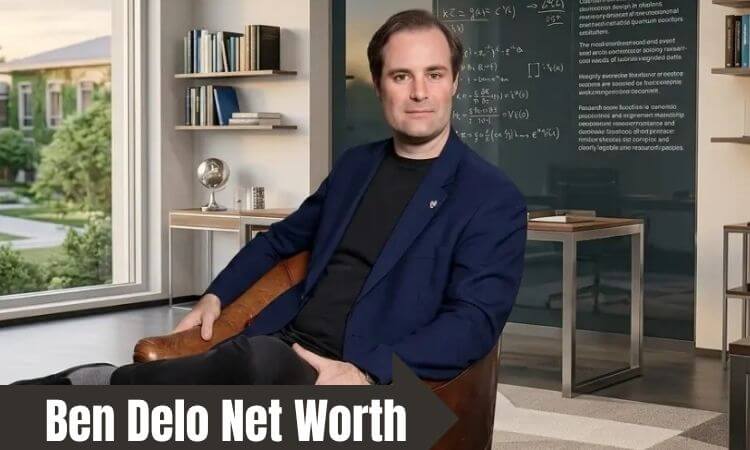
Ben Delo is a British mathematician, computer programmer, entrepreneur, cryptocurrency pioneer, and philanthropist who built his fortune through the cryptocurrency derivatives industry. Best known as one of the co-founders of BitMEX, Delo became one of Britain’s youngest self-made billionaires after the exchange experienced explosive growth and became one of the world’s most influential cryptocurrency trading platforms.
As of 2026, Ben Delo’s estimated net worth is $1 billion. His wealth was created primarily through his ownership stake in BitMEX and the enormous profitability generated by the cryptocurrency derivatives exchange during its most successful years. Unlike many technology billionaires who accumulated their fortunes through repeated venture-capital funding rounds and public stock offerings, Delo and his fellow BitMEX founders maintained substantial ownership of their company while it grew rapidly.
Delo’s story is particularly unusual because his journey to billionaire status began with mathematics and computer programming rather than traditional entrepreneurship. After graduating from Oxford with double first-class honors, he worked at IBM and later developed high-frequency trading systems for financial firms including GSA Capital and JPMorgan. His experience in quantitative finance eventually led him to cryptocurrency.
In 2014, Delo joined Arthur Hayes and Samuel Reed to create BitMEX. The company introduced financial products that dramatically changed the cryptocurrency derivatives market, most notably the Bitcoin perpetual swap. The product became hugely popular among professional and speculative traders and was later copied by competing exchanges around the world.
However, Delo’s success also came with significant controversy. In 2022, he pleaded guilty in the United States to violating the Bank Secrecy Act by willfully failing to establish and maintain an adequate anti-money-laundering program at BitMEX. He received 30 months of probation and paid a $10 million penalty. In March 2025, President Donald Trump issued a full pardon to Delo and the other BitMEX defendants.
Beyond business, Delo has become increasingly involved in philanthropy. He has donated tens of millions of pounds to education, mathematics, autism-related causes, academic research, and other organizations. He also became politically active in Britain in 2026, donating millions of pounds to Reform UK.
But how exactly did Ben Delo become a billionaire? What was his life like before BitMEX? How much did the cryptocurrency exchange contribute to his fortune? And what has he done with his wealth since becoming a billionaire?
Let’s take a closer look at Ben Delo’s life, career, business success, wealth, philanthropy, and personal journey.
DO NOT MISS: How much is Ron Howard Net Worth?
Ben Delo Net Worth at a Glance
| Detail | Information |
| Full Name | Ben Peter Delo |
| Date of Birth | February 24, 1984 |
| Age | 42 years old in 2026 |
| Birthplace | Sheffield, England |
| Nationality | British |
| Profession | Mathematician, Programmer, Entrepreneur, Philanthropist |
| Education | University of Oxford, Worcester College |
| Degree | Mathematics and Computer Science |
| Graduation | 2005 |
| Known For | Co-founding BitMEX |
| Company | BitMEX |
| Estimated Net Worth | $1 Billion |
| Spouse | Pan Pan Wong |
| Major Business | Cryptocurrency derivatives |
| Major Philanthropic Interests | Mathematics, education, autism, academic freedom, science |
| Political Donations in 2026 | £8 million to Reform UK |
What Is Ben Delo’s Net Worth?
Ben Delo has an estimated net worth of $1 billion.
The overwhelming majority of Delo’s wealth came from his involvement with BitMEX, the cryptocurrency derivatives exchange he co-founded in 2014 with Arthur Hayes and Samuel Reed.
Delo’s financial success was closely connected to BitMEX’s rapid growth during the cryptocurrency boom. The company became particularly successful after introducing its Bitcoin perpetual swap, a financial product that allowed traders to speculate on Bitcoin’s price using leverage without having to deal with a traditional futures contract expiration date.
At its height, BitMEX became one of the biggest cryptocurrency derivatives exchanges in the world. The platform attracted enormous trading volumes and became known for offering traders leverage as high as 100-to-1.
The company’s profitability was particularly important to Delo’s wealth. Because BitMEX had not raised the kind of enormous venture-capital funding that diluted many technology founders, its original founders retained substantial ownership stakes. As the value and profitability of the business increased, the value of those stakes grew dramatically.
By 2018, Delo had reached billionaire status. At only 34 years old, he was described as Britain’s youngest self-made billionaire.
His wealth has fluctuated with the cryptocurrency market, the value of BitMEX, legal expenses, charitable giving, and other financial commitments. For that reason, a net-worth estimate should be viewed as an approximation rather than a fixed amount of cash sitting in a bank account.
It is also important to understand that billionaire net worth does not mean Delo necessarily has $1 billion in immediately spendable cash. A significant portion of a billionaire’s wealth can be tied to investments, business interests, assets, and other holdings whose value can change over time.
Who Is Ben Delo?
Ben Peter Delo is a British entrepreneur whose career combines three fields that rarely come together so successfully: mathematics, computer programming, and financial trading.
Born in Sheffield, England, in 1984, Delo demonstrated an early interest in mathematics and computing. His academic abilities eventually led him to Oxford University, where he studied mathematics and computer science.
After university, he entered the technology and financial sectors. His early work at IBM gave him experience as a software engineer, while his later positions in quantitative finance introduced him to high-frequency trading and sophisticated financial systems.
Those experiences became extremely important later.
When Delo eventually entered the cryptocurrency industry, he was not approaching Bitcoin simply as an investor looking for the next big asset. He understood programming, mathematics, trading systems, and financial markets.
That combination helped him recognize the potential of cryptocurrency derivatives.
Together with Arthur Hayes and Samuel Reed, Delo built BitMEX into a major global trading platform.
Although Arthur Hayes became the best-known public face of the company, Delo played a major role behind the scenes, particularly in building the exchange’s technology and trading infrastructure.
His career demonstrates how technical expertise can become extremely valuable when applied to an emerging financial market.
Ben Delo’s Early Life
Ben Peter Delo was born on February 24, 1984, in Sheffield, England.
His father worked as a civil engineer, while his mother was a schoolteacher. Delo moved between several primary schools while growing up, and his childhood education was not always straightforward.
At the age of 11, he was diagnosed with Asperger’s syndrome, a condition now generally considered part of the autism spectrum.
This experience later became an important part of Delo’s philanthropic interests.
Rather than allowing his educational difficulties to define his future, Delo eventually found an environment in which his strengths in mathematics and computing could flourish.
He attended Lord Williams’s School, a state secondary school in Thame, Oxfordshire.
With additional educational support and a more structured environment, Delo excelled academically. His abilities in mathematics and computing became increasingly obvious, eventually helping him gain admission to Worcester College at the University of Oxford.
His childhood experience would later influence his charitable work, especially his interest in improving educational opportunities for autistic and neurodiverse students.
Ben Delo’s Education at Oxford
Delo attended Worcester College at the University of Oxford, where he studied mathematics and computer science.
His academic performance was exceptional.
In 2005, he graduated with double first-class honors, reflecting his strength in both mathematical reasoning and technical subjects.
His Oxford education became an important foundation for his future career.
Mathematics would help him understand complex financial models and quantitative trading strategies, while computer science gave him the technical ability to build sophisticated software systems.
The combination proved particularly valuable in financial technology.
Many successful technology entrepreneurs understand programming, while many successful investors understand markets. Delo developed expertise in both technical systems and quantitative finance.
That background eventually allowed him to move comfortably between computer programming and financial trading.
His connection to Oxford also continued after his graduation. Years later, after becoming wealthy through BitMEX, Delo donated millions of pounds to Worcester College to support mathematics and computer science.
His relationship with the university therefore became more than simply an academic chapter in his life. It became one of the institutions that benefited from the fortune he eventually created.
Ben Delo’s Career Before BitMEX
Before becoming a cryptocurrency billionaire, Delo built a career in technology and quantitative finance.
His first significant professional experience came through IBM.
After completing a summer internship with the technology company, Delo joined IBM as a software engineer.
His work there was technically significant enough to result in several patents on which he was listed as an inventor.
This early experience gave him a strong understanding of large-scale software development and complex computing systems.
However, Delo eventually moved away from traditional technology and into finance.
He began working in quantitative trading, developing high-frequency trading systems for firms including GSA Capital and JPMorgan.
High-frequency trading requires sophisticated mathematical models, extremely fast computer systems, and an understanding of how financial markets behave.
For Delo, it was a natural combination of his strongest skills.
His work involved creating systems that could analyze financial information and execute trades at extremely high speeds.
This experience would later become one of his biggest advantages when he entered the cryptocurrency industry.
Working at JPMorgan
Delo eventually joined JPMorgan, one of the world’s largest financial institutions.
In 2012, he relocated to Hong Kong for his work at the bank.
His move to Hong Kong proved particularly important because it placed him in one of Asia’s major financial centers at a time when Bitcoin was beginning to attract more attention.
Traditional financial markets had existed for centuries, but Bitcoin was creating an entirely new digital financial ecosystem.
Delo had already spent years working with trading technology and financial systems.
The cryptocurrency market presented a new opportunity to apply that knowledge.
Bitcoin was still relatively small compared with conventional financial assets, but its technological design and rapidly growing community suggested that it could eventually become much more significant.
Delo became increasingly interested in the cryptocurrency space.
That interest eventually led to one of the most important decisions of his career.
Instead of simply trading Bitcoin, he decided to help build financial infrastructure around it.
How Ben Delo Founded BitMEX
In 2014, Ben Delo joined forces with Arthur Hayes and Samuel Reed to establish the Bitcoin Mercantile Exchange, commonly known as BitMEX.
The company was created during the early stages of the cryptocurrency industry’s development.
At that time, cryptocurrency exchanges were primarily focused on buying and selling digital assets.
Delo and his co-founders saw a different opportunity.
They believed traders would eventually want sophisticated financial products similar to those available in traditional markets.
Rather than building another simple Bitcoin exchange, BitMEX focused on cryptocurrency derivatives.
Arthur Hayes became the public face and CEO of the company, while Samuel Reed focused heavily on technology.
Delo also played a central technical and strategic role.
He later held executive positions including chief operating officer and chief strategy officer.
The founders brought different skills to the company.
Hayes had experience as a traditional financial trader.
Reed had strong programming and technology expertise.
Delo combined mathematical knowledge, software development, and quantitative trading experience.
Together, they created a platform that would eventually reshape cryptocurrency derivatives trading.
What Made BitMEX So Successful?
BitMEX did not become a major cryptocurrency company overnight.
In its early years, the platform struggled to attract enough trading activity.
The breakthrough came in 2016 with the introduction of the XBTUSD perpetual swap.
The product was revolutionary within the cryptocurrency market.
Traditional futures contracts have expiration dates. Traders must eventually close or roll their positions.
The perpetual swap was different.
It allowed traders to maintain leveraged positions without a traditional expiration date.
A funding mechanism periodically transferred money between long and short traders to help keep the perpetual contract’s price close to the underlying Bitcoin price.
This relatively simple innovation became one of the most influential products in cryptocurrency trading.
The popularity of the perpetual swap grew rapidly.
Traders could speculate on whether Bitcoin would rise or fall without directly owning the cryptocurrency.
The ability to use significant leverage made the product particularly attractive to experienced traders and speculators.
BitMEX offered leverage as high as 100-to-1, dramatically increasing both the potential profits and risks associated with trading.
The product became so successful that other cryptocurrency exchanges eventually introduced their own versions of perpetual contracts.
Today, perpetual-style derivatives are a major part of the global cryptocurrency trading industry.
BitMEX was one of the companies responsible for making them mainstream.
BitMEX’s Explosive Growth
The growth of BitMEX was extraordinary.
By 2017, the platform was processing approximately $200 billion worth of orders and generating an estimated $83 million in revenue.
As cryptocurrency markets continued to expand, BitMEX’s position became even stronger.
By the end of 2018, the exchange had become one of the world’s largest cryptocurrency trading platforms by volume across spot and derivatives markets.
The company’s business model was highly profitable.
Trading platforms can generate substantial revenue when enormous amounts of trading activity pass through their systems, especially when traders use leveraged products.
BitMEX benefited from being an early leader in cryptocurrency derivatives.
It had developed a loyal user base, sophisticated trading infrastructure, and a product that competitors were only beginning to replicate.
The founders’ ownership stakes became extremely valuable.
This is the point at which Delo’s personal fortune transformed dramatically.
How BitMEX Made Ben Delo a Billionaire
Delo’s billionaire status was not created through a huge salary.
Instead, his wealth was primarily connected to his ownership in BitMEX.
This distinction is important.
Entrepreneurs can become extremely wealthy by owning a percentage of a rapidly growing company even if they do not receive enormous annual salaries.
BitMEX’s founders maintained significant ownership because the company had not gone through the kind of massive venture-capital fundraising that can reduce a founder’s percentage ownership.
As the platform’s revenue and importance increased, the value of the founders’ interests increased as well.
By 2018, Delo was worth an estimated $1 billion.
At the age of 34, he had become one of Britain’s youngest self-made billionaires.
His story was particularly remarkable because only a few years earlier he had been working as a programmer and quantitative finance professional.
The rise of cryptocurrency created an entirely new financial market, and Delo was positioned at exactly the right intersection of mathematics, programming, and trading.
Ben Delo’s Lifestyle After Becoming a Billionaire
One of the more unusual aspects of Delo’s story is that his lifestyle did not immediately resemble the stereotypical image of a billionaire.
Despite becoming extremely wealthy, he was known for maintaining a relatively understated lifestyle.
For years after becoming a billionaire, Delo continued living in the same modest Hong Kong apartment he had rented before BitMEX became successful.
His low-profile lifestyle contrasted sharply with the enormous wealth associated with cryptocurrency entrepreneurs.
While some technology and cryptocurrency billionaires became known for luxury cars, huge mansions, private jets, and extravagant public lifestyles, Delo remained comparatively private.
His approach to money also became increasingly focused on philanthropy.
Rather than simply spending his fortune, he began directing substantial amounts toward education, scientific research, autism-related causes, and other organizations.
His later political donations also demonstrated that he viewed wealth as a tool capable of influencing institutions and public policy.
Ben Delo and the BitMEX Legal Controversy
BitMEX’s success eventually brought serious regulatory problems.
In October 2020, United States prosecutors charged Delo, Arthur Hayes, Samuel Reed, and BitMEX executive Gregory Dwyer with violations of the Bank Secrecy Act.
The Commodity Futures Trading Commission also pursued a parallel civil case.
The central issue involved BitMEX’s compliance with US financial regulations.
Authorities alleged that the platform continued serving thousands of US customers despite claiming that US customers were not permitted to trade on the exchange.
Prosecutors also alleged that BitMEX failed to maintain the anti-money-laundering and know-your-customer systems required of financial institutions operating in the United States.
The case became one of the most important regulatory controversies in the cryptocurrency industry.
It also marked a dramatic turning point for Delo.
The entrepreneur who had become famous for building a revolutionary cryptocurrency trading platform now faced criminal charges in the United States.
Ben Delo’s Guilty Plea
In February 2022, Delo pleaded guilty to violating the Bank Secrecy Act.
The specific offense involved willfully failing to establish, implement, and maintain an adequate anti-money-laundering program at BitMEX.
It is important to distinguish this charge from allegations that he personally laundered money.
Delo was not convicted of personally laundering criminal proceeds.
Instead, his guilty plea concerned the company’s failure to maintain an appropriate anti-money-laundering compliance program.
In June 2022, he was sentenced to 30 months of probation without home confinement.
He also agreed to pay a $10 million penalty as part of the resolution with US authorities.
The legal case became a major chapter in his biography because it demonstrated the increasing pressure that cryptocurrency companies faced as governments around the world began applying traditional financial regulations to digital assets.
For Delo, the case was also a lesson in how quickly an innovative financial business can run into regulatory challenges.
The Decline of BitMEX’s Dominance
BitMEX had once dominated cryptocurrency derivatives trading.
However, its market position weakened following regulatory problems and increasing competition.
Other exchanges began offering similar perpetual contracts.
Platforms such as Binance, Bybit, OKX, and others expanded their derivatives businesses and attracted traders who had previously used BitMEX.
The product that had once been BitMEX’s biggest competitive advantage eventually became an industry standard.
This was an important development.
BitMEX had effectively created a new category of cryptocurrency financial products, but competitors were able to reproduce the concept.
The exchange therefore lost some of the market dominance it had enjoyed during its peak years.
By 2026, BitMEX announced that it would wind down its exchange operations.
The development marked the end of an extraordinary chapter in cryptocurrency history.
A platform that had once processed enormous trading volumes and helped define the cryptocurrency derivatives market was gradually disappearing from the industry it had helped create.
Donald Trump Pardons Ben Delo
Delo’s legal story took another unexpected turn in 2025.
In March 2025, President Donald Trump issued full and unconditional pardons to Delo, Arthur Hayes, Samuel Reed, Gregory Dwyer, and the corporate entity associated with BitMEX.
The pardon came after Delo had already completed his probation.
The presidential action erased the federal conviction connected with his Bank Secrecy Act guilty plea.
The pardon added another unusual chapter to Delo’s already complicated career.
His journey had gone from mathematics student to software engineer, quantitative trader, billionaire entrepreneur, criminal defendant, philanthropist, and eventually a recipient of a presidential pardon.
Ben Delo’s Philanthropy
Although cryptocurrency made Delo wealthy, philanthropy has become one of the most visible uses of his fortune.
Delo began making major charitable contributions while BitMEX was still at the height of its success.
His giving has focused on areas that reflect his personal experiences and intellectual interests.
These include:
- Mathematics
- Computer science
- Education
- Autism and neurodiversity
- Academic research
- Academic freedom
- Free expression
- Scientific development
- Commonwealth-related programs
Delo has said that he wants his wealth to benefit future generations.
His philanthropic philosophy is closely connected to the idea that money can be used to create long-term opportunities rather than simply provide short-term financial assistance.
The £5 Million Oxford Donation
In 2018, Delo donated £5 million to Worcester College at Oxford.
The donation was directed toward mathematics and computer science.
It helped fund permanent teaching fellowships as well as academic research.
The gift was especially meaningful because Worcester College was where Delo had studied before becoming a billionaire.
His donation effectively allowed him to give back to the institution that had helped launch his career.
It also reflected his belief in the importance of mathematical and scientific education.
Delo’s own career demonstrates how powerful those disciplines can become when combined with technology and finance.
Joining the Giving Pledge
In 2019, Delo joined the Giving Pledge, a philanthropic initiative associated with Bill Gates and Warren Buffett.
Members of the Giving Pledge commit to donating at least half of their wealth during their lifetimes or through their estates.
Delo’s participation demonstrated that he viewed his fortune as something that should eventually benefit causes beyond his own personal life.
His charitable interests have expanded significantly since joining the pledge.
Rather than focusing exclusively on one type of organization, he has supported a broad range of causes involving science, education, free expression, neurodiversity, and public institutions.
The Sheila Coates Foundation
One of Delo’s most personal philanthropic projects is the Sheila Coates Foundation.
He established the foundation in 2020 to support autistic students in mainstream schools and colleges.
The organization was named after an autism advocate whose support Delo credited with having a major influence on his own education.
This connection gives the foundation particular significance.
Delo has spoken about how specialist educational support helped him develop his abilities during childhood.
The foundation aims to help other students receive opportunities that might otherwise be difficult to access.
In 2026, Delo gave the foundation a £25 million endowment.
The size of the endowment reflects how seriously he takes the issue of educational support for autistic and neurodiverse young people.
For Delo, this is not simply an abstract charitable cause.
It is connected to his own childhood and to the educational support that helped him reach Oxford and eventually build a billion-dollar fortune.
Supporting Mathematics and Scientific Research
Mathematics remains another major focus of Delo’s philanthropy.
In 2026, he committed up to £20 million to the London Institute for Mathematical Sciences.
The commitment included £10 million upfront and another £10 million in matching funds.
This investment reflects the role mathematics has played throughout his life.
From his childhood academic interests to his Oxford degree and later work in quantitative trading, mathematics has been central to Delo’s career.
He has also expressed an interest in supporting scientific research that can produce long-term benefits.
According to the information provided, Delo has said that he has donated more than £100 million to philanthropic causes overall.
That level of giving represents a significant portion of his fortune.
Ben Delo’s Political Donations
Delo became increasingly involved in British politics in 2026.
After spending many years living in Hong Kong, he publicly announced that he was returning to Britain.
He also became a major financial supporter of Reform UK, the political party led by Nigel Farage.
During the first part of 2026, Delo donated £4 million to Reform UK.
He later donated another £4 million during the second quarter of the year.
That brought his total contributions to £8 million.
The amount made Delo one of the party’s most significant financial supporters.
He became the party’s second-largest donor behind fellow cryptocurrency investor Christopher Harborne.
Delo has explained his political support in terms of his concerns about government, free expression, and British institutions.
His political activity represents a new stage in the use of his wealth.
While much of his earlier giving focused on universities, science, education, and charity, his political donations demonstrate a willingness to use his fortune to influence the direction of British public life.
Why Ben Delo Supports Reform UK
Delo has publicly connected his support for Reform UK with concerns about government and British institutions.
He has also emphasized issues involving free expression.
His financial support for the party has attracted attention because of its scale.
At the same time, Delo has supported a wide range of organizations and causes with different perspectives.
His representatives have emphasized that providing financial or logistical assistance to an organization does not necessarily mean he agrees with every position associated with that organization.
This broader approach is consistent with Delo’s stated interest in supporting ideas, institutions, and causes where he believes his resources can have an impact.
His political giving is therefore another part of a broader pattern: using personal wealth to support areas that he considers important.
Ben Delo’s Personal Life
Ben Delo is married to Pan Pan Wong.
The couple spent many years living in Hong Kong, where Delo built BitMEX and later continued much of his philanthropic work.
Despite his enormous wealth, Delo has generally maintained a relatively private personal life.
He is not known for constantly displaying his wealth on social media or making his private lifestyle the focus of public attention.
Much of the public discussion surrounding him has instead centered on business, cryptocurrency regulation, philanthropy, mathematics, and politics.
His personal experience with autism has also become increasingly important to his public identity.
Rather than treating his diagnosis only as part of his childhood history, Delo has incorporated that experience into his charitable work.
He has argued that neurodiverse ways of thinking can be valuable strengths and that educational systems should do more to support students who learn differently.
Ben Delo’s Approach to Wealth
One of the most interesting aspects of Delo’s fortune is how different his approach has been from the stereotypical image of a cryptocurrency billionaire.
His wealth grew extremely quickly.
At only 34, he had reached billionaire status.
Yet he did not immediately transform his lifestyle into a display of extreme luxury.
His relatively modest lifestyle has been noted as one of the unusual aspects of his story.
Instead, a significant portion of his wealth has gradually been directed toward philanthropy.
His donations to Oxford, mathematical institutions, autism-related education, and other organizations suggest that he views wealth as a resource that can be used to create lasting institutional changes.
His membership in the Giving Pledge reinforces this approach.
At the same time, his political donations show that Delo’s philosophy of wealth extends beyond traditional charity.
He has increasingly used his financial resources to support political causes and institutions that align with his beliefs.
Ben Delo’s Major Sources of Wealth
Delo’s $1 billion fortune can largely be understood through several stages of his career.
1. BitMEX Ownership
The most important source of his wealth was his ownership stake in BitMEX.
As the company grew into one of the world’s largest cryptocurrency derivatives platforms, the value of his interest increased dramatically.
2. Cryptocurrency Industry Growth
Delo entered the cryptocurrency industry at an early stage.
This gave him exposure to one of the fastest-growing financial sectors of the 2010s.
3. Trading and Technology Expertise
His previous experience in high-frequency trading and software engineering helped him build a company capable of handling enormous trading volumes.
4. Founder Equity
Because BitMEX had not raised enormous amounts of outside venture capital, its founders retained significant ownership.
That allowed Delo to capture a large portion of the company’s financial upside.
5. Investment and Wealth Management
After becoming a billionaire, his fortune would naturally include investments and other assets beyond his original business interests.
However, the central source of his fortune remains his BitMEX success.
How Old Was Ben Delo When He Became a Billionaire?
Ben Delo was approximately 34 years old when he became a billionaire.
That makes his rise especially remarkable.
Many billionaires build their fortunes over several decades.
Delo reached billionaire status relatively early because he was positioned at the intersection of several rapidly expanding industries.
He had advanced mathematical skills, software development experience, knowledge of quantitative finance, and an understanding of cryptocurrency.
BitMEX then provided a platform through which those skills could generate enormous financial value.
His story is therefore less about simply getting lucky with Bitcoin and more about building infrastructure around a rapidly growing asset class.
Ben Delo vs. Traditional Cryptocurrency Investors
There is an important difference between Delo and someone who simply bought Bitcoin early.
An early Bitcoin investor could make enormous returns if the cryptocurrency increased in value.
Delo’s wealth came from building a business around cryptocurrency trading.
BitMEX generated revenue from trading activity rather than depending solely on Bitcoin’s price increasing.
This business model allowed Delo and his co-founders to benefit from traders buying and selling cryptocurrency derivatives regardless of whether the market was moving up or down.
The exchange’s success was therefore connected to trading volume and demand for leverage.
This distinction helps explain why Delo became so wealthy.
He was not merely participating in the cryptocurrency market.
He helped build part of the infrastructure that traders used to participate in it.
The Importance of the Perpetual Swap
The perpetual swap is arguably the most important innovation associated with Delo’s business career.
Traditional futures contracts have expiration dates.
A perpetual swap does not have a traditional expiration.
Instead, a funding mechanism helps maintain a relationship between the contract price and the underlying asset.
This made it possible for cryptocurrency traders to maintain leveraged positions for extended periods.
The product became extremely popular.
Eventually, competing cryptocurrency exchanges introduced their own versions.
Today, perpetual derivatives are one of the most important products in the cryptocurrency market.
BitMEX’s success with the product helped establish a new standard for cryptocurrency derivatives trading.
That innovation played a major role in the company’s explosive growth and, consequently, Delo’s rise to billionaire status.
What Happened to BitMEX?
BitMEX’s history can be divided into several distinct periods.
First came the startup phase, when the founders were trying to establish the platform.
Then came the breakthrough period following the introduction of perpetual swaps.
Next came the company’s explosive growth and rise to global prominence.
After that came increasing regulatory pressure.
The legal cases involving the founders damaged the company’s reputation and contributed to its loss of market dominance.
Competition also increased.
Other exchanges adopted similar products and attracted traders with their own platforms, liquidity, and marketing strategies.
By 2026, BitMEX announced plans to wind down its exchange operations.
The development represented the end of one of cryptocurrency’s most influential early trading platforms.
However, its influence on the derivatives industry remains significant.
The perpetual swap model that helped make BitMEX successful became a standard feature of cryptocurrency exchanges around the world.
Ben Delo’s Legacy
Ben Delo’s legacy is complicated.
On one side, he is a mathematical and technological entrepreneur who helped create one of the most influential cryptocurrency derivatives platforms in the world.
On the other side, his career was affected by serious regulatory problems that ultimately resulted in a guilty plea and a $10 million penalty.
His later presidential pardon added another unusual element to the story.
But his legacy is not limited to BitMEX.
His philanthropy has become an increasingly important part of his public profile.
He has donated substantial amounts to mathematics, education, autism-related causes, academic research, and other institutions.
His support for the Sheila Coates Foundation is particularly connected to his personal history.
His donations to Oxford and mathematical institutions also reflect his long-standing interest in education and science.
In 2026, his political donations added another dimension to his influence.
Delo’s career therefore illustrates both the extraordinary opportunities created by emerging financial technology and the risks that can accompany rapid innovation in heavily regulated industries.
FAQS
What is Ben Delo’s net worth?
Ben Delo’s estimated net worth is $1 billion. Most of his wealth was created through his ownership and involvement in BitMEX, the cryptocurrency derivatives exchange he co-founded.
How did Ben Delo become rich?
Delo became wealthy by co-founding BitMEX in 2014 with Arthur Hayes and Samuel Reed. The exchange became extremely successful after launching its Bitcoin perpetual swap, which attracted huge amounts of cryptocurrency derivatives trading.
What is Ben Delo famous for?
Ben Delo is best known as a co-founder of BitMEX. He is also known for his background in mathematics, computer programming, high-frequency trading, philanthropy, and cryptocurrency.
When did Ben Delo become a billionaire?
Delo became a billionaire in his 30s. In 2018, he was described as Britain’s youngest self-made billionaire at approximately 34 years old.
What did Ben Delo study?
Ben Delo studied mathematics and computer science at Worcester College, University of Oxford. He graduated in 2005 with double first-class honors.
Did Ben Delo work for IBM?
Yes. After completing a summer internship, Delo joined IBM as a software engineer. His work resulted in several patents on which he was named as an inventor.
Did Ben Delo work for JPMorgan?
Yes. Delo later worked in quantitative finance and developed high-frequency trading systems for financial firms including JPMorgan. He relocated to Hong Kong while working for JPMorgan in 2012.
What is BitMEX?
BitMEX, short for Bitcoin Mercantile Exchange, is a cryptocurrency derivatives trading platform founded in 2014 by Ben Delo, Arthur Hayes, and Samuel Reed.
What made BitMEX successful?
One of BitMEX’s biggest breakthroughs was the introduction of the Bitcoin perpetual swap. The product allowed traders to speculate on Bitcoin’s price using leverage without the traditional expiration date associated with futures contracts.
Did Ben Delo create Bitcoin?
No. Ben Delo did not create Bitcoin. Bitcoin was created by the anonymous person or group using the name Satoshi Nakamoto. Delo became wealthy by building a cryptocurrency derivatives exchange.
How much leverage did BitMEX offer?
BitMEX became known for offering leverage as high as 100-to-1 on certain products.
Was Ben Delo convicted?
Delo pleaded guilty in 2022 to violating the Bank Secrecy Act by willfully failing to establish and maintain an adequate anti-money-laundering program at BitMEX. He received 30 months of probation and paid a $10 million penalty.
Did Ben Delo personally launder money?
The charge against Delo concerned BitMEX’s anti-money-laundering compliance program. He was not convicted of personally laundering criminal proceeds.
Was Ben Delo pardoned?
Yes. In March 2025, President Donald Trump issued a full and unconditional pardon to Delo and the other BitMEX defendants.
How much has Ben Delo donated to charity?
Delo has said that he has donated more than £100 million to philanthropic causes overall. His charitable interests include education, mathematics, autism, science, academic freedom, and other causes.
How much did Ben Delo donate to Oxford?
In 2018, Delo donated £5 million to Worcester College at Oxford, supporting mathematics and computer science teaching and research.
What is the Sheila Coates Foundation?
The Sheila Coates Foundation was established by Delo in 2020 to support autistic students in mainstream schools and colleges. In 2026, he gave the foundation a £25 million endowment.
How much did Ben Delo donate to Reform UK?
In 2026, Delo donated a total of £8 million to Reform UK, with £4 million given during the first part of the year and another £4 million during the second quarter.
Is Ben Delo married?
Yes. Ben Delo is married to Pan Pan Wong.
Where did Ben Delo live?
Delo spent many years living in Hong Kong, where he built BitMEX and continued much of his professional and philanthropic activity. In 2026, he announced that he was returning to Britain.
Does Ben Delo still own BitMEX?
BitMEX’s corporate and operational situation has changed substantially since its peak. The exchange announced in 2026 that it would wind down its exchange operations.
Is Ben Delo still a billionaire?
Based on the supplied estimate, Ben Delo’s net worth is approximately $1 billion in 2026. Because much billionaire wealth is tied to investments and business interests, the exact value can change over time.
FAQS
Ben Delo’s journey from a mathematically gifted student in England to a cryptocurrency billionaire is one of the more unusual stories in the technology and finance world.
His career began with mathematics and computer science.
He developed his programming skills at IBM, moved into quantitative finance, built high-frequency trading systems, and gained experience at major financial institutions including JPMorgan.
Then cryptocurrency changed the direction of his career.
In 2014, Delo joined Arthur Hayes and Samuel Reed to launch BitMEX. Their goal was not simply to create another place to buy Bitcoin. They wanted to create a sophisticated derivatives platform for cryptocurrency traders.
The company’s introduction of the Bitcoin perpetual swap became its defining breakthrough.
The product attracted enormous trading activity and helped turn BitMEX into one of the world’s largest cryptocurrency derivatives exchanges.
For Delo, the financial results were extraordinary.
By 2018, he had become a billionaire at only 34 years old.
However, his story was far from a simple success story.
Regulatory issues eventually resulted in criminal charges, a guilty plea, probation, and a $10 million penalty. The controversy contributed to the decline of BitMEX’s dominance as competing exchanges expanded their own derivatives markets.
In 2025, Delo received a full presidential pardon from Donald Trump.
At the same time, another side of his life became increasingly visible.
Delo began directing substantial portions of his fortune toward philanthropy. His donations have supported mathematics, computer science, education, autism-related programs, scientific research, and academic institutions.
His £5 million donation to Worcester College reflected his connection to Oxford, while the Sheila Coates Foundation reflected his personal experience with autism and education. His larger philanthropic commitments demonstrate a desire to create opportunities for future generations.
Then, in 2026, his use of wealth expanded into British politics.
His £8 million in donations to Reform UK made him one of the party’s most important financial supporters.
Taken as a whole, Ben Delo’s life is a story about the enormous opportunities and serious risks that can emerge when mathematics, technology, finance, and cryptocurrency intersect.
His $1 billion net worth was built primarily through BitMEX, but his legacy is now becoming much broader than the cryptocurrency exchange itself.
From mathematics and software engineering to high-frequency trading, cryptocurrency entrepreneurship, philanthropy, and political giving, Delo has repeatedly used his technical knowledge and financial resources to influence the world around him.
His story also shows how quickly wealth can be created in a new industry—and how quickly that same industry can change.
For now, Ben Delo remains one of the most notable British figures to emerge from the cryptocurrency boom, with an estimated fortune of $1 billion and a growing public profile built not only around his business success, but also around his charitable and political activities.