
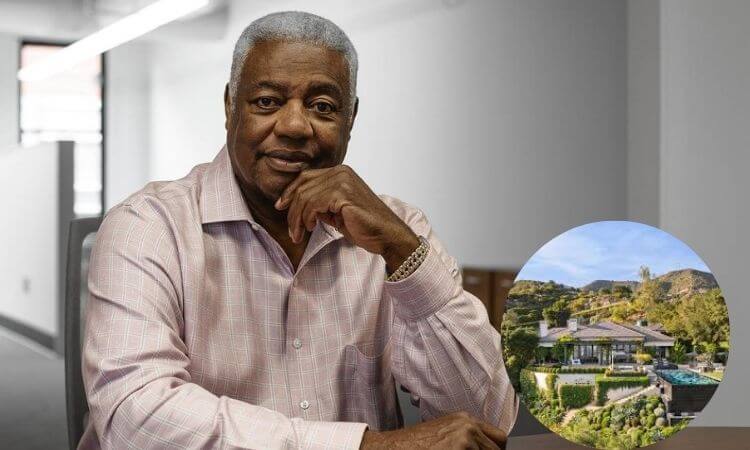
What Is Oscar Robertson’s Net Worth?
Oscar Robertson, widely known as “The Big O,” is a retired American professional basketball player whose current net worth is estimated at $300,000. Despite being one of the most transformative figures in basketball history and a pioneer for player rights, Robertson’s financial situation stands in stark contrast to the fortunes of many modern athletes. His journey from basketball legend to legal trailblazer, and later facing financial hardship, paints a complex and inspiring picture.
Early Life and Background
Oscar Palmer Robertson was born on November 24, 1938, in Charlotte, Tennessee. Raised in poverty, his family moved to Indianapolis, Indiana, when he was just 18 months old. They settled in the segregated Lockefield Gardens housing project, a place that would shape his early love for basketball.
Without access to a proper basketball, young Oscar used whatever he could find—tennis balls, bundled rags, and a peach basket—to practice. His love for the game grew stronger when he enrolled at Crispus Attucks High School, an all-Black school, where he would go on to make history. Under coach Ray Crowe, Robertson helped lead the team to a state championship in 1955, marking the first time an all-Black school had ever won a state title in the U.S. They repeated the feat in 1956 with an undefeated 31–0 season.
DO NOT MISS: Top 12 Most Popular Hollywood Singers in 2025
College Career: Dominance and Adversity
Oscar chose to attend the University of Cincinnati, where he played for the Cincinnati Bearcats and quickly became a national sensation. Over his three-year college career, he averaged a staggering 33.8 points per game, making him the NCAA scoring champion from 1958 to 1960. He was also named College Player of the Year and All-American every year.
However, his collegiate experience wasn’t without hardship. Traveling to segregated cities exposed him to intense racism—he was often forced to sleep in college dorms while his white teammates stayed in hotels. Despite this, he set more than a dozen NCAA records and 19 school records, and his team reached the Final Four twice.
Professional Career: The Big O’s NBA Legacy
Oscar Robertson entered the NBA in 1960 after being selected by the Cincinnati Royals as a territorial pick. He signed a $33,000 contract and immediately made an impact. In his rookie season, he averaged 30.5 points, earned NBA Rookie of the Year, and made the All-NBA First Team and the All-Star Game.
Over a 14-season career, Robertson played for the Royals (1960–1970) and the Milwaukee Bucks (1970–1974). His list of accomplishments is staggering:
- NBA Champion with the Bucks in 1971
- NBA MVP in 1964
- 12× NBA All-Star (1961–1972)
- 9× All-NBA First Team
- 3× All-Star Game MVP
He was also the first NBA player to average a triple-double for an entire season—a feat that stood unmatched for decades. His record of 41 triple-doubles in a season remained unbeaten until Russell Westbrook surpassed it in 2017.
When Robertson joined the Bucks, the team achieved a 66–16 record and captured their first championship alongside Kareem Abdul-Jabbar. His departure in 1974 left a void, and the team quickly fell in performance.
Labor Activism and the Robertson Rule
Oscar Robertson wasn’t just a revolutionary on the court—he transformed the NBA’s labor system off it. From 1965 to 1974, he served as the president of the NBA Players Association, where he led a landmark antitrust lawsuit: Robertson v. National Basketball Association.
Filed in 1970, the lawsuit aimed to block the NBA’s merger with the ABA and challenged the league’s restrictive contract policies. At the time, teams retained significant control over players even after their contracts ended. The lawsuit delayed the merger until 1976 and resulted in a settlement that introduced restricted free agency—a turning point in player rights.
This became known as the Oscar Robertson Rule, which:
- Abolished the “reserve clause”
- Allowed players more freedom to negotiate
- Set the foundation for modern free agency, salary increases, and collective bargaining
Despite backlash from team owners and even some players, Robertson’s efforts permanently changed the league. His fight didn’t just benefit NBA players but influenced athlete labor rights in NFL, MLB, and beyond. For his groundbreaking role, Robertson was honored with the Arthur Ashe Award for Courage at the 2025 ESPYS.
Financial Problems in Retirement
While Oscar Robertson revolutionized player rights and salaries, he never reaped the financial benefits himself. His career predated the era of multimillion-dollar contracts and endorsement deals.
After retirement, he pursued business ventures and in 1981, founded a chemical distribution company, Orchem. Initially promising, the business eventually suffered financial decline and reportedly filed for bankruptcy around 2012.
By 2018, Robertson faced significant financial strain. He owed approximately $200,000 in property taxes and was burdened with $2.4 million in bank loans, largely tied to a commercial property in Fairfield, Ohio, that had entered foreclosure.
To stabilize his finances, Robertson made the heartbreaking decision to auction some of his most cherished basketball memorabilia, including:
- His 1971 NBA Championship ring
- His Hall of Fame ring and induction trophy
- All 12 of his NBA All-Star rings
The auction symbolized the financial challenges faced by athletes of his era. It also stood in stark contrast to today’s players, many of whom enjoy wealth and security made possible by Robertson’s own activism decades prior.
Personal Life and Philanthropy
Oscar Robertson married Yvonne Crittenden on June 25, 1960, and the couple has three children. His devotion to family became especially evident in 1997, when he donated a kidney to his daughter Tia, who was suffering from lupus-induced kidney failure.
Following this, he became an honorary spokesman for the National Kidney Foundation, helping raise awareness for kidney disease and organ donation. He has also remained active in civic and educational causes, receiving an Honorary Doctorate of Humane Letters from the University of Cincinnati in 2007.
Oscar is a proud member of the Kappa Alpha Psi fraternity, Beta Eta chapter.
Real Estate Ventures
In 2003, Robertson and his wife bought a home in Cincinnati, Ohio, for $440,000. They sold this property in 2019 for nearly $995,000. That same year, a home in Orlando, Florida, was purchased for $650,000; however, the deed lists their daughter, Mari, as the owner. Nonetheless, this property is believed to be the couple’s current primary residence.
Career Accolades and Honors
Oscar Robertson’s impact on the game and beyond is celebrated through numerous awards and honors:
- NBA Champion (1971)
- NBA MVP (1964)
- NBA Rookie of the Year (1961)
- 12× NBA All-Star
- 3× NBA All-Star MVP
- First player to average a triple-double for an entire season
- NBA 35th, 50th, and 75th Anniversary Teams
- Namesake of the “Oscar Robertson Trophy” (top NCAA men’s player)
- Inductee in the Naismith Memorial Basketball Hall of Fame, FIBA Hall of Fame, and College Basketball Hall of Fame
- Arthur Ashe Award for Courage (2025)
Legacy
Oscar Robertson’s story is one of brilliance, resilience, and sacrifice. As a player, he redefined what a point guard could be—dominant in scoring, assisting, and rebounding. As a leader, he reshaped the very structure of professional basketball, granting future players freedom and financial opportunity.
Though his current net worth stands at a modest $300,000, his true value to the sport is immeasurable. He gave everything to basketball—his time, his talent, and even his financial security. And while he may not have reaped the riches of today’s NBA stars, their success is built on the foundation he courageously laid.
Oscar Robertson is not just a basketball icon—he’s a legend whose legacy lives in every free agent contract signed, every player salary negotiated, and every championship ring earned.