
Table of Contents
Microsoft Surface Laptop 7 Early Leaks Appear — Everything You Need to Know
Microsoft’s Surface lineup has long represented the perfect blend of elegance, performance, and innovation in the Windows ecosystem. From sleek designs to smooth software optimization, the Surface brand has become synonymous with premium productivity. Now, the tech world is buzzing again — this time about the upcoming Surface Laptop 7, which has been making waves online due to a series of early leaks.
From powerful next-gen Intel and Snapdragon chipsets to potential AI integration through Microsoft’s Copilot+ platform, the Surface Laptop 7 is shaping up to be one of the most interesting Windows laptops of 2025. While Microsoft hasn’t officially confirmed the specs, multiple leaks from trusted sources such as The Verge, Tom’s Hardware, and NotebookCheck have given us a sneak peek at what’s to come.
So, let’s dive into all the leaks, rumored features, expected performance, and what makes the Surface Laptop 7 potentially one of the best premium laptops of the upcoming year.
DO NOT MISS: Foldable Phones vs Flagships: Which to Buy in 2026?
1. Design and Display — Familiar Yet Refined
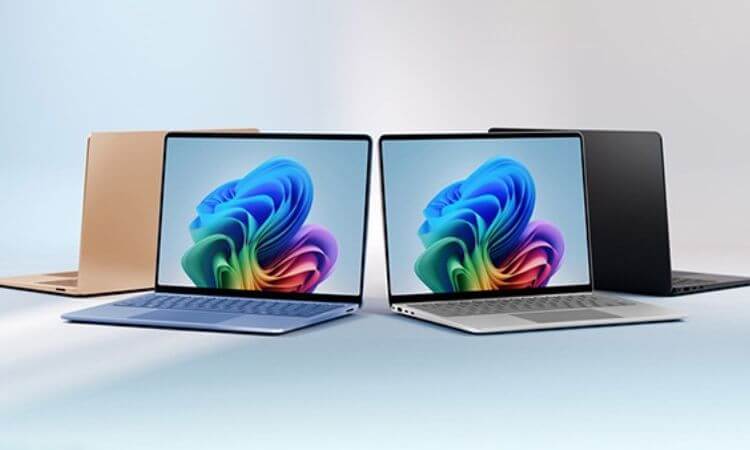
According to the early leaks, Microsoft seems to be retaining the classic Surface Laptop aesthetic that fans love — a minimalist aluminum chassis, soft curves, and a clean, premium design. Photos of a prototype model that appeared on a Chinese marketplace suggest only minor changes to the body, meaning we’re likely looking at an incremental design update rather than a full overhaul.
However, there are whispers of a new 13-inch variant, smaller and more portable than the 13.8-inch and 15-inch versions we saw in the Surface Laptop 6 lineup. This smaller model is expected to target students, travelers, and light users who want high portability without sacrificing build quality.
The leaked display details indicate:
- Resolutions similar to the previous models (around 2256×1504 for smaller versions)
- A possible refresh rate downgrade on the smaller model from 120 Hz to 60 Hz
- Thinner bezels and improved color accuracy for creative users
While it’s not a revolutionary redesign, the Surface Laptop 7 looks to continue Microsoft’s “if it isn’t broken, don’t fix it” approach — sleek, lightweight, and premium.
2. Hardware Upgrades — Two Powerful Paths: Intel and Snapdragon
The biggest talking point about the Surface Laptop 7 leaks isn’t its look — it’s what’s under the hood. According to multiple leaks, Microsoft is experimenting with two chipset variants:
- An Intel Lunar Lake version
- A Snapdragon X series (Arm-based) version
Intel Lunar Lake Variant
One leaked prototype listed specifications featuring an Intel Core Ultra 7 268V processor, 32 GB of RAM, and a 1 TB SSD. This processor belongs to Intel’s upcoming Lunar Lake lineup, which promises significant improvements in efficiency, AI processing, and integrated graphics.
Key benefits of this model may include:
- Better compatibility with legacy Windows applications and professional software
- Potential Thunderbolt 5 support for faster data transfer
- Powerful integrated GPU performance (Intel Xe2 graphics)
This model seems tailored for professionals, developers, and power users who need full compatibility and raw performance.
Snapdragon X Plus / X Elite Variant
On the other side, leaks reveal a smaller 13-inch Surface Laptop 7 model powered by Qualcomm’s Snapdragon X Plus (or possibly X Elite) processor — part of Microsoft’s major push toward Windows on Arm and Copilot+ AI PCs.
Expected highlights:
- Significantly longer battery life (potentially up to 20 hours)
- Built-in NPU (Neural Processing Unit) for on-device AI acceleration
- Cooler and quieter operation
- Instant wake and better standby power efficiency
However, the trade-off is software compatibility — while Windows on Arm has made huge strides, some legacy applications may still run through emulation and perform slightly slower.
This dual-chip strategy shows that Microsoft is embracing choice and flexibility, giving users the option to pick performance or efficiency depending on their needs.
3. Copilot+ AI Integration — The Future of Productivity
Another key focus area for Microsoft in 2025 is AI integration. With Windows 11’s Copilot+ experience rolling out, the Surface Laptop 7 is expected to be one of the first AI-optimized devices to make full use of these new features.
AI-powered capabilities will likely include:
- On-device AI summarization and recall (using NPU)
- Smart photo editing and background removal
- Real-time language translation and transcription
- Context-aware recommendations in Office apps
- AI-assisted browsing and search
This marks a clear direction for the future of computing — bringing cloud-based AI down to the local hardware level, allowing features to run faster, more securely, and even offline.
4. Storage, Ports, and Connectivity
Leaked specs show the Surface Laptop 7 will likely feature:
- Up to 1 TB SSD storage (removable on Intel variant)
- 32 GB RAM (LPDDR5X memory)
- Dual USB-C / Thunderbolt 4 or 5 ports
- Possibly one USB-A port on larger models
- Headphone jack (still uncertain)
- Surface Connect port — may be removed in the smaller Arm variant
One surprising leak mentions that the smaller Snapdragon model might use UFS storage instead of a traditional SSD, which would make it less upgradeable. While UFS storage is fast, it’s typically soldered to the motherboard, limiting repairability.
In short, the Intel version seems designed for users who need expansion and flexibility, while the Arm version focuses on thinness and battery life.
5. Expected Release Date and Price
If leaks and insider reports are accurate, we can expect the Surface Laptop 7 to officially debut between early and mid-2025, likely around Microsoft’s annual Surface or CES event.
The price range is expected to be:
- $899–$999 for the 13-inch Snapdragon X variant
- $1,299–$1,599 for the Intel Lunar Lake variant
These prices would keep the Surface Laptop 7 competitive with the MacBook Air (M3) and high-end Windows ultrabooks from Dell, HP, and ASUS.
6. Who the Surface Laptop 7 Is For
Ideal for Everyday Users and Students
The Arm-based variant (Snapdragon) seems perfect for students and light users. It’s expected to be silent, efficient, and long-lasting — ideal for note-taking, streaming, and web work.
Ideal for Professionals and Creators
The Intel Lunar Lake model will attract business users, developers, and creative professionals who rely on traditional software like Adobe Creative Suite, AutoCAD, or VS Code.
AI Enthusiasts and Early Adopters
With Copilot+ integration and an onboard NPU, the Surface Laptop 7 will be one of the first true AI laptops optimized for Windows’ next-generation AI tools.
7. What Still Remains Unclear
While the leaks provide a fascinating look at what’s coming, several details remain uncertain:
- Exact battery life of both variants
- Thermal performance (especially for Intel models)
- Port configurations on smaller models
- Display refresh rate consistency across variants
- Repairability score and service options
These details will likely be confirmed once Microsoft officially unveils the device.
8. Comparison With Surface Laptop 6
| Feature | Surface Laptop 6 | Surface Laptop 7 (Leaked) |
| Processor | Intel 13th Gen / Snapdragon X | Intel Lunar Lake / Snapdragon X Plus |
| Display | 13.8″ / 15″ 120 Hz | 13″ / 13.8″ / 15″ (60–120 Hz) |
| AI Integration | Minimal | Copilot+ PC with NPU |
| Ports | USB-C, USB-A, Surface Connect | Likely USB-C only (no Connect on smaller) |
| Storage | Removable SSD | UFS (Arm) / SSD (Intel) |
| Battery Life | Up to 15 hours | Up to 20 hours (Arm variant) |
This comparison clearly shows Microsoft’s move toward AI-driven performance and better efficiency, while maintaining a familiar, elegant form factor.
9. The Bigger Picture — Microsoft’s Strategy
Microsoft’s decision to launch both Intel and Snapdragon variants marks a major step in its long-term hardware strategy. By offering dual architecture options, Microsoft can target both traditional Windows users and forward-looking AI adopters.
The Surface Laptop 7 thus sits at the crossroads of two computing eras:
- The traditional x86 era — powerful, compatible, and proven.
- The AI + ARM era — efficient, adaptive, and future-ready.
This dual approach ensures that Microsoft’s Surface brand remains relevant across both markets, catering to professionals and casual users alike.
Conclusion
The Microsoft Surface Laptop 7 might not revolutionize laptop design, but its leaked features reveal a device that’s smartly evolving with the times. With dual chipset options (Intel Lunar Lake and Snapdragon X Plus), Copilot+ AI features, sleek design continuity, and potential for incredible battery life, Microsoft is positioning this device as a bridge between traditional computing and the AI-powered future.
If you’re looking for a premium Windows experience that blends performance, portability, and intelligence, the Surface Laptop 7 could easily become one of 2025’s most talked-about laptops.
FAQs
1. When will the Microsoft Surface Laptop 7 be released?
Leaks suggest a release in early to mid-2025, likely around Microsoft’s annual Surface event or CES 2025.
2. What processors will the Surface Laptop 7 use?
It’s expected to come in two variants — one with Intel Lunar Lake processors and another with Qualcomm Snapdragon X Plus/X Elite chips.
3. Will the Surface Laptop 7 have Copilot+ AI features?
Yes, Microsoft’s new laptops will likely include Copilot+ AI integration, featuring an NPU for faster on-device AI tasks.
4. Is the Surface Laptop 7 good for gaming?
While not a gaming laptop, the Intel Lunar Lake variant may handle casual gaming or light titles thanks to improved integrated graphics.
5. What is the expected battery life?
The Snapdragon variant could reach up to 20 hours of battery life, while the Intel version might offer around 12–15 hours, depending on usage.
6. Will it be available globally?
Yes, Microsoft typically rolls out Surface devices worldwide, though regional availability (like in Pakistan or India) might lag slightly after the U.S. launch.