
Table of Contents
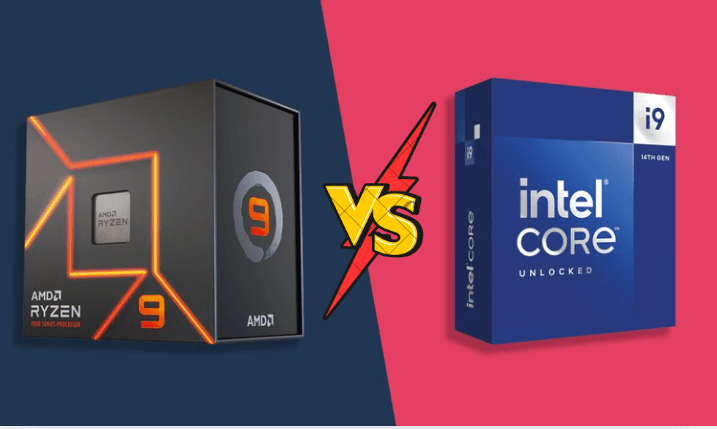
Intel vs AMD 2026 Processors Compared: Which CPU Should You Choose?
The Intel vs AMD rivalry continues to heat up in 2026, and this year is no different. Both companies are pushing the limits with high-performance desktops, laptops, and AI-capable processors. But which one is right for you? Let’s dive into the details.
Intel vs AMD 2026: Architecture & Technology
Intel
Intel’s 2026 lineup focuses on hybrid architectures, combining Performance-cores (P-cores), Efficient-cores (E-cores), and Low-power E-cores (LP-E). Desktop chips like Nova Lake-S offer up to 52 cores, built on Intel’s advanced 18A process.
Intel is also integrating Neural Processing Units (NPUs) for AI acceleration, making it a strong choice for AI workloads, content creation, and multitasking.
Pros:
- Exceptional multi-core performance
- Integrated AI acceleration
- Strong OEM ecosystem
AMD
AMD continues its Zen 6 architecture on TSMC’s 2 nm process. Zen 6 brings a wider dispatch engine and better vector/FPU performance, ideal for gaming and heavy compute tasks.
AMD maintains its chiplet design, which improves efficiency and scalability. Desktop Ryzen 9000 chips and upcoming Zen 6 models promise high performance per watt.
Pros:
- Excellent energy efficiency
- Superior gaming performance (X3D cache models)
- AM5 platform supports multiple CPU generations
DO NOT MISS: Best Gaming Hardware 2026
Performance Comparison
| Category | Intel Nova Lake-S | AMD Zen 6 |
| Single-Core | Very strong | Slight edge in efficiency |
| Multi-Core | Highest (many cores) | Excellent |
| Gaming | Strong | Superior in cache-heavy titles |
| AI/Content Creation | Excellent | Good |
| Efficiency | Higher power usage | Lower power, sustained performance |
Takeaway: Intel dominates multi-core productivity and AI, while AMD excels in energy efficiency and gaming.
Laptop & Mobile Performance
- AMD Ryzen AI chips improve mobile AI and energy efficiency.
- Intel hybrid cores dominate OEM laptops and ultrabooks, offering strong CPU+GPU integration.
Platform & Upgrade Considerations
- AMD AM5: Supports multiple CPU generations and DDR5, offering a long-term upgrade path.
- Intel Sockets: Frequent changes may require new motherboards, but OEM support is extensive.
Data Center & AI Market
Both companies are eyeing AI workloads:
- Intel Xeon: Massive core counts and AI acceleration for enterprise and cloud.
- AMD EPYC: Chiplet design allows scaling and efficiency, ideal for servers and AI processing.
Who Should Choose Which CPU?
Choose AMD if you want:
- Energy efficiency & lower thermals
- Superior gaming performance
- Long-term AM5 platform upgrades
Choose Intel if you want:
- Maximum multi-core productivity
- AI acceleration on desktop & mobile
- Broad OEM adoption & prebuilt system options
FAQs
Q1: Will Intel or AMD be better for gaming in 2026?
A: AMD Zen 6 with X3D cache may edge Intel in gaming, especially in cache-heavy titles.
Q2: Which CPU is better for AI workloads?
A: Intel’s NPUs give it an advantage for AI inference and content creation tasks.
Q3: Should I worry about motherboard compatibility?
A: AMD’s AM5 is stable for multiple CPU generations, while Intel often requires new boards for each major release.
Q4: Are laptop CPUs different from desktop CPUs?
A: Yes. Mobile AMD chips focus on efficiency, while Intel uses hybrid cores for strong OEM laptop performance.
Q5: Which CPU is more power-efficient?
A: AMD Zen 6 chips generally consume less power while maintaining high performance, ideal for thermally constrained systems.
Conclusion
The Intel vs AMD battle in 2026 is fierce. Intel shines in multi-core productivity and AI, while AMD leads in gaming performance and energy efficiency.
There’s no one-size-fits-all CPU — the best choice depends on your priorities:
- Choose AMD: Gaming, long-term upgrades, energy efficiency
- Choose Intel: AI, heavy multi-threading, content creation
Whether you’re building a gaming rig, AI workstation, or efficient laptop, 2026 offers something for everyone.