Table of Contents
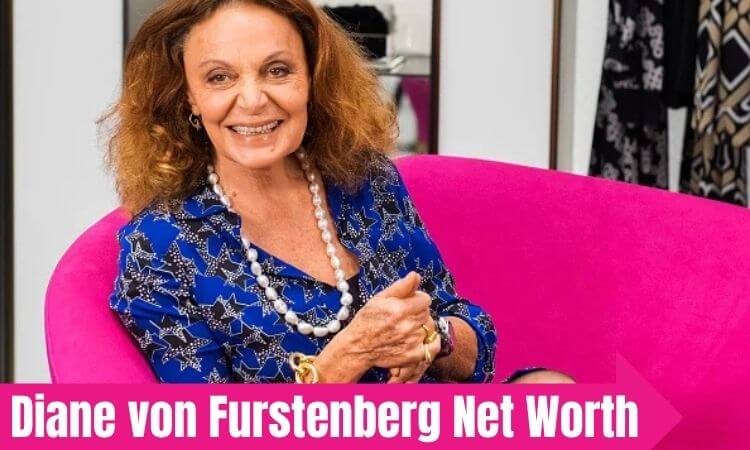
How much is Diane von Furstenberg Net Worth?
Diane von Furstenberg net worth: $1.2 billion
Diane von Furstenberg is one of the most influential fashion designers and businesswomen of the modern era. Best known for creating the iconic wrap dress in the 1970s, she transformed a simple clothing design into a global fashion phenomenon and built a name that became synonymous with confidence, independence, femininity, and women’s empowerment.
With an estimated net worth of $1.2 billion, Diane von Furstenberg has built her fortune through decades of work in fashion, licensing, publishing, beauty, jewelry, media, and business. Her wealth is also connected to the value of her fashion brand and her family’s extensive investments and real estate holdings.
Her journey to becoming a billionaire was far from straightforward. She experienced enormous success early in her career, faced financial difficulties, stepped away from fashion for a period, and eventually returned with the very design that had first made her famous. Her comeback became one of the most remarkable stories in the fashion industry.
Born Diane Simone Michele Halfin in Brussels, Belgium, in 1946, she grew up in a European environment and later moved between several countries before establishing herself in New York. Her marriage to Prince Egon von Furstenberg introduced her to European aristocracy, while her later marriage to media mogul Barry Diller connected her to one of America’s most powerful business figures.
Today, von Furstenberg is much more than a designer. She is an author, philanthropist, women’s-rights advocate, podcast host, mentor, and cultural figure. Through the DVF Awards and other charitable initiatives, she has dedicated significant attention to helping women become leaders.
So, how did Diane von Furstenberg build a $1.2 billion fortune? What happened to her fashion company? Who is her husband? And what luxury properties does the couple own?
Here is a detailed look at Diane von Furstenberg’s life, career, wealth, relationships, business success, philanthropy, and real estate.
Diane von Furstenberg Net Worth
Diane von Furstenberg’s estimated net worth is $1.2 billion.
Her fortune is primarily associated with the success and value of the Diane von Furstenberg fashion brand, which she founded after achieving international recognition for her wrap dress.
Unlike celebrities whose fortunes largely come from acting, music, or sports contracts, von Furstenberg’s wealth has been built around entrepreneurship and brand ownership. Her career demonstrates how a recognizable fashion identity can develop into a major global business over several decades.
Her sources of wealth have included:
- Fashion and clothing
- Diane von Furstenberg brand ownership
- Licensing and product partnerships
- Cosmetics and fragrances
- Jewelry
- Publishing
- Television and shopping networks
- Books
- Media projects
- Real estate and investments
- Business partnerships
Her financial story is particularly interesting because she did not experience a straight line of success. Her fashion company enjoyed extraordinary popularity during the 1970s, but she later faced major business difficulties. Instead of permanently leaving the fashion world, she returned and successfully revived her signature wrap dress.
That comeback helped establish Diane von Furstenberg as one of the rare designers whose name remained culturally relevant across multiple generations.
DO NOT MISS: How much is Ava Max Net Worth?
Who Is Diane von Furstenberg?
Diane von Furstenberg is an American fashion designer and philanthropist who became famous for creating the wrap dress.
Although she was born in Belgium and has European roots, much of her professional career has been connected with New York City. Her distinctive approach to fashion emphasized clothes that allowed women to look stylish while remaining comfortable and practical.
The wrap dress became particularly significant because of the period in which it appeared.
During the 1970s, women were entering professional environments in greater numbers and questioning traditional expectations about women’s clothing and careers. Von Furstenberg’s dress offered something different: a garment that could be worn from the office to social occasions without requiring complicated styling.
Its design was simple but effective. The dress wrapped around the body and tied at the waist, creating a flattering silhouette while remaining relatively easy to wear.
That combination of practicality and femininity became one of the key reasons for its enormous popularity.
Her name also became an important part of her brand. Instead of being known only for a particular product, Diane von Furstenberg developed herself into a recognizable fashion personality.
Diane von Furstenberg’s Early Life
Diane Simone Michele Halfin was born on December 31, 1946, in Brussels, Belgium.
Her family had Jewish roots. Her father had moved to Belgium from the Republic of Moldova, while her mother came from Greece.
Her mother’s life was particularly difficult. During World War II, she was imprisoned at Auschwitz, the Nazi concentration camp in German-occupied Poland. Diane was born only about 18 months after her mother was released.
The experience of her mother strongly influenced Diane’s understanding of resilience and survival.
Von Furstenberg has spoken publicly about her mother’s strength and the role that her mother played in shaping her outlook on life. Her childhood therefore took place against a complicated historical background, but she was encouraged to develop independence and confidence.
Her education was international.
She attended boarding school in Oxfordshire, England, and later studied in Madrid and Geneva. Living and studying in different European countries gave her an international perspective that would eventually become valuable in the fashion world.
Fashion was already becoming part of her interests while she was young.
During university, she experimented with designing clothes and developed an interest in textiles and construction. However, she did not immediately enter the fashion industry as a famous designer.
Instead, she gained experience from several different environments.
From Paris to Italy
One of the important early steps in Diane’s career came when she moved to Paris.
There, she worked as an assistant to a fashion photographer’s agent. The position allowed her to observe the fashion industry from behind the scenes.
However, her most valuable technical experience came after moving to Italy.
In Italy, she worked as an apprentice to textile manufacturer Angelo Ferretti. This gave her hands-on experience with fabrics, patterns, production, and garment construction.
That experience would become extremely important later.
Von Furstenberg wasn’t simply interested in designing clothes that looked attractive. She also learned how fabrics behaved and how garments could be produced.
Her understanding of textiles eventually helped her create the jersey wrap dress that changed her career.
Marriage to Prince Egon von Furstenberg
Diane’s personal life attracted considerable attention even before she became a major fashion celebrity.
While she was young, she met Prince Egon von Furstenberg, a German-born aristocrat.
The couple married in 1969 when Diane was only 23 years old.
The marriage connected her to European aristocracy. Prince Egon’s family background was particularly notable. His mother was the heiress to the Fiat fortune, while his father was a German Catholic priest who later became part of the European aristocratic world.
Diane was Jewish, while the prince’s family was Roman Catholic, and the marriage reportedly was not enthusiastically welcomed by every member of his family.
The couple eventually had two children:
- Alexander von Furstenberg
- Tatiana von Furstenberg
Their marriage did not last.
The couple separated in 1972 and eventually divorced in 1983.
However, Diane retained the von Furstenberg name.
That decision became extremely important for her professional life.
The name “Diane von Furstenberg” eventually became one of the most recognizable names in fashion, and it remained central to the identity of her business.
The Birth of the Wrap Dress
Diane von Furstenberg’s biggest breakthrough came in the 1970s.
After moving to New York, she began developing her own clothing business.
In 1974, she introduced the knitted jersey wrap dress under her own name.
The design was revolutionary in its simplicity.
Instead of complicated fastenings, the dress wrapped around the body and tied around the waist. It could be adjusted easily and was flattering on different body types.
The design was also versatile.
Women could wear it to work, dinners, parties, or social events. It was fashionable without being excessively restrictive.
The timing was perfect.
The 1970s were a period of significant social change. Women were becoming increasingly independent and entering professional fields that had traditionally been dominated by men.
The wrap dress became associated with that changing lifestyle.
It wasn’t just another fashion item.
For many women, it represented independence and confidence.
The dress became so successful that von Furstenberg quickly became a major fashion name.
She was eventually featured on the cover of Newsweek, which famously described her as “the most marketable woman since Coco Chanel.”
Her business expanded rapidly.
How Diane von Furstenberg Made Her Fortune
The wrap dress was the foundation of Diane’s wealth, but her billionaire fortune was not created by selling one dress alone.
Over the years, she expanded her business into multiple categories.
Fashion
Fashion remains the heart of the Diane von Furstenberg empire.
Her company expanded beyond the original wrap dress into a broader range of women’s clothing, including dresses, tops, skirts, outerwear, accessories, and other fashion products.
The brand developed a recognizable visual identity based on bold prints, feminine silhouettes, color, and sophisticated designs.
The wrap dress remained an important part of that identity.
Licensing
Licensing became another important part of the business.
A fashion brand can generate revenue by allowing other companies to use its name and designs on products.
This model enabled the Diane von Furstenberg name to expand beyond traditional clothing.
Beauty and Fragrance
Von Furstenberg also entered the beauty industry.
She launched cosmetic and fragrance products, allowing her brand to reach consumers outside the clothing market.
Fragrance was particularly useful for expanding a designer’s identity because customers could purchase an affordable product carrying the name of a luxury fashion house without buying an expensive dress.
Jewelry
She also developed a fine jewelry collection.
Jewelry helped extend the brand into another luxury category and provided additional opportunities for customers to engage with the DVF name.
Publishing
Von Furstenberg has also worked as an author.
She has written books about her life, career, philosophy, and experiences as a woman in fashion.
Her books helped transform her from a designer into a broader cultural personality.
Television and Media
She has also appeared through television shopping and other media projects.
These appearances allowed her to communicate directly with consumers and strengthen her personal brand.
Her later podcast, #InCharge, continued this evolution.
The podcast focuses on women, leadership, ambition, and personal experiences, featuring prominent guests from entertainment, fashion, and business.
The Difficult Years
Diane von Furstenberg’s career was not an uninterrupted success story.
After the extraordinary popularity of the wrap dress during the 1970s, her business experienced serious difficulties during the following decade.
Fashion trends changed.
The original wrap dress lost some of its momentum, while the fashion industry became increasingly competitive.
The business environment also changed, and von Furstenberg eventually moved away from the American fashion scene.
In the mid-1980s, she moved to Paris.
Rather than simply continuing with clothing, she explored other areas of business.
One of these ventures was a French-language publishing house called Salvy.
She also continued experimenting with beauty, fragrance, and other commercial projects.
This period was important because it gave her experience beyond clothing.
However, her most significant professional comeback would happen years later.
Diane von Furstenberg’s Fashion Comeback
During the 1990s, von Furstenberg began rebuilding her connection with fashion.
One of the smartest moves she made was recognizing the continued cultural value of her original wrap dress.
Instead of treating the design as a relic from the 1970s, she brought it back to a new generation.
The dress once again became fashionable.
Younger women discovered the design, while older customers remembered why they loved it in the first place.
The comeback demonstrated the power of a timeless product.
A fashion trend normally has a short lifespan. But the wrap dress had characteristics that made it useful across generations.
It was comfortable.
It was feminine.
It was adjustable.
It was relatively easy to wear.
And it could be styled in many different ways.
The comeback helped restore Diane von Furstenberg as a major fashion figure.
Celebrity Influence
Celebrity support has played an important role in maintaining the visibility of the Diane von Furstenberg brand.
Over the years, her clothing has been worn by numerous famous figures, including Gwyneth Paltrow, Jennifer Lopez, Madonna, Priyanka Chopra, and Michelle Obama.
Celebrity appearances can have a powerful effect on fashion brands.
When a recognizable celebrity wears a designer’s clothing, photographs and media coverage can expose the design to millions of potential customers.
For DVF, this helped keep the brand connected with popular culture.
The association with influential women also fit naturally with von Furstenberg’s broader philosophy.
Her clothing has often been marketed around the idea of confidence and independence rather than simply following temporary trends.
Diane von Furstenberg and “Journey of a Dress”
One of the clearest examples of the cultural importance of the wrap dress came through an exhibition titled “Diane von Furstenberg: Journey of a Dress.”
The exhibition was curated by fashion editor and cultural figure André Leon Talley.
It first appeared in Moscow in 2009 before traveling to other international locations, including São Paulo and Beijing.
The exhibition celebrated the history and evolution of the wrap dress.
This was significant because it demonstrated that the dress had moved beyond commercial fashion and had become part of fashion history.
Few individual clothing designs become recognizable enough to receive major museum-style exhibitions.
The wrap dress achieved that distinction.
GapKids Collaboration
Von Furstenberg also expanded her creative work into children’s fashion.
In 2011, she collaborated with GapKids, creating a collection aimed at children.
The partnership allowed her distinctive design aesthetic to reach a younger audience while demonstrating that the DVF brand could operate successfully outside women’s fashion.
It was another example of how she used collaborations to keep her brand relevant.
Diane von Furstenberg and Hillary Clinton
In 2016, von Furstenberg designed shirts associated with Hillary Clinton’s presidential campaign.
The project reflected her public support for women’s leadership and political participation.
Fashion has long been used as a tool for political expression, and von Furstenberg’s work frequently overlaps with her advocacy for women’s empowerment.
The campaign collaboration therefore fit naturally into her broader public identity.
#InCharge Podcast
In 2019, Diane von Furstenberg launched the #InCharge podcast.
The podcast focuses on women, leadership, personal stories, career experiences, and empowerment.
Among the notable guests associated with the podcast are Kris Jenner and Karlie Kloss.
The project gave von Furstenberg another way to share her experiences and speak directly about success, failure, relationships, confidence, and leadership.
It also reinforced an important part of her brand philosophy: that success is not simply about looking fashionable but about becoming confident and independent.
Diane von Furstenberg’s Personal Life
Diane von Furstenberg has had an unusually interesting personal life.
Her first marriage was to Prince Egon von Furstenberg.
After their divorce, she continued using the Furstenberg name, which eventually became the name of her global fashion company.
Her most important long-term relationship after her first marriage was with Barry Diller.
The two first met in 1974.
Their relationship developed over many years and included periods of romance, friendship, and separation.
Eventually, the couple reunited and married in 2001 at New York City Hall.
Their relationship has been notable not only because of their personal connection but also because they have worked together on philanthropic and business-related projects.
Who Is Barry Diller?
Barry Diller is a major American media executive and businessman.
He has been associated with major entertainment and media companies and has built an enormous personal fortune throughout his career.
His business background differs from Diane’s fashion empire, but the two share an interest in entrepreneurship, culture, and philanthropy.
Their combined influence has made them one of the most recognizable billionaire couples in American cultural and business circles.
In 2025, Diller publicly discussed his sexuality in his memoir “Who Knew.”
The revelation attracted significant media attention.
Diane responded supportively and emphasized the long history of love, trust, and honesty in their relationship.
Their relationship has continued to be characterized as a partnership built on companionship and mutual respect.
Diane von Furstenberg’s Children
Diane and Prince Egon von Furstenberg had two children.
Alexander von Furstenberg
Alexander became involved in business and investment and has remained connected to the family’s entrepreneurial world.
Tatiana von Furstenberg
Tatiana has worked in creative fields, including filmmaking and writing.
She has also been involved in projects connected to the arts and entertainment industry.
Diane’s relationship with her children has been an important part of her life, particularly as she balanced motherhood with building an international fashion company.
Diane von Furstenberg and Women’s Empowerment
Women’s empowerment is one of the most important themes of Diane von Furstenberg’s career.
Her fashion success came at a time when women were increasingly demanding independence in professional and personal life.
The wrap dress became associated with that movement because it allowed women to dress in a way that felt both feminine and practical.
But von Furstenberg’s commitment to women extends far beyond clothing.
She has spent years supporting female leaders, entrepreneurs, activists, and community organizers.
DVF Awards
In 2010, Diane von Furstenberg launched the DVF Awards in partnership with Vital Voices.
The awards recognize women who demonstrate leadership, courage, and a commitment to improving their communities.
Rather than focusing solely on celebrity or financial success, the awards highlight women who create meaningful social change.
The program has become one of the most important parts of von Furstenberg’s philanthropic identity.
She has also served on the board of Vital Voices, supporting its mission of helping women become leaders around the world.
Ban Bossy Campaign
Von Furstenberg has also participated in the Ban Bossy campaign.
The initiative challenged the negative way in which girls can sometimes be labeled when they demonstrate leadership.
The campaign encouraged young girls to become confident leaders rather than being discouraged from speaking up or taking responsibility.
This message is closely aligned with von Furstenberg’s own philosophy.
Throughout her career, she has encouraged women to take control of their identities and lives.
Council of Fashion Designers of America
Diane von Furstenberg also played a major role in the American fashion industry through the Council of Fashion Designers of America, commonly known as the CFDA.
She became president of the organization in 2006.
She remained in the leadership position for more than a decade.
The CFDA represents American fashion designers and works to support the industry’s creative and business interests.
During her leadership, von Furstenberg advocated for designers, innovation, diversity, and the continued growth of American fashion.
Her position also demonstrated how far she had come.
She had started as a young designer trying to sell a revolutionary dress.
Decades later, she was helping shape the direction of the American fashion industry itself.
Diller–von Furstenberg Family Foundation
Diane and Barry Diller have also devoted significant resources to philanthropy through the Diller–von Furstenberg Family Foundation.
The foundation supports projects involving:
- Arts
- Education
- Human rights
- Public spaces
- Culture
- Community development
One of the foundation’s most notable areas of support has been New York City’s public spaces.
The foundation has contributed more than $130 million toward projects including the High Line and Little Island.
These projects transformed public areas in Manhattan into major cultural and recreational destinations.
Their philanthropic strategy demonstrates that the couple’s wealth is not focused solely on luxury.
They have also used significant resources to support public culture and urban development.
Diane von Furstenberg’s Awards and Honors
Diane von Furstenberg’s career has earned numerous honors.
In 2009, she received a star on Seventh Avenue’s Fashion Walk of Fame.
Seventh Avenue is closely associated with New York’s fashion industry, making the recognition particularly meaningful.
In 2010, she received a gold medal at the Queen Sofia Spanish Institute Gala.
She was also recognized internationally for her contributions to fashion and philanthropy.
In 2020, France named her a Chevalier de la Légion d’honneur, one of the country’s highest honors.
The recognition reflected the international impact of her work in fashion as well as her philanthropic activities.
Diane von Furstenberg’s Real Estate
Real estate represents another significant part of the lifestyle and wealth associated with Diane von Furstenberg and Barry Diller.
The couple has owned or acquired properties in some of the most expensive locations in the United States and Europe.
Their property portfolio reflects their connections to New York, California, Florida, Connecticut, and France.
Beverly Hills Home
In February 2020, Diane von Furstenberg and Barry Diller purchased a home in Beverly Hills, California, for approximately $4.3 million.
The property reportedly measures about 2,711 square feet and includes three bedrooms and four bathrooms.
The house is located adjacent to their longtime residence in the exclusive Coldwater Canyon area.
The couple’s existing property sits on nearly three acres, making the combined estate particularly valuable.
Beverly Hills has long been associated with Hollywood celebrities, luxury homes, and wealthy business figures.
The purchase added a West Coast residence to their already extensive property holdings.
Miami Beach Property
In April 2024, Barry Diller purchased a major waterfront property on North Bay Road in Miami Beach for approximately $45 million.
The property reportedly covers around 1.5 acres and was formerly associated with the Whitehall Mansion.
Miami Beach has become one of America’s most popular destinations for ultra-high-net-worth individuals, and waterfront properties on North Bay Road are particularly valuable.
The acquisition gives the couple another luxury retreat in Florida.
Manhattan Penthouse
Diane von Furstenberg’s Manhattan home is perhaps the property most closely associated with her personal aesthetic.
Her residence is located above the company’s headquarters in New York City’s Meatpacking District.
The apartment has been described as a distinctive glass-and-steel “tree house.”
It was designed by the architectural firm WORKac.
One of the home’s most memorable features is its light-filled concrete staircase decorated with Swarovski crystals.
The property offers dramatic views of Manhattan and reflects von Furstenberg’s preference for combining fashion, architecture, art, and nature.
Living above her own company’s headquarters is also symbolic.
The location brings her personal life and fashion business into the same creative environment.
Connecticut Estate
The couple also owns Cloudwalk, a historic estate in New Milford, Connecticut.
The property dates back to the 19th century and sits on approximately 100 acres.
Compared with their Manhattan and Miami residences, Cloudwalk provides a much quieter environment.
The large property gives the couple access to nature and privacy while maintaining their connection to major cities.
Paris Apartment
Diane von Furstenberg also maintains an apartment on Paris’s Left Bank.
Paris has always played an important role in her life.
She lived there during part of her career and developed a publishing business there.
Her continued connection to Paris also reflects her European heritage and the city’s importance to global fashion.
Eos Yacht
The couple’s luxury lifestyle extends beyond real estate.
Barry Diller owns Eos, a 305-foot sailing yacht.
Eos is considered one of the world’s largest private sailing yachts.
The yacht functions almost like a floating luxury residence and allows the couple to travel internationally in privacy.
For a billionaire couple with properties in several countries, a yacht provides another way to move between destinations while maintaining a private environment.
Diane von Furstenberg’s Fashion Philosophy
The success of Diane von Furstenberg cannot be explained by clothing alone.
Her brand has always been closely tied to a philosophy of confidence.
The designer has often presented fashion as a tool that can help women feel stronger and more independent.
This philosophy was visible in the wrap dress.
The dress did not require a woman to conform to an uncomfortable or overly complicated style. It allowed movement, flexibility, and personal expression.
That approach helped differentiate her from designers who focused more heavily on rigid couture traditions.
Her work also demonstrated the commercial potential of creating clothing around the real lives of women.
Why the Wrap Dress Became So Successful
There are several reasons the wrap dress became such an enduring fashion success.
1. Simplicity
The design was easy to understand and relatively easy to wear.
2. Versatility
Women could wear the same dress to different types of occasions.
3. Adjustable Fit
Because the garment wrapped around the body and tied at the waist, it offered flexibility.
4. Feminine Design
The dress emphasized the waist while maintaining a relaxed feel.
5. Timing
It arrived during a major period of social change for women.
6. Strong Branding
Von Furstenberg understood the importance of attaching her personal identity to the product.
The combination created a product that became much more than a temporary trend.
Diane von Furstenberg’s Business Lessons
Her career offers several important lessons for entrepreneurs.
A Successful Product Can Be Reborn
The wrap dress initially became famous, later declined in popularity, and eventually returned.
Rather than abandoning the product permanently, von Furstenberg recognized its potential with a new generation.
Personal Branding Matters
The name Diane von Furstenberg became inseparable from her company.
Her personal story, philosophy, and public image all strengthened the brand.
Failure Does Not Have to Be Final
Her business difficulties during the 1980s did not end her career.
Instead, she used later experiences to rebuild.
Diversification Can Create New Opportunities
She expanded into beauty, jewelry, publishing, media, children’s fashion, and other ventures.
Long-Term Relevance Is More Valuable Than Short-Term Trends
The continued popularity of the wrap dress demonstrates the value of designing something that can survive changing fashion cycles.
Diane von Furstenberg’s Influence on Modern Fashion
Diane von Furstenberg’s influence can be seen far beyond her own company.
She helped popularize the idea that women’s fashion could be both stylish and practical.
Her success also demonstrated that a female designer could create a powerful global fashion business while maintaining a distinctive personal identity.
The wrap dress became one of the most recognizable garments of the 20th century.
Even decades after its original introduction, the design continues to appear in fashion discussions and collections.
Her influence also extends into mentorship.
Through her work with the CFDA, DVF Awards, Vital Voices, and other organizations, she has helped promote new generations of women in fashion and leadership.
Diane von Furstenberg’s Legacy
Diane von Furstenberg’s legacy is much larger than a $1.2 billion net worth.
Her career represents a rare combination of fashion innovation, entrepreneurship, personal branding, resilience, and philanthropy.
She entered the fashion world as a young woman with limited industry experience.
She created a dress that became an international phenomenon.
She experienced business difficulties.
She stepped away from fashion.
She returned.
And she rebuilt her brand for a new generation.
That journey is one of the main reasons she remains such an important figure in fashion.
Her story also demonstrates how wealth can develop over decades.
The $1.2 billion figure associated with her name is not simply the result of selling clothing. It reflects the cumulative value of a global brand, business interests, investments, relationships, and decades of entrepreneurship.
FAQS
What is Diane von Furstenberg’s net worth?
Diane von Furstenberg has an estimated net worth of $1.2 billion. Her wealth has been built primarily through her fashion business, brand-related ventures, investments, and other commercial activities.
How did Diane von Furstenberg become famous?
Diane von Furstenberg became famous after introducing her iconic knitted jersey wrap dress in 1974. The dress became one of the defining fashion designs of the 1970s.
What is Diane von Furstenberg famous for?
She is best known for creating the wrap dress and building the Diane von Furstenberg fashion brand.
Is Diane von Furstenberg still married?
Yes. Diane von Furstenberg has been married to businessman Barry Diller since 2001.
Who was Diane von Furstenberg’s first husband?
Her first husband was Prince Egon von Furstenberg. They married in 1969, had two children, separated in 1972, and divorced in 1983.
Does Diane von Furstenberg have children?
Yes. She has two children with Prince Egon von Furstenberg: Alexander and Tatiana von Furstenberg.
When was Diane von Furstenberg born?
Diane von Furstenberg was born on December 31, 1946, in Brussels, Belgium.
What is the DVF wrap dress?
The DVF wrap dress is a jersey dress that wraps around the body and ties at the waist. It became one of the most influential fashion designs of the 1970s.
What happened to Diane von Furstenberg’s company?
The company experienced major success in the 1970s, faced difficulties during the following decade, and was later rebuilt when von Furstenberg returned to fashion and revived the popularity of her wrap dress.
Is Diane von Furstenberg a billionaire?
Yes. Her estimated net worth is approximately $1.2 billion.
What does Diane von Furstenberg do besides fashion?
She is also an author, philanthropist, podcast host, businesswoman, and women’s empowerment advocate.
What are the DVF Awards?
The DVF Awards were established in 2010 in partnership with Vital Voices. They recognize women who demonstrate leadership, courage, and positive social impact.
What is Diane von Furstenberg’s connection to the CFDA?
She served as president of the Council of Fashion Designers of America beginning in 2006 and remained in the position for more than a decade.
Where does Diane von Furstenberg live?
She and Barry Diller have had residences and properties in locations including New York City, Beverly Hills, Connecticut, Paris, and Miami Beach.
What is Diane von Furstenberg’s most famous fashion design?
Her most famous creation is undoubtedly the wrap dress, which she introduced in 1974.
Conclusion
Diane von Furstenberg’s journey from a young woman born in Brussels to a billionaire fashion icon is one of the most fascinating stories in the fashion industry.
Her estimated $1.2 billion net worth reflects decades of entrepreneurship, brand building, fashion innovation, investments, and business development.
The wrap dress remains the foundation of her legacy, but her influence goes far beyond one garment. She has built a global fashion identity, written books, entered beauty and jewelry, worked with major brands, participated in media projects, and supported women through organizations such as the DVF Awards and Vital Voices.
Her life has also been marked by dramatic changes. She married into European aristocracy, became a mother, divorced, built a fashion empire, experienced business setbacks, returned to fashion, and eventually married media billionaire Barry Diller.
Her philanthropic work has become an equally important part of her public identity. Through the Diller–von Furstenberg Family Foundation and other initiatives, she and Diller have contributed significant resources to arts, education, human rights, and public spaces.
Perhaps the most remarkable aspect of Diane von Furstenberg’s story is that her greatest success was not simply creating a popular dress. It was creating a brand that could survive changing decades.
The wrap dress became a symbol of confidence, while the woman behind it became a symbol of entrepreneurship and independence.
At an estimated $1.2 billion, Diane von Furstenberg has achieved extraordinary financial success. But her lasting legacy may ultimately be measured less by her wealth and more by the number of women she has inspired to become confident, independent, and in charge of their own lives.