
Table of Contents
Bill Dundee Net Worth: Career, Wrestling Legacy, Championships, Family and Life Story
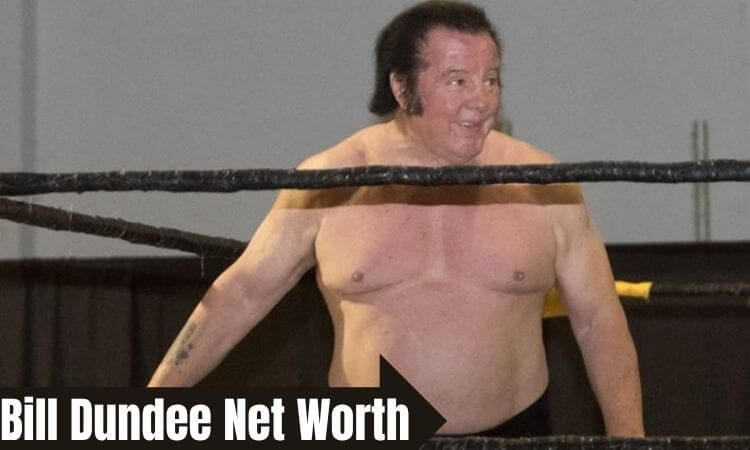
Bill Dundee Net Worth: $1 Million
Bill Dundee was one of the most recognizable and influential figures of the American territory-era wrestling business. Better known to generations of fans as “Superstar” Bill Dundee, the Scottish-Australian wrestler built a remarkable career that lasted nearly six decades. Despite standing only around 5-foot-7, Dundee became a legitimate main-event star, championship contender, booker, manager, promoter, and author.
At the time of his death on September 6, 2026, Bill Dundee had an estimated net worth of $1 million. His wealth was accumulated through decades of professional wrestling, championship performances, booking work, management roles, promotional activities, independent wrestling appearances, and his published autobiography.
Dundee’s career was particularly important in Memphis wrestling, where he became one of the central figures of the territory system. His long-running relationship with Jerry “The King” Lawler produced some of the most memorable rivalries and tag-team partnerships in regional wrestling history. The two men could be bitter enemies one week and popular partners the next, creating storylines that repeatedly brought fans back to arenas.
Dundee was also more than an in-ring performer. He understood the wrestling business from behind the scenes and became a respected booker who helped construct storylines, matches, rivalries, and championship programs. His experience took him beyond Memphis to promotions such as Mid-South Wrestling, Jim Crockett Promotions, and eventually WCW, where he appeared under the character “Sir William.”
His career included nine reigns as AWA Southern Heavyweight Champion, two AWA World Tag Team Championship reigns with Jerry Lawler, numerous Southern Tag Team Championship victories, USWA championships, and an extraordinary late-career run that saw him compete in the ring even during his 70s.
DO NOT MISS: How Much Is the Pawn Stars Net Worth?
Bill Dundee Net Worth
Bill Dundee’s estimated net worth was $1 million at the time of his death in 2026.
Unlike modern professional wrestlers who can earn substantial salaries through national television contracts, merchandise, sponsorships, social media, and major entertainment projects, Dundee’s career was built largely during the territory era of professional wrestling.
The financial structure of wrestling was very different during Dundee’s prime. Wrestlers frequently worked for regional promotions, traveled from city to city, performed multiple times a week, appeared on local television, and became the primary attractions for live events. Successful performers could generate considerable income through wrestling matches, championship programs, bookings, appearances, and other wrestling-related work.
Dundee’s ability to perform multiple roles likely contributed significantly to his long-term financial success. He was not limited to wrestling in the ring. He worked as a booker, manager, promoter, and author, allowing him to remain involved in the industry even when he was no longer competing at the level he had during his physical prime.
His association with Memphis wrestling was particularly important. The territory relied heavily on recognizable local stars who could consistently draw audiences. Dundee was one of those performers.
His long career also meant that his income was spread across several decades. From his professional debut in Australia in 1962 to his final in-ring appearances in 2019, Dundee remained connected to wrestling for approximately 57 years.
It is important to remember that celebrity net worth figures are estimates rather than audited financial statements. A reported net worth of $1 million represents an estimate of his accumulated wealth and should not be interpreted as an exact figure for his bank accounts, investments, property, or other assets.
Who Was Bill Dundee?
Bill Dundee was born William Cruickshanks on October 24, 1943, in Kirriemuir, Angus, Scotland.
Although born in Scotland, he spent much of his formative childhood years in Australia after moving there with his family. Australia would become the place where Dundee first began developing the skills that eventually helped him become a professional wrestler.
His unusual route into wrestling began when he was just 16 years old.
Rather than immediately entering the wrestling business, Dundee joined a traveling circus and worked as a trapeze artist. That experience exposed him to live audiences and physical performance at an early age.
The circus environment demanded coordination, timing, physical control, confidence, and an ability to perform in front of crowds. Those qualities would later become valuable when Dundee transitioned into professional wrestling.
He began wrestling professionally in Australia in 1962.
For more than a decade, he worked throughout the Australian wrestling circuit. During those years, he developed his wrestling abilities and gained experience performing in front of live audiences.
Eventually, Dundee began looking toward the United States.
America represented a much larger professional wrestling market and offered opportunities for performers who could establish themselves in major regional territories. In 1974, Dundee traveled to the United States with fellow Australian-based wrestler George Barnes.
That move ultimately transformed his career.
Dundee eventually became known as “Superstar” Bill Dundee, a name that would remain associated with him throughout the majority of his professional life.
Bill Dundee’s Early Life
Dundee’s early life was shaped by movement, physical performance, and a willingness to pursue unusual opportunities.
Born in Scotland during the early 1940s, he moved with his family to Melbourne, Australia, while still young. Australia became central to his development, and it was there that he first entered the world of professional entertainment.
His teenage years as a trapeze artist were particularly significant.
Working in a traveling circus was physically demanding. It required performers to understand timing, balance, movement, and the importance of entertaining a live crowd.
Professional wrestling would eventually combine many of these same elements.
A successful wrestler had to know how to move around a ring, protect himself and his opponent, sell the impact of attacks, create dramatic moments, and communicate with thousands of spectators.
Dundee’s circus background gave him an unusual foundation for such a career.
By the time he entered professional wrestling in 1962, he was already comfortable performing in front of audiences.
His Australian wrestling years gave him the opportunity to develop further. He spent more than a decade on the Australian circuit before making the major decision to relocate to America.
That move demonstrated one of the characteristics that would define Dundee’s career: adaptability.
He repeatedly reinvented himself depending on the promotion, audience, storyline, or role he was asked to play.
YOU MAY LIKE THIS: Barry Gibb Net Worth: Career, Wealth & Real Estate
Moving to the United States
Dundee arrived in the United States in 1974 during an important period in professional wrestling.
American wrestling was divided into regional territories rather than being dominated by a handful of national promotions. Different territories had their own stars, champions, television programs, promoters, and fan bases.
One of the most important territories Dundee became associated with was Memphis.
Memphis wrestling would eventually become the defining chapter of his career.
The promotion operated around weekly television and live events, particularly shows at the Mid-South Coliseum. Television was crucial because it allowed wrestlers to develop personalities and storylines before audiences attended live events.
Dundee was ideally suited for this style.
He could wrestle, talk, create rivalries, play both heroic and villainous roles, and participate in physical brawls. He understood that professional wrestling was not simply about winning matches.
It was about creating reasons for fans to care.
That understanding helped him become one of Memphis wrestling’s most important stars.
Becoming a Memphis Wrestling Superstar
Memphis wrestling was built around personalities.
Fans wanted wrestlers they could love, hate, support, or blame. Championships mattered, but the emotional story behind the championship was often even more important.
Dundee quickly became one of the territory’s essential performers.
His relatively small stature could have been a disadvantage. At approximately 5-foot-7, he did not possess the imposing physical size associated with many traditional wrestling heavyweights.
Instead, Dundee used his speed, stamina, charisma, technical ability, and crowd psychology.
His appearance could actually help his character.
Rather than looking like an unbeatable superhero, he could appear like an ordinary man placed in extraordinary circumstances. Fans could identify with him, especially when he was presented as an underdog.
When he played a villain, that same quality could make him even more frustrating.
Dundee became capable of moving between roles without losing his identity.
During his Memphis years, he shared the territory with performers such as Jerry Lawler, Jimmy Valiant, Tommy Rich, Austin Idol, Dutch Mantel, and Jimmy Hart.
He could work with almost anyone.
That flexibility was extremely valuable in a territory system where promoters needed to constantly create new rivalries without necessarily changing their core roster.
Dundee could be a singles wrestler one week, a tag-team competitor the next, a manager or authority figure in another storyline, and a booker working behind the scenes.
That versatility helped keep him relevant for decades.
Bill Dundee and Jerry Lawler
Perhaps the most important professional relationship of Bill Dundee’s career was his connection with Jerry “The King” Lawler.
Their partnership and rivalry became a central part of Memphis wrestling.
Dundee and Lawler were able to create the kind of wrestling relationship that promoters dream about.
They could be partners.
They could be enemies.
They could compete for championships.
They could betray one another.
They could reunite.
Then they could turn against each other again.
The repeated changes never stopped audiences from caring because each new storyline gave the rivalry a different emotional hook.
Their programs included championship matches, cage matches, hair matches, “Loser Leaves Town” stipulations, and storylines involving personal humiliation and betrayal.
One memorable angle involved Dundee winning Lawler’s Cadillac.
Another storyline involved Dundee and his wife having their hair cut.
These stories demonstrated the unique nature of Memphis wrestling.
The promotion did not rely solely on athletic competition. Personal possessions, relationships, pride, appearance, humiliation, revenge, and betrayal could all become central elements of a wrestling storyline.
Dundee and Lawler understood this better than most.
Their chemistry was one of the major reasons they remained relevant to Memphis audiences for so long.
The Economics of Dundee and Lawler’s Rivalry
The Dundee-Lawler relationship also demonstrates how the territory wrestling business worked.
In modern wrestling, performers can move between companies, appear on streaming platforms, build social-media audiences, and reach fans around the world.
During Dundee’s prime, wrestling was much more localized.
A regional promotion needed to keep its audience interested week after week.
The same stars might appear on television every week and then wrestle at a local arena days later.
That meant the performers had to constantly reinvent their stories.
Dundee and Lawler were especially valuable because they could create multiple combinations of matches and angles.
The audience could watch them as enemies, then as allies, then as enemies again.
The relationship became almost renewable.
As long as fans believed there was another chapter to the Dundee-Lawler story, promoters had another potential main event.
This ability to consistently draw interest was a major part of Dundee’s value to Memphis wrestling.
The Tupelo Concession Stand Brawl
One of the most famous moments associated with Bill Dundee came in 1979, when he teamed with Jerry Lawler against Wayne Farris and Larry Latham, the team known as the Blond Bombers.
The match eventually moved away from the traditional wrestling ring.
The action spilled into the concession area of the Tupelo Sports Arena.
What followed became one of the legendary brawls in wrestling history.
The wrestlers fought around the concession area, using tables, chairs, food, equipment, and whatever else was available to create the impression of uncontrolled chaos.
The match is frequently remembered as an early example of the type of environment-based, violent wrestling that would later become associated with hardcore wrestling.
The significance of the match goes beyond the physical action.
Dundee understood that professional wrestling did not always need a perfect ring or elaborate production to become memorable.
A fight that appeared to break out of the controlled environment of the wrestling ring could make fans feel as though something genuinely unpredictable was happening.
That illusion of chaos was one of the great strengths of Memphis wrestling.
Wayne Farris would later achieve national fame as The Honky Tonk Man, but his earlier work in territories such as Memphis helped establish the foundations of his career.
Dundee, meanwhile, continued to build his legacy as one of the territory’s most dependable attractions.
Bill Dundee’s Championships
Bill Dundee’s career was filled with championships.
One of his most significant achievements was winning the AWA Southern Heavyweight Championship nine times.
The title was an important championship within the Memphis wrestling territory and served as a centerpiece for many of the region’s biggest programs.
Dundee repeatedly battled other major Memphis stars for the championship, including Jerry Lawler.
His numerous reigns demonstrated how highly promoters valued him as a singles performer.
Dundee also achieved significant success in tag-team wrestling.
He won versions of the Southern Tag Team Championship with numerous partners.
Among his partners were:
- Jerry Lawler
- Tommy Rich
- Robert Gibson
- Steve Keirn
- Dutch Mantel
- Dream Machine
His ability to work effectively with different partners made him one of the most versatile tag-team wrestlers of his generation.
However, one of his most prestigious tag-team accomplishments came in the AWA.
AWA World Tag Team Championship
In 1987, Bill Dundee and Jerry Lawler captured the AWA World Tag Team Championship.
They defeated Doug Somers and Soldat Ustinov in Memphis.
After briefly losing the championship, Dundee and Lawler regained the belts a week later.
As a result, Dundee and Lawler became two-time AWA World Tag Team Champions.
The achievement was especially significant because the American Wrestling Association was entering a difficult period.
The wrestling industry was rapidly changing.
Vince McMahon’s WWF was expanding nationally, while regional promotions were beginning to face competition from companies with increasingly large television and touring operations.
The traditional territory system was gradually disappearing.
Dundee’s championship success therefore came during a transitional era.
He represented one generation of professional wrestling while simultaneously participating in the changes that were reshaping the business.
USWA Success
Dundee continued competing at a high level after the decline of the traditional territory system.
The Memphis wrestling operation evolved under the United States Wrestling Association, and Dundee remained involved.
In 1995, while already in his 50s, Dundee defeated Jerry Lawler for the USWA Unified World Heavyweight Championship.
That achievement illustrated his extraordinary longevity.
Most professional wrestlers from Dundee’s generation had already retired by that point.
Dundee was still capable of performing in major championship programs.
He also won the USWA World Tag Team Championship with Jerry Lawler and with his son Jamie Dundee.
Working with his son added another dimension to his career.
Dundee was no longer simply an established veteran. He was now part of a wrestling family that was producing another generation of performers.
Bill Dundee as a Booker
Dundee’s importance to wrestling cannot be measured only by his championship record.
He was also a respected booker.
In professional wrestling, a booker is responsible for determining the creative direction of a promotion. This can include deciding match outcomes, developing rivalries, creating storylines, organizing championship programs, and determining which performers should be elevated.
Dundee eventually received opportunities to work in this capacity in Memphis.
His knowledge of wrestling made him particularly suited to the role.
He understood what audiences wanted because he had spent years standing in front of them.
He knew how wrestlers worked.
He understood television.
He understood pacing.
And, perhaps most importantly, he understood that a wrestling show needed to make people want to return the following week.
Dundee’s philosophy was centered around giving matches and storylines a purpose.
The best wrestling cards were not simply collections of individual matches.
They needed to build toward major attractions.
This understanding helped Dundee establish a reputation behind the scenes.
Working With Bill Watts
Dundee’s booking abilities eventually took him outside Memphis.
He worked with Bill Watts in Mid-South Wrestling, one of the strongest regional promotions of the 1980s.
Mid-South Wrestling was known for its hard-hitting style and logical storytelling.
The promotion operated across areas including Louisiana, Oklahoma, Mississippi, and surrounding regions.
Dundee’s experience made him valuable in such an environment.
Working as a booker while also wrestling could be demanding.
A performer might have to think about future television episodes, upcoming arena cards, championship programs, and long-term rivalries while simultaneously preparing to perform in the main event.
Dundee was able to operate in both worlds.
His career therefore represents one of the older wrestling traditions in which the top performers were not merely athletes but also creative contributors to the business.
Mid-South Wrestling
Dundee had a run in Mid-South Wrestling in 1984.
The territory was operated by Bill Watts and had a reputation for producing intense, believable wrestling stories.
Dundee’s background in Memphis made him a natural fit.
Both promotions placed heavy emphasis on television storytelling and strong character development.
The Mid-South experience expanded Dundee’s reputation beyond Tennessee.
Although Memphis remained the place most closely associated with his career, his work in other territories demonstrated that his skills were transferable.
He was not simply a local attraction.
He was a professional wrestling veteran who could contribute to different promotions in multiple capacities.
Jim Crockett Promotions and Other Territories
In 1986, Dundee appeared for several wrestling promotions, including Jim Crockett Promotions, Central States Wrestling, and Florida Championship Wrestling.
Jim Crockett Promotions was becoming one of the biggest forces in American wrestling during this period.
The promotion featured many stars who would later become nationally famous.
Performers such as Ric Flair, Arn Anderson, and Tully Blanchard were part of the broader wrestling landscape during this era.
Dundee also captured the NWA Central States Heavyweight Championship.
His willingness to travel between territories was another indication of his reputation.
He could function as a wrestler, manager, booker, or veteran presence depending on what a promotion required.
This versatility helped prolong his career.
Bill Dundee in WCW as Sir William
One of the most interesting reinventions of Dundee’s career came in 1993, when he joined World Championship Wrestling.
Instead of using the “Superstar” Bill Dundee identity that had made him famous in Memphis, WCW transformed him into “Sir William.”
The character was designed as a formal British aristocrat and was connected to Lord Steven Regal.
Dundee appeared in formal clothing, spectacles, and a top hat, creating a dramatic contrast with the rough-and-tumble Memphis wrestler fans had known for decades.
The character demonstrated Dundee’s ability to adapt.
Professional wrestling was changing rapidly in the early 1990s.
National television companies were increasingly replacing the regional territory system.
Dundee’s WCW role allowed him to participate in this new era.
His WCW tenure was relatively short, and he left the company in 1994.
Afterward, he returned to the USWA and continued his association with Memphis wrestling.
Why “Sir William” Was Important
The “Sir William” character may have been very different from Dundee’s traditional persona, but it demonstrated one of his greatest professional strengths.
He was willing to change.
Many wrestlers become closely tied to one character and struggle when the wrestling industry evolves.
Dundee had already spent decades adapting.
He had been a circus performer.
He had been an Australian wrestler.
He became a Memphis superstar.
He became a champion.
He became a booker.
He became a manager.
Then he transformed himself into a British aristocratic character on national television.
That ability to reinvent himself was one reason Dundee could remain relevant for so many years.
Dundee’s Later Wrestling Career
Dundee’s longevity is one of the most remarkable aspects of his career.
His biggest years came during the 1970s and 1980s, but he refused to disappear from professional wrestling.
He continued appearing for independent promotions, wrestling reunions, conventions, and other wrestling-related events.
Even as the industry became increasingly national and then global, Dundee remained connected to the Memphis wrestling tradition.
His age became part of his story.
While many wrestlers had long since retired, Dundee continued stepping into the ring.
In July 2019, at the age of 75, he wrestled Tony Deppen at a Game Changer Wrestling event in Tullahoma, Tennessee.
Dundee won the promotion’s tongue-in-cheek WOMBAT Television Championship.
The match was a remarkable reminder of his longevity.
By that point, Dundee had already been wrestling professionally for approximately 57 years.
He finally retired from in-ring competition in December 2019.
His retirement brought the curtain down on one of the longest careers in American professional wrestling.
Bill Dundee’s Autobiography
Dundee expanded his legacy beyond wrestling through his autobiography.
In 2011, he published:
“If You Don’t Want the Answer, Don’t Ask the Question: Bill Dundee’s Life Story.”
The autobiography explored his life and career, including his childhood in Scotland, his move to Australia, his years as a circus performer, his entry into professional wrestling, his journey to the United States, his Memphis career, and his experiences as a booker.
The book also offered insight into the wrestling personalities and business practices of his era.
By the time Dundee wrote his autobiography, professional wrestling’s traditional culture of secrecy had changed considerably.
Former wrestlers were increasingly discussing what happened behind the scenes, including booking decisions, locker-room relationships, money, promoters, and wrestling politics.
Dundee’s direct personality made the autobiography particularly fitting.
The title itself reflected his reputation for speaking openly.
For fans interested in the territory era, the book provided another way to understand the world that had produced Dundee and many of his contemporaries.
Memphis Wrestling Hall of Fame
In 2017, Bill Dundee was inducted into the Memphis Wrestling Hall of Fame.
The recognition placed him alongside other important figures from the territory.
The inaugural class also honored people such as Jerry Lawler and Jimmy Hart.
Dundee’s inclusion was particularly appropriate because his career was inseparable from Memphis wrestling.
While some wrestlers passed through the territory for short periods, Dundee repeatedly returned.
He became part of the identity of Memphis professional wrestling itself.
His contributions were not limited to championships.
He helped create the type of television storytelling that made Memphis wrestling famous.
He participated in some of the territory’s most memorable feuds.
He worked with generations of performers.
And he contributed creatively as a booker.
Bill Dundee’s Influence on Memphis Wrestling
The legacy of Bill Dundee is closely tied to the unique style of Memphis wrestling.
Memphis was famous for emotional storytelling.
Matches could be built around revenge.
A championship could become the symbol of personal pride.
A car could become part of a feud.
A haircut could become an act of humiliation.
A friendship could suddenly become betrayal.
The wrestling itself was important, but the emotional story was often the real attraction.
Dundee excelled at this environment.
He understood that the audience needed a reason to care.
His ability to portray both heroes and villains made him extremely valuable.
He could make fans cheer.
He could make them angry.
He could make them laugh.
And he could make them believe that the conflict between two wrestlers mattered.
That is why his legacy extends beyond his championship record.
Bill Dundee’s Relationship With Jerry Lawler
Even after decades of rivalry and partnership, Dundee and Lawler remained linked in the history of professional wrestling.
Their relationship was unusual because they could repeatedly change roles without losing their credibility.
Their rivalries were often built around intense personal storylines.
At other times, they became a tag team and pursued championships together.
Their AWA World Tag Team Championship success is one of the clearest examples.
The pair’s chemistry was valuable because they understood how to make each other look important.
A successful wrestling rivalry requires two performers who can elevate one another.
Dundee and Lawler were able to do that repeatedly.
When they fought, each man became more important because of the other.
When they teamed together, their history made the partnership more interesting.
That dynamic helped make their relationship one of the defining partnerships of Memphis wrestling.
Bill Dundee’s Family
Dundee’s wrestling legacy continued through his family.
He had two children:
- Donna
- Jamie Dundee
His son Jamie followed him into professional wrestling.
Jamie Dundee became known most famously as J.C. Ice and Jamie Dundee and achieved recognition as one half of the tag team PG-13, alongside Wolfie D.
This meant that Dundee’s influence extended into another generation of professional wrestling.
His family connections became even broader through his daughter Donna.
Donna married professional wrestler Bobby Eaton, one of the most respected tag-team wrestlers in wrestling history and a member of the famous Midnight Express.
Donna and Eaton had four children.
Donna died in 2021, and Bobby Eaton also died later that year.
The family’s connections created a multi-generational wrestling legacy.
Dundee was therefore not simply a wrestler whose children happened to enter the business.
His family became deeply connected to the Southern wrestling tradition.
Bill Dundee and Jamie Dundee
The relationship between Bill Dundee and his son Jamie represents another interesting chapter of Dundee’s career.
Jamie entered professional wrestling during an era when the territory system was already changing.
Unlike his father, who became famous during the peak of Memphis wrestling, Jamie developed his career in a different wrestling environment.
He became associated with PG-13 and performed as J.C. Ice.
Bill and Jamie also became tag-team partners during Dundee’s USWA years.
The father-son partnership gave fans an opportunity to see two generations of Dundee performing together.
It also showed how deeply professional wrestling had become embedded in Dundee’s family.
Bill Dundee and Bobby Eaton
Through Donna’s marriage to Bobby Eaton, Dundee became connected to another legendary Southern wrestling family.
Eaton was best known for his work with the Midnight Express, one of the most celebrated tag teams in professional wrestling.
The connection between Dundee and Eaton was significant because both were products of the Southern territory wrestling tradition.
Both understood the importance of tag-team psychology.
Both had careers deeply connected to regional wrestling.
And both became respected by generations of wrestling fans.
Their family connection therefore represented an intersection of two important wrestling lineages.
Dundee’s Health in Later Life
Dundee remained connected to wrestling for years after his retirement from active competition.
However, his health eventually affected his public appearances.
In 2023, Jamie Dundee publicly revealed that his father was living with advanced dementia.
Following the disclosure, Bill largely withdrew from regular public appearances.
Nevertheless, his reputation remained strong among Memphis wrestling fans.
His contributions to the city and its wrestling history continued to be remembered by performers, promoters, and supporters.
Final Memphis Tribute
The modern Memphis Wrestling promotion honored Dundee shortly before his death.
On the September 5, 2026, episode, the promotion held a tribute to the legendary wrestler at the WrestleCenter.
Members of the roster came out to honor Dundee and recognize his contribution to Memphis wrestling.
The tribute was especially meaningful because Dundee had spent so much of his career connected to Memphis.
For decades, he had helped define the territory’s wrestling culture.
By the time modern wrestlers were honoring him, his career had become part of the historical foundation upon which Memphis wrestling had been built.
Bill Dundee’s Death
Bill Dundee died in the early morning hours of September 6, 2026, at the age of 82.
His son Jamie announced his death.
No immediate cause of death was publicly disclosed.
Dundee’s death marked the end of an extraordinary professional wrestling journey.
He had begun his working life as a teenage circus performer in Australia.
He became a professional wrestler in 1962.
He moved to America in 1974.
He became one of Memphis wrestling’s defining stars.
He won numerous championships.
He formed a legendary partnership and rivalry with Jerry Lawler.
He worked as a booker.
He became a manager in WCW.
He wrote an autobiography.
He entered the Memphis Wrestling Hall of Fame.
And he continued wrestling until the age of 75.
Few wrestlers of his generation demonstrated such extraordinary longevity.
Bill Dundee’s Career Timeline
Bill Dundee’s life and career can be summarized through several important milestones:
1943: Born William Cruickshanks in Kirriemuir, Scotland.
Young age: Moved with his family to Melbourne, Australia.
Age 16: Joined a traveling circus as a trapeze artist.
1962: Began professional wrestling in Australia.
1974: Moved to the United States with George Barnes.
1970s: Established himself as “Superstar” Bill Dundee in Memphis wrestling.
1979: Participated in the legendary Tupelo concession-stand brawl with Jerry Lawler against the Blond Bombers.
1980s: Became a major Memphis attraction and highly successful booker.
1984: Worked in Bill Watts’ Mid-South Wrestling.
1986: Appeared for Jim Crockett Promotions and other major regional promotions.
1987: Won the AWA World Tag Team Championship with Jerry Lawler.
1993: Joined WCW as “Sir William,” manager of Lord Steven Regal.
1994: Left WCW and returned to the USWA.
1995: Won the USWA Unified World Heavyweight Championship.
2011: Published his autobiography.
2017: Inducted into the Memphis Wrestling Hall of Fame.
2019: Wrestled Tony Deppen at age 75 and won the WOMBAT Television Championship.
December 2019: Retired from in-ring competition.
2023: His son Jamie revealed that Dundee was living with advanced dementia.
September 5, 2026: Honored by modern Memphis Wrestling in a tribute at the WrestleCenter.
September 6, 2026: Died at age 82.
What Made Bill Dundee So Successful?
Dundee’s success cannot be explained simply by his wrestling ability.
His greatest advantage was his understanding of professional wrestling as entertainment.
He knew how to create a character.
He understood crowd reactions.
He could tell a story inside a wrestling match.
He could make a rivalry feel personal.
He could transition between hero and villain.
He could work as a singles wrestler or tag-team performer.
He could book matches.
He could manage other wrestlers.
And he could adapt to different promotions.
His relatively small stature also made his achievements more impressive.
At a time when wrestling promoters often favored larger performers, Dundee proved that personality and wrestling intelligence could be just as valuable as physical size.
He became a superstar without fitting the traditional image of a wrestling superstar.
Bill Dundee’s Legacy
Bill Dundee’s legacy is particularly strong among fans of territory-era wrestling.
Modern wrestling is dominated by national and international promotions, but Dundee’s career was built in an era when regional wrestling territories were the foundation of the industry.
Memphis was one of the most influential territories.
It produced memorable characters, dramatic storylines, intense rivalries, and television segments that influenced wrestling for decades.
Dundee was one of the central figures who helped make that system work.
His career also demonstrates the importance of wrestlers who can contribute creatively.
Today, wrestlers are often recognized primarily for what happens in the ring.
During the territory era, many important figures were also involved in the business side.
Dundee understood booking and promotion.
He knew how to create matches that encouraged audiences to buy tickets.
He understood that wrestling was a continuing story rather than a series of isolated contests.
That knowledge made him valuable long after his physical prime had passed.
Bill Dundee Compared With Modern Wrestling Stars
It is difficult to compare Dundee’s $1 million estimated net worth with the wealth of modern wrestling superstars because the wrestling industry changed dramatically during his lifetime.
Today’s top wrestlers can generate income from:
- National television contracts
- Streaming platforms
- Merchandise
- Sponsorships
- Social media
- Film and television
- Video games
- International appearances
- Licensing
- Major event contracts
Dundee’s career operated under a much different financial model.
Regional wrestling promotions depended heavily on ticket sales and local television exposure.
A wrestler’s ability to draw a crowd could determine how much value he had to a promotion.
Dundee became a reliable draw in Memphis, which helped sustain his career.
He also expanded his income opportunities by becoming a booker, manager, promoter, and author.
His estimated $1 million net worth therefore reflects a long career in an industry that operated very differently from today’s wrestling business.
Why Bill Dundee Remained Relevant for So Long
Longevity in professional wrestling is extremely difficult.
The physical demands of wrestling can shorten careers.
Performers often retire in their 30s or 40s, while others transition into backstage roles.
Dundee managed to remain connected to the business for decades.
Part of that longevity came from his ability to change roles.
When he was younger, he could wrestle long matches and participate in physically demanding rivalries.
As he became older, his knowledge and experience became increasingly valuable.
He could book.
He could manage.
He could mentor.
He could appear as a veteran.
He could participate in nostalgia events.
And, remarkably, he could still wrestle.
His 2019 match at age 75 demonstrated just how unusual his career was.
Bill Dundee’s Most Important Achievements
When evaluating Dundee’s career, several accomplishments stand out.
Nine-Time AWA Southern Heavyweight Champion
Winning the AWA Southern Heavyweight Championship nine times established Dundee as one of the most important singles wrestlers in Memphis.
Two-Time AWA World Tag Team Champion
Dundee and Jerry Lawler captured the AWA World Tag Team Championship twice, adding national-level championship recognition to their famous partnership.
USWA Unified World Heavyweight Champion
Dundee defeated Jerry Lawler for the USWA Unified World Heavyweight Championship in 1995, showing that he remained a championship-level performer well into his 50s.
Successful Booker
His influence behind the scenes helped shape wrestling storylines and cards in Memphis and other territories.
WCW Manager
As Sir William, Dundee successfully reinvented his character and appeared on national television alongside Lord Steven Regal.
Memphis Wrestling Hall of Fame
His 2017 induction recognized his extraordinary contribution to one of American wrestling’s most important regional traditions.
Extraordinary Longevity
Dundee wrestled professionally for approximately 57 years and remained active in the ring into his 70s.
Conclusion
Bill Dundee’s estimated $1 million net worth represents only one part of his story.
Financial figures can tell us how much wealth a celebrity may have accumulated, but they do not fully measure cultural importance.
Dundee’s real legacy lies in the influence he had on professional wrestling.
He was one of the defining stars of Memphis wrestling.
He was a championship performer.
He was a tag-team specialist.
He was a booker.
He was a manager.
He was an author.
He was a father who saw his son enter the wrestling business.
And he was a performer who continued wrestling long after most people from his generation had left the ring.
His partnership and rivalry with Jerry Lawler became one of the defining relationships of Memphis wrestling. Their ability to move between friendship, partnership, betrayal, and bitter rivalry helped create a style of wrestling storytelling that remains influential.
The Tupelo concession-stand brawl became one of the memorable examples of the chaotic Memphis style.
His nine AWA Southern Heavyweight Championship reigns demonstrated his importance as a singles wrestler.
His two AWA World Tag Team Championship victories with Lawler added another major achievement to his record.
His USWA championship success in his 50s demonstrated his extraordinary durability.
His WCW run as Sir William showed that he could reinvent himself.
His autobiography preserved his memories of a wrestling world that had largely disappeared.
And his Memphis Wrestling Hall of Fame induction confirmed his place among the territory’s most important figures.
Perhaps the most remarkable part of Dundee’s story is that his career began in a traveling circus and ended with him being remembered as one of Memphis wrestling’s greatest stars.
He started as William Cruickshanks, a young Scottish-born performer who moved to Australia.
He became a trapeze artist.
Then a professional wrestler.
Then “Superstar” Bill Dundee.
Then a champion.
Then a booker.
Then a manager.
Then an author.
And ultimately, a legendary figure in the history of Memphis professional wrestling.
Bill Dundee died on September 6, 2026, at the age of 82, bringing an extraordinary 57-year in-ring career to its final chapter.
For Memphis wrestling fans, however, “Superstar” Bill Dundee will remain much more than a name in an old championship record. He was one of the men who helped make Memphis wrestling special.
His estimated $1 million net worth may summarize the financial side of his career, but his enduring contribution to professional wrestling is measured in something far more difficult to calculate: the memories of the fans who watched him fight, cheer, betray, reunite, book, manage, and entertain generation after generation.
FAQS
What was Bill Dundee’s net worth?
Bill Dundee had an estimated net worth of $1 million at the time of his death in 2026.
Who was Bill Dundee?
Bill Dundee was a Scottish-Australian professional wrestler, booker, manager, promoter, and author best known for his work in Memphis wrestling.
What was Bill Dundee’s real name?
Bill Dundee was born William Cruickshanks.
When was Bill Dundee born?
Bill Dundee was born on October 24, 1943, in Kirriemuir, Angus, Scotland.
When did Bill Dundee die?
Bill Dundee died on September 6, 2026, at the age of 82.
How old was Bill Dundee when he died?
He was 82 years old when he died.
What was Bill Dundee famous for?
He was best known for his career in Memphis wrestling, his rivalry and partnership with Jerry Lawler, his championship success, and his work as a wrestling booker.
How many times did Bill Dundee win the AWA Southern Heavyweight Championship?
Dundee won the AWA Southern Heavyweight Championship nine times.
Did Bill Dundee and Jerry Lawler wrestle as a tag team?
Yes. Dundee and Jerry Lawler were both longtime rivals and tag-team partners. They won the AWA World Tag Team Championship twice together.
What was Bill Dundee’s WCW character?
Dundee appeared in WCW as Sir William, a formal aristocratic character who managed Lord Steven Regal.
When did Bill Dundee retire from wrestling?
Dundee retired from in-ring competition in December 2019, after an extraordinary career that lasted approximately 57 years.
How old was Bill Dundee when he last wrestled?
Dundee wrestled at the age of 75 in 2019.
Did Bill Dundee have children?
Yes. He had two children, Donna and Jamie Dundee.
Was Bill Dundee’s son also a wrestler?
Yes. Jamie Dundee became a professional wrestler known as Jamie Dundee and J.C. Ice, and he was one half of the tag team PG-13 with Wolfie D.
Was Bill Dundee related to Bobby Eaton?
Bill Dundee’s daughter Donna married professional wrestler Bobby Eaton, who was famous for his work with the Midnight Express.
Was Bill Dundee in the Memphis Wrestling Hall of Fame?
Yes. Dundee was inducted into the Memphis Wrestling Hall of Fame in 2017.
Did Bill Dundee write a book?
Yes. In 2011, he published his autobiography, “If You Don’t Want the Answer, Don’t Ask the Question: Bill Dundee’s Life Story.”
What made Bill Dundee different from other wrestlers?
Dundee’s versatility was one of his greatest strengths. He succeeded as an in-ring wrestler, championship performer, tag-team wrestler, booker, manager, promoter, and author. His ability to adapt helped him remain relevant across multiple generations of professional wrestling.