Table of Contents
Tesla Robotaxi Updates — Everything You Need to Know
Tesla’s long-promised Robotaxi service is no longer just a futuristic idea — it has officially begun limited real-world testing and supervised public rides. With rapid software upgrades, new regulatory steps, and ongoing supervised deployments, 2025 has been the most important year yet for Tesla’s autonomous mobility ambitions.
In this blog, you’ll find a complete, easy-to-read breakdown of the latest Tesla Robotaxi updates, including launch details, technology, safety progress, early ride experiences, and what we can expect next.
Quick Highlights
- Tesla launched a limited Robotaxi service in Austin, Texas in mid-2025.
- Rides are supervised, with a human safety monitor required inside the vehicle.
- Tesla has heavily updated FSD (Full Self-Driving) through its v14 series.
- Nevada and Arizona have advanced regulatory steps, allowing supervised testing and partial approvals.
- Fleet expansion is happening gradually but at a smaller scale than originally projected.
Tesla Robotaxi Timeline (2025)
June 2025 — Soft Launch in Austin
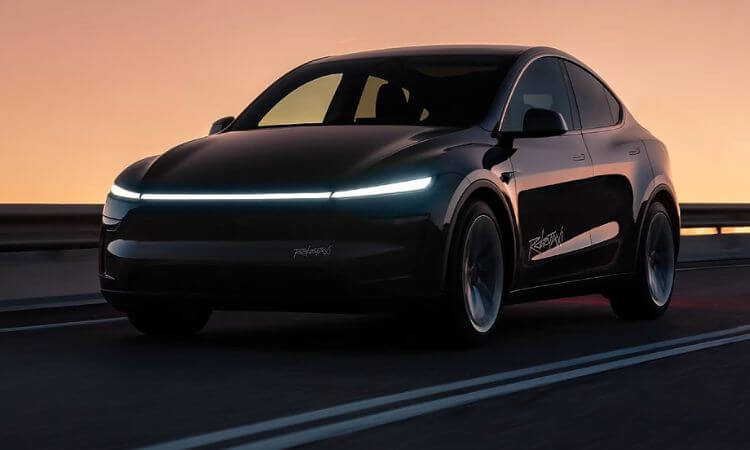
Tesla introduced the first phase of Robotaxi rides in a geofenced part of South Austin. The service was invite-only, with promotional pricing, and used modified Model Y vehicles equipped with the latest FSD technology.
Mid–Late 2025 — Rapid FSD Evolution
Tesla rolled out several updates in the FSD v14 series, improving:
- Vision networks
- Pedestrian and emergency-vehicle recognition
- Lane selection in complex intersections
- Handling of rare edge cases
Tesla also expanded its Hardware 4 fleet, preparing for large-scale autonomous use.
Late 2025 — Regulatory Momentum
- Nevada: Completed Tesla’s self-certification stage.
- Arizona: Approved supervised Robotaxi testing.
- Texas: Continues to be the primary testing ground.
Wider commercial licenses are still pending across multiple states.
DO NOT MISS: Best Camera Phones Compared 2026: Top 10 Picks for Photography & Videography
The Technology Behind Tesla’s Robotaxi
Full Self-Driving (FSD) v14
Tesla’s Robotaxi runs entirely on its AI vision-based FSD system. Key improvements include:
- Higher-resolution camera interpretation
- Better prediction of human behavior
- Smoother lane merges
- More accurate object detection
Tesla is aggressively training its neural networks using fleet data collected from millions of FSD-enabled cars on the road.
Hardware 4
Current Robotaxi cars use:
- Tesla’s in-house AI chips
- Upgraded cameras
- Faster onboard computing
- A vision-first sensor design
Supervised Operation
Even though the car drives itself, a safety operator is still present. Tesla aims to remove safety monitors later, but only after regulators approve fully driverless operation.
Regulations & Safety Status
Regulatory approval is one of Tesla’s biggest challenges.
State-Level Progress
- Texas: Allowed supervised pilot rides in Austin.
- Nevada: Completed a key self-certification step.
- Arizona: Authorized supervised testing.
What’s Still Pending?
To go fully driverless or expand statewide, Tesla still needs:
- Additional commercial permits
- New regulatory filings
- Verified long-term safety data
Safety Observations
Early rides show:
- Strong performance in normal traffic
- Occasional hesitation in unusual scenarios (work zones, hand gestures from pedestrians, emergency vehicles)
- Continuous improvements with each FSD update
Real Ride Experience: What Test Riders Are Saying
People invited to ride in Tesla Robotaxis describe them as:
- Smooth during regular highway and city driving
- Impressive at lane changes and roundabouts
- Still imperfect in unpredictable human-centric situations
Analysts say the service feels promising but not ready for unsupervised commercial launch yet.
Tesla vs. Competitors
Tesla’s Strengths
- Massive fleet for data collection
- Powerful AI hardware
- Fast-paced software iteration
- Potential future owner-fleet participation (owners renting cars as Robotaxis)
Main Competitors
- Waymo
- Cruise
- Zoox
These companies use more sensors (e.g., LiDAR) and operate fully driverless rides in some cities, giving them a head-start in regulatory trust — but Tesla has scale and cost advantages.
Current Challenges
- Regulatory Delays
Approvals take time, and not all states are ready for AI-driven vehicles. - Edge-Case Behavior
School zones, road construction, emergency signals — these remain difficult for AI. - Public Trust Issues
Viral clips of unexpected car behavior increase public scrutiny. - Fleet Scaling
Tesla’s actual deployment numbers are smaller than Musk’s early predictions.
What’s Coming Next?
1. Wider U.S. State Approvals
Expect the next expansion in Texas, followed by Arizona or Nevada.
2. More FSD v14.x Updates
Improved prediction models and smoother decision-making.
3. Larger Austin Fleet
Tesla plans to add more cars gradually as performance stabilizes.
4. Cybercab (Purpose-Built Robotaxi) Reveal
A fully dedicated Robotaxi vehicle is in development — with no steering wheel.
Details are expected sometime in 2026.
Conclusion
Tesla’s Robotaxi program is progressing — cautiously, steadily, and more realistically than previous hype suggested.
The Austin pilot marks Tesla’s first true step toward autonomous ride-hailing, but full driverless service and nationwide rollout remain long-term goals, requiring continued software improvements and regulatory trust.
For now, Tesla is refining the system, gathering massive real-world data, and preparing the groundwork for a future where autonomous mobility becomes mainstream.
FAQs
Q1. Is Tesla Robotaxi fully driverless yet?
No. A human safety monitor is still required.
Q2. Where is it running right now?
Only in selected parts of Austin, Texas — under limited, supervised launch.
Q3. When will it expand?
Likely state-by-state through late 2025 and 2026, depending on regulations.
Q4. When will the steering-wheel-less Cybercab arrive?
Tesla is expected to reveal a production-ready version in 2026.