
Table of Contents
Best Graphics Cards for Gaming in 2025 — The Ultimate Buying Guide
The year 2025 has arrived with incredible innovation in the world of gaming graphics cards. Whether you’re a hardcore gamer chasing 4K ultra settings or a competitive esports player focused on high FPS performance, the GPU market has something for everyone. With new launches from NVIDIA and AMD, gaming visuals and performance have reached an all-time high — driven not just by raw power, but also by advanced AI technologies like frame generation and neural rendering.
In this article, we’ll explore the best graphics cards for gaming in 2025, explaining which one fits your needs and budget — from high-end monsters to affordable options that deliver impressive performance.
What’s New in 2025: GPU Evolution at a Glance
The GPU landscape has transformed in 2025 with two main themes:
1. AI-Powered Performance
AI-driven upscaling, frame generation, and neural rendering have revolutionized gaming visuals. Technologies like NVIDIA DLSS and AMD FSR now use AI to render extra frames and enhance details, giving you smoother gameplay without sacrificing image quality. A midrange GPU can now achieve frame rates that were once limited to flagship models.
2. New GPU Generations
NVIDIA’s RTX 50-series (Blackwell architecture) and AMD’s Radeon RX 9000-series have redefined performance standards. These new cards bring improved ray tracing, more VRAM, better efficiency, and faster AI cores. If you’re still using a 20 or early 30-series card, the upgrade difference is huge — especially for 4K or VR gamers.
DO NOT MISS: Nvidia RTX 5090 Leak Shows Record-Breaking Performance
Understanding the New Gaming Technologies
Neural Rendering and Frame Generation
Traditional GPUs focused mainly on rendering each frame from scratch. In 2025, AI-enhanced frame generation allows GPUs to create additional frames using predictive algorithms. This drastically improves frame rates while maintaining visual fidelity.
NVIDIA’s latest DLSS and AMD’s updated FSR technologies are game-changers. For example, a midrange GPU like the RTX 5070 can now handle 4K gaming with AI frame generation turned on — something previously possible only with flagship models. These technologies make gaming smoother, more responsive, and visually stunning.
Ray Tracing Improvements
Ray tracing simulates how light interacts with objects, creating lifelike shadows and reflections. The newest GPUs have dedicated hardware cores to handle ray tracing more efficiently. AMD has significantly narrowed the gap with NVIDIA in this department, meaning gamers now have more balanced options between the two brands.
The Best Graphics Cards for Gaming in 2025 — Detailed Review
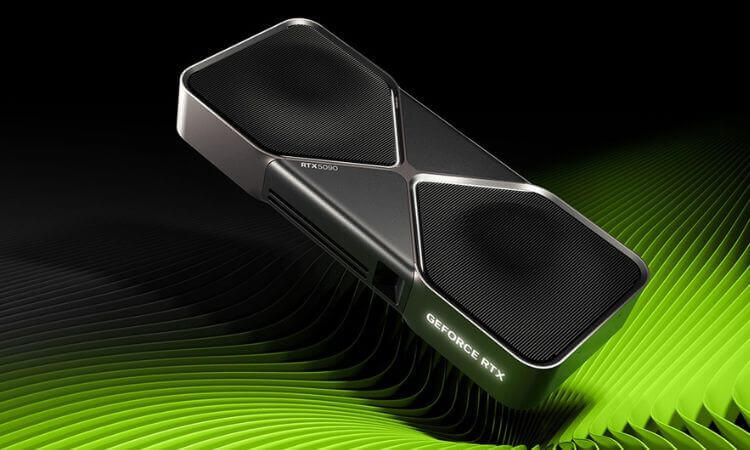
1. NVIDIA GeForce RTX 5090 — The Ultimate Gaming Beast
The RTX 5090 sits proudly at the top of the performance pyramid. Built on NVIDIA’s Blackwell architecture, it offers massive gains in both rasterization and ray tracing compared to the previous generation. With upgraded Tensor and RT cores, this card delivers breathtaking visuals in 4K resolution with maxed-out settings.
Why It’s Great:
- Best-in-class 4K gaming performance
- Advanced AI-powered rendering and DLSS 4.0
- Excellent for streaming, video editing, and 3D workloads
- Huge VRAM buffer for future-proof gaming
Drawbacks:
- Extremely expensive
- Power-hungry — requires a robust PSU and cooling system
Ideal For:
Gamers and creators who want the absolute best graphics quality and have the budget for it. Perfect for 4K, ray tracing, and VR setups.
2. AMD Radeon RX 9070 — The Sweet Spot for Most Gamers
AMD’s Radeon RX 9070 is the standout performer for the majority of gamers. Offering excellent 1440p and even 4K performance, it bridges the gap between affordability and high-end gaming. AMD’s focus on efficiency and ray-tracing improvements has made this card a serious rival to NVIDIA’s offerings.
Why It’s Great:
- Outstanding 1440p performance
- Improved ray tracing vs previous AMD generations
- Competitive pricing and lower power consumption
- Great for both gaming and productivity tasks
Drawbacks:
- Slightly behind NVIDIA in ray tracing and AI frame generation
- Fewer specialized AI tools compared to NVIDIA’s ecosystem
Ideal For:
Gamers who want near-flagship performance without paying flagship prices. Excellent for 1440p ultra settings and occasional 4K gameplay.
3. NVIDIA RTX 4070 / RTX 5070 — The Perfect Midrange Choice
If you’re upgrading from an older GPU and want a balance of performance, efficiency, and price, the RTX 4070 or 5070 series is the best option. These GPUs are designed for 1440p gaming at high refresh rates, offering smooth gameplay with AI-enhanced rendering. They’re also great for content creators thanks to NVIDIA’s NVENC encoder and AI features.
Why It’s Great:
- Excellent balance of price and performance
- Runs cool and quiet
- DLSS and frame generation support for smoother gameplay
- Futureproof for modern titles
Drawbacks:
- Limited VRAM compared to high-end cards
- 4K performance is good, but not ideal for ultra settings
Ideal For:
Gamers who play at 1440p resolution and want the best value for money. Perfect for competitive gaming and high-refresh monitors.
4. AMD RX 7600 XT / NVIDIA RTX 4060 — Best Budget Gaming GPUs
Budget gamers don’t have to compromise much in 2025. The RX 7600 XT and RTX 4060 offer excellent 1080p gaming performance, especially for esports titles like Valorant, Apex Legends, and Fortnite. With AI frame generation and efficient architecture, these GPUs deliver strong frame rates while keeping costs low.
Why It’s Great:
- Very affordable
- Excellent for 1080p high-refresh gaming
- Power-efficient and easy to cool
- Supports upscaling and frame-generation features
Drawbacks:
- Limited for heavy 4K or ray-traced gaming
- May struggle with future high-end titles
Ideal For:
Gamers on a budget or those building compact systems who mainly play competitive or casual titles.
Buying Tips: What to Consider Before Choosing a GPU
1. Match Your GPU with Your Monitor
Before you splurge on a top-tier GPU, ensure your monitor can handle it. There’s no sense in buying an RTX 5090 if you’re gaming on a 1080p 60Hz display. For 1440p or 4K monitors, midrange or high-end GPUs make more sense.
2. Check Your Power Supply and Case Size
High-end cards can draw a lot of power and generate heat. Make sure your power supply (PSU) can handle the card’s requirements and that your case has enough room for a triple-slot GPU.
3. Consider the Games You Play
If your favorite titles support DLSS or FSR, a midrange GPU with AI upscaling may be all you need. If you prefer older games or ones that don’t use these technologies, go for raw rasterization power instead.
4. Think About VRAM
VRAM plays a key role in handling textures and high resolutions. For 1080p gaming, 8GB is fine. For 1440p or 4K, aim for at least 12–16GB to futureproof your setup.
5. Keep an Eye on Driver Updates
New GPUs often launch with early driver issues. Always keep your drivers updated for optimal performance and stability.
Gaming Benchmarks: What to Expect
Here’s a rough idea of what you can expect in popular titles (at ultra settings):
| GPU Model | Resolution | Average FPS (Ultra Settings) | Ideal For |
| RTX 5090 | 4K | 150–180 FPS | 4K Ultra + Ray Tracing |
| RX 9070 | 1440p | 120–160 FPS | 1440p Ultra / 4K High |
| RTX 5070 | 1440p | 110–140 FPS | 1440p High Refresh |
| RX 7600 XT | 1080p | 100–140 FPS | Esports / Casual Gaming |
Note: Performance may vary depending on system configuration and game optimization.
Final Verdict: Which GPU Should You Buy?
If you’re still unsure which GPU to choose, here’s a simple breakdown:
- Best Overall: AMD Radeon RX 9070 — excellent balance of power, price, and efficiency.
- Best for 4K Gaming: NVIDIA GeForce RTX 5090 — unmatched power for enthusiasts and creators.
- Best Midrange: NVIDIA RTX 4070 / 5070 — great for most gamers who value high refresh rates and strong performance.
- Best Budget Pick: AMD RX 7600 XT / NVIDIA RTX 4060 — perfect for smooth 1080p gaming on a budget.
No matter your choice, 2025 is the best time in years to build or upgrade your gaming PC. With more balanced pricing, AI enhancements, and better efficiency, modern GPUs ensure that every gamer can find a card that fits their needs.
FAQs
Q: Is it worth upgrading from a 30-series card in 2025?
Yes, especially if you want better ray tracing, AI performance, or 4K capability. However, if you’re happy with your current performance at 1080p or 1440p, you can hold off another year.
Q: Which brand is better in 2025 — NVIDIA or AMD?
Both are excellent. NVIDIA leads in AI and ray tracing, while AMD often wins in price-to-performance and efficiency. Choose based on your gaming goals and budget.
Q: Do I need a new power supply for these GPUs?
Possibly. High-end cards like the RTX 5090 require more power, so check the wattage recommendation from the manufacturer before upgrading.
Q: Are Intel ARC GPUs worth it now?
Intel ARC cards have improved, but still lag behind AMD and NVIDIA in performance and driver support. They’re suitable for budget users, but not the top choice for serious gamers.